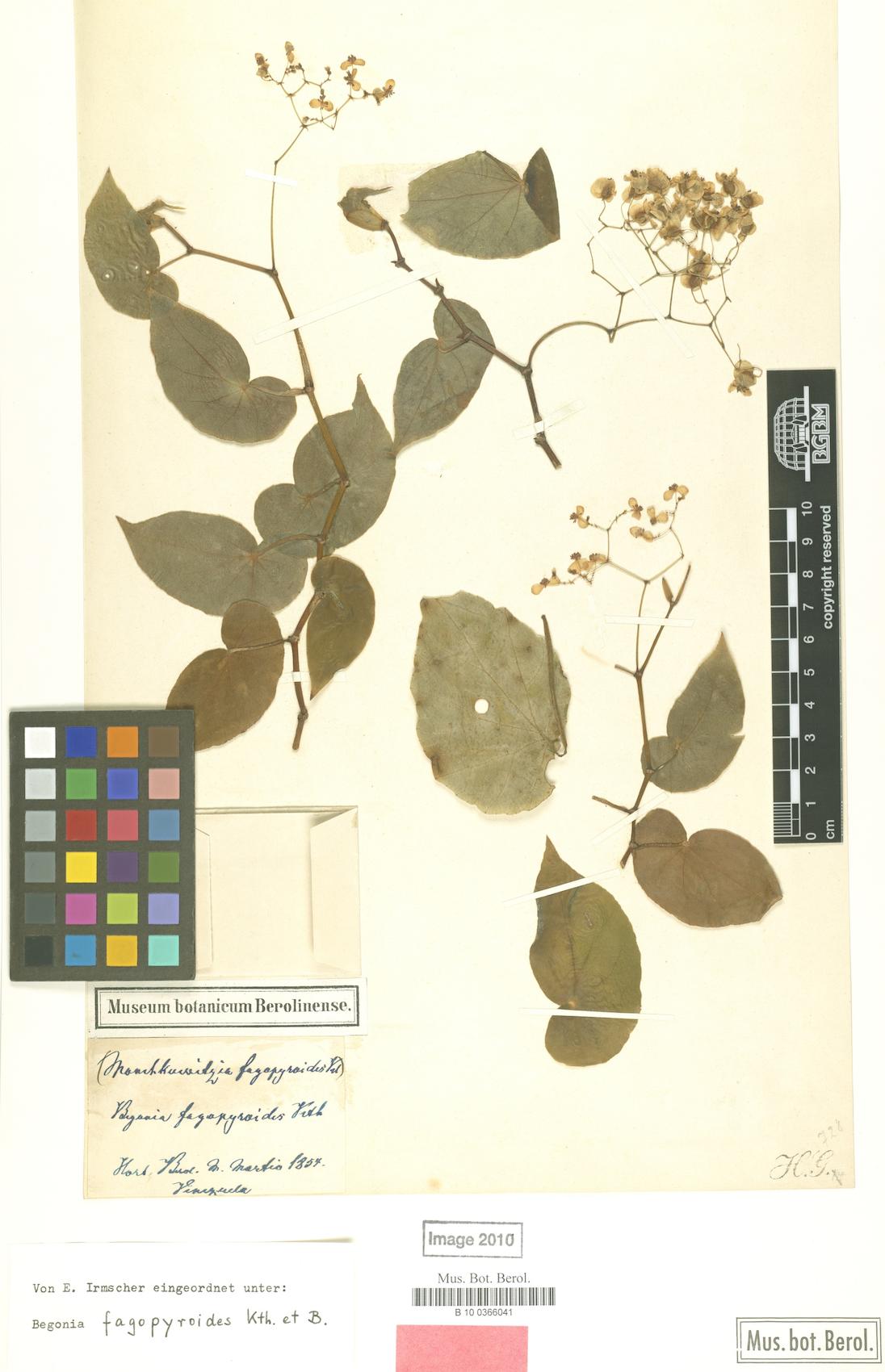
Begonia glabra
Aubl.
Trailing begonia
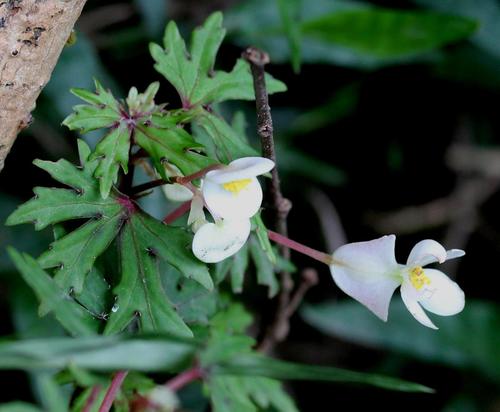
iNaturalist· cc-by-nc
(c) geomanuel, some rights reserved (CC BY-NC), uploaded by geomanuel
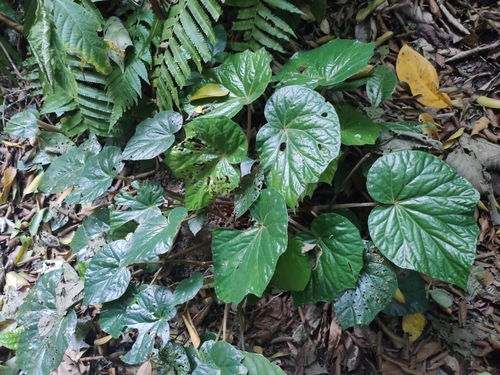
iNaturalist· cc-by
(c) Neptalí Ramírez Marcial, some rights reserved (CC BY), uploaded by Neptalí Ramírez Marcial
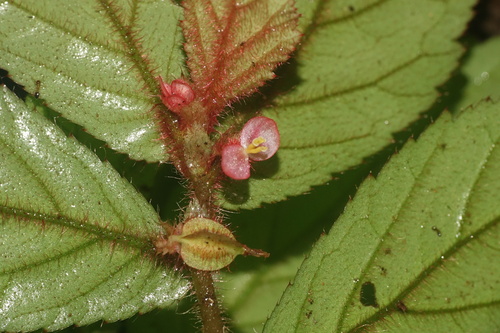
iNaturalist· cc-by
(c) Mathew* Zappa, some rights reserved (CC BY), uploaded by Mathew* Zappa
Summary
Source: WikipediaBegonia glabra, the climbing sorrel, is a species of flowering plant in the family Begoniaceae, native to the New World Tropics. An unusual vining begonia, it is popular in vivariums. Its use in the Winti Afro-Surinamese traditional religion has led to local over-collection.
Description
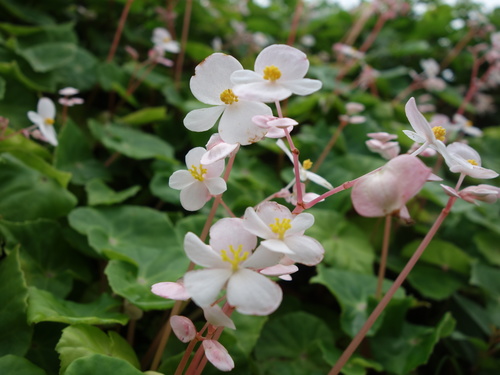
A climbing herb. It can grow 1 m tall. The leaves are simple and alternate. They are heart shaped with teeth along the edge. The flowers are white.
Edible Uses
The leaf stalks are edible.
Medicinal Uses
The leaves are used in the treatment of intestinal infections and stomach inflammations. The French Guiana Wayapi use the leaves to combat parasitic ankylostome larvae embedded interdigitally (between the toes) in children, by rubbing the infected area with Capsicum frutescens, and then using a hot foot-bath of Begonia glabra leaves in a decoction with Citrus aurantiifolia and Ocimum micranthum. The plant contains lipophilic flavonoids.. The crushed leaves are applied to the gums in order to alleviate teething pain in children.
Distribution
It is a subtropical plant. It suits hardiness zone 10.
Where It Grows
Amazon, Central America, Mexico, Peru, South America, West Indies,
Synonyms
Also Known As
Tsitsirique
References (2)
- Mapes, C. & Basurto, F., 2016, Biodiversity and Edible Plants of Mexico. Chapter 5 in R. Lira, et al. (eds.), Ethnobotany of Mexico, Ethnobiology, Springer. p 114
- Pena, F. B., et al, 1998, Los quelites de la Sierra Norte de Puebla, Mexico: Inventory Y Formas de Preparacion. Bol. Soc. Bot. Mexico 62:49-62