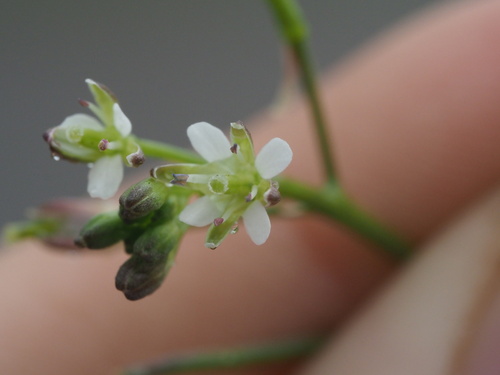
Rorippa madagascariensis
(DC.) Hara
African cress, Nigerian watercress
iNaturalist· cc-by-nc
(c) Bart Wursten, some rights reserved (CC BY-NC), uploaded by Bart Wursten
iNaturalist· cc-by
(c) Shedron Mukhumo, some rights reserved (CC BY)
Description
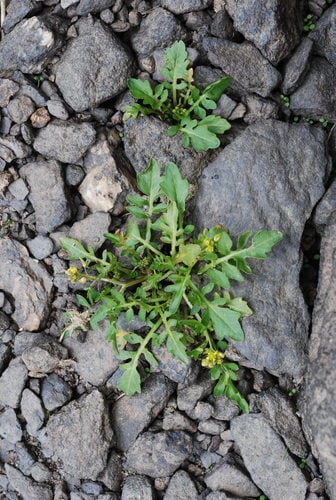
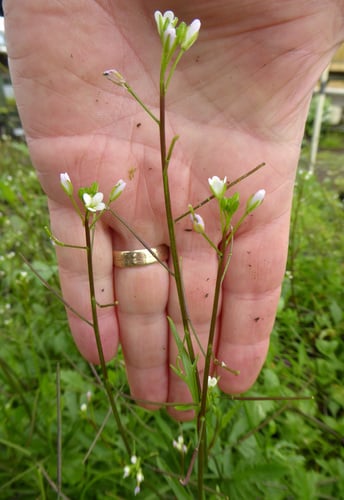
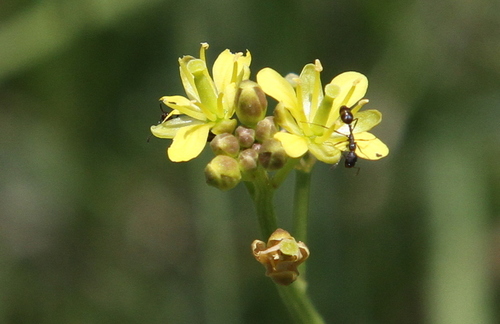
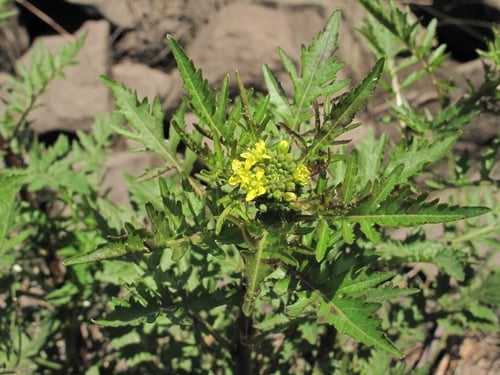
A herb. It grows from seeds each year. It has a fine taproot. The leaves are in a ring. They have lobes and are divided. They are 3-11 cm long by 2 cm wide. The segments are in 4-6 pairs. There can be rounded teeth along the edge. The end leaflet is usually the largest. The flowers are in dense groups in the axils of leaves. The fruit is a long seed capsule. It is 7-15 mm long by 1 mm wide. It splits open into 2 valves. There are many seeds.
Edible Uses
The leaves are eaten raw as a peppery salad or cooked in soups. It is a minor vegetable of local importance.
Traditional Uses
The leaves are eaten raw as a salad. It has a peppery flavour. They can be cooked and used in soups.
This uses section is brief — help expand it
Medicinal Uses
The leaves are considered to be a blood purifier.
Distribution
It is a tropical plant. It grows in humid locations. It is often along river banks and the edges of pools. It is mostly in the lowlands but can be up to 1,200 m above sea level.
Where It Grows
Africa, Burundi, Central Africa, Central African Republic, CAR, Congo, East Africa, Gabon, Guinea, Guinée, Guinea-Bissau, Madagascar, Mozambique, Namibia, Senegal, Southern Africa, Tanzania, Uganda, West Africa, Zambia,
Other Information
It is a minor vegetable of local importance.
Synonyms
References (2)
- Grubben, G. J. H. and Denton, O. A. (eds), 2004, Plant Resources of Tropical Africa 2. Vegetables. PROTA, Wageningen, Netherlands. p 449
- World Checklist of Useful Plant Species 2020. Royal Botanic Gardens, Kew