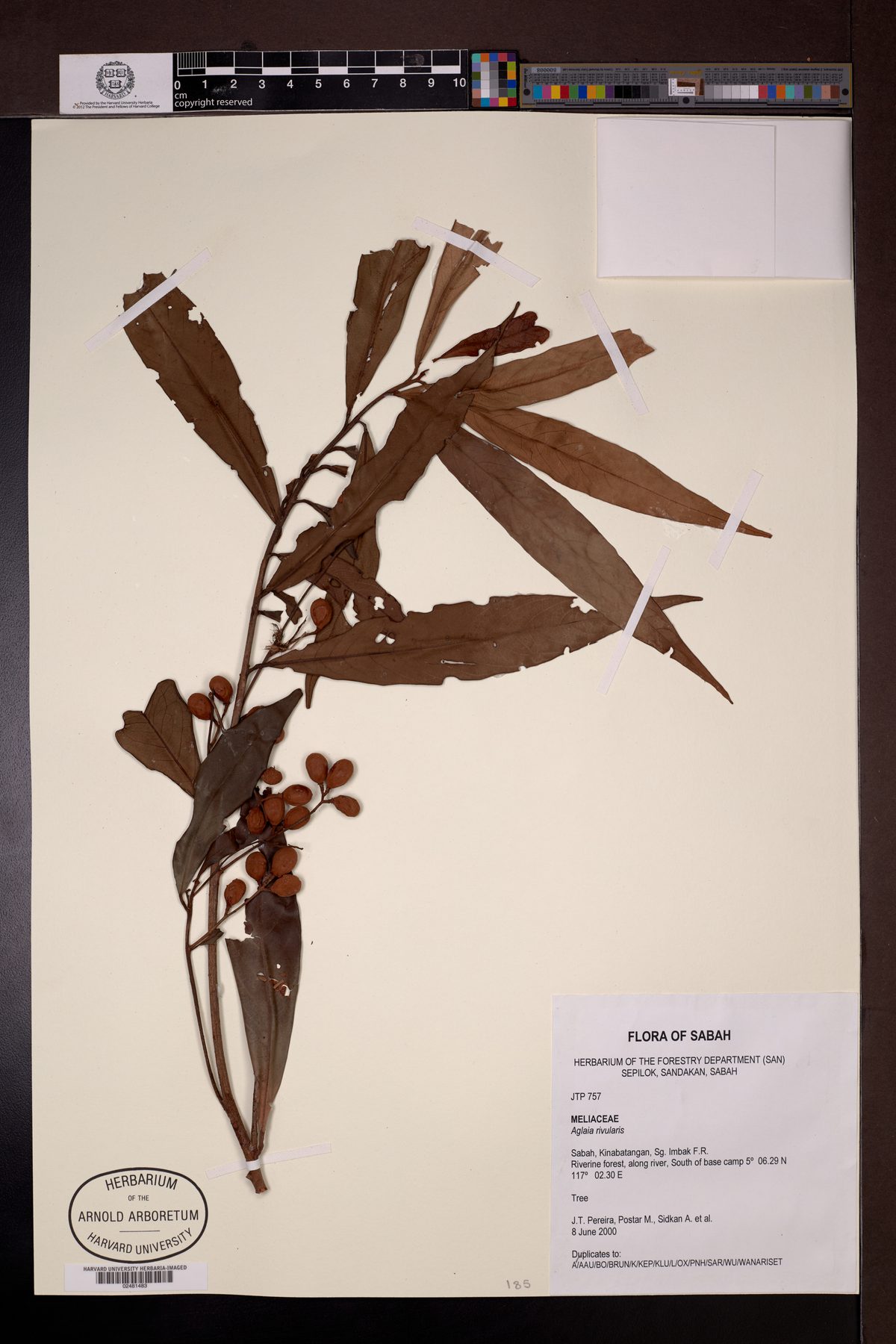
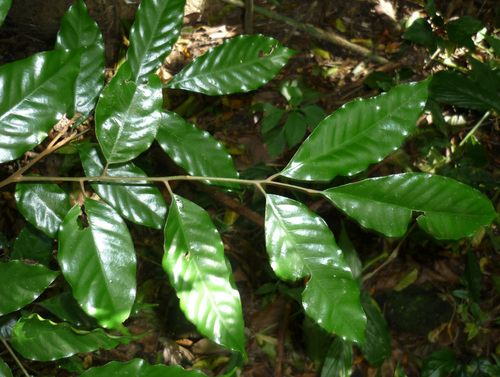
Aglaia perviridis
Hiern
wikimedia· cc-by-sa
Vinayaraj (via Wikimedia Commons)
Summary
Source: WikipediaAglaia perviridis is a species of plant in the family Meliaceae. It is found in Bangladesh, Bhutan, China, India, Malaysia, Thailand, and Vietnam.
Description
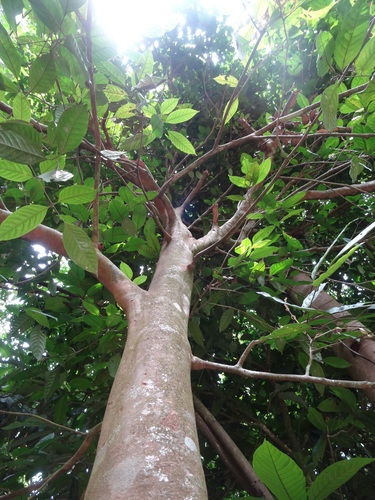
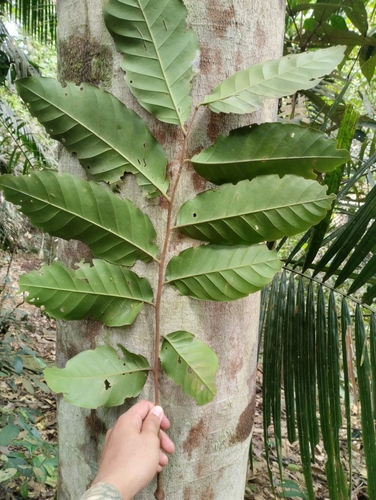
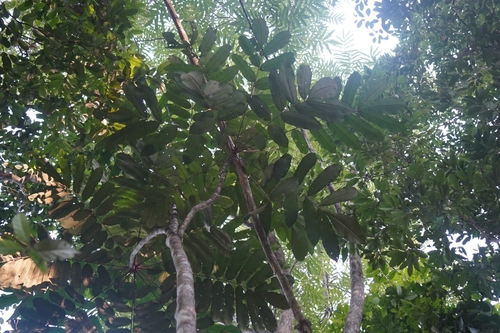
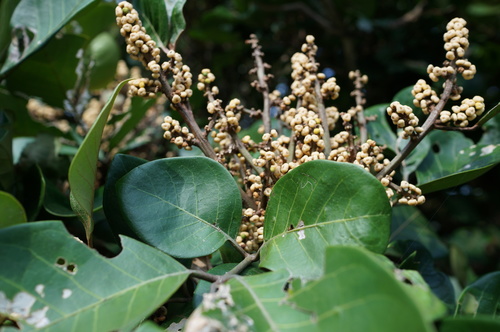
A small to medium sized tree. It can grow to 25 m high and have a trunk 50 cm across. The leaves are compound. There are 11-13 leaflets that are almost opposite. The flowers have 5 parts. The fruit is oblong and curved. It is 3-4 cm long by 2 cm wide. It is rust coloured. There is one seed. The aril is yellowish and fleshy.
Edible Uses
The fruit is eaten locally. The yellow, fleshy coat (aril) surrounding the seed is eaten. The fruit is up to 38mm x 20mm, containing a single large seed.
Traditional Uses
The pulp of the fruit is eaten raw.
This uses section is brief — help expand it
Medicinal Uses
The genus 'Aglaia' is the only source of the group of about 50 known representatives of compounds that bear a unique cyclopenta[b]tetrahydrobenzofuran skeleton. These compounds are more commonly called rocaglate or rocaglamide derivatives, or flavaglines, and most have been found to have potent insecticidal properties, antifungal, antiviral, antibacterial or anthelmintic bioactivity. Several of them exhibit pronounced cytotoxic activity against a range of human cancers. Since the first representative in this group was only discovered in 1982, this is one of the few recent examples of a completely new class of plant secondary metabolites of biological promise (see B. G. Wang et al., Biochem. Syst. Ecol. 32: 1223-1226. 2004; L.W. Chaidir et al., J. Nat. Prod. 64: 1216-1220. 2001).
Distribution
It is a tropical plant. It grow in forests usually on limestone. It grows between 100-1,500 m above sea level. In Yunnan.
Where It Grows
Andaman Islands, Asia, Bangladesh, Bhutan, China, Himalayas, India, Indochina, Laos, Malaysia, SE Asia, Thailand, Vietnam,
Cultivation
A plant of tropical and subtropical climates. Regeneration is said to be poor in Vietnam, and saplings are rarely found under the canopy of mother trees. A dioecious species, both male and female forms need to be grown if fruit and seed are required.
Other Uses
The genus 'Aglaia' is the only source of the group of about 50 known representatives of compounds that bear a unique cyclopenta[b]tetrahydrobenzofuran skeleton. These compounds are more commonly called rocaglate or rocaglamide derivatives, or flavaglines, and most have been found to have potent insecticidal properties, antifungal, antiviral, antibacterial or anthelmintic bioactivity. Several of them exhibit pronounced cytotoxic activity against a range of human cancers. Since the first representative in this group was only discovered in 1982, this is one of the few recent examples of a completely new class of plant secondary metabolites of biological promise (see B. G. Wang et al., Biochem. Syst. Ecol. 32: 1223-1226. 2004; L.W. Chaidir et al., J. Nat. Prod. 64: 1216-1220. 2001). The dark reddish-brown wood is hard, close and even grained. An excellent looking wood, it is used in construction, ship and boat-building, for household utensils and agricultural tools.
Production
In China plants flower in March to May and fruit September to December.
Synonyms
Also Known As
Athakka, Bilumuzilan, Goi xanh, Sabuj amoor, Teng-korak lang, Tenkohalang
References (8)
- Binu, S., 2010, Wild edible plants by the tribals in Pathanamthitta district, Kerala. Indian Journal of Traditional Knowledge. 9(2): 309-312
- Bircher, A. G. & Bircher, W. H., 2000, Encyclopedia of Fruit Trees and Edible Flowering Plants in Egypt and the Subtropics. AUC Press. p 14 (As Aglaia kingiana)
- Burkill, I.H., 1966, A Dictionary of the Economic Products of the Malay Peninsula. Ministry of Agriculture and Cooperatives, Kuala Lumpur, Malaysia. Vol 1 (A-H) p 75 (As Aglaia kingiana)
- Pasha, M. K. & Uddin, S. B., 2019, Minor Edible Fruits of Bangladesh. Bangladesh J. Plant Taxon. 26(2): 299–313
- Slik, F., www.asianplant.net
Show all 8 references Hide references
- Wongprasert, T. et al, 2011, A Synoptic Account of the Meliaceae of Thailand. Thai For. Bull. 39:210-266
- World Checklist of Useful Plant Species 2020. Royal Botanic Gardens, Kew
- www.worldagroforestrycentre.org/sea/products/afdbases/af/asp/SpeciesInfo.asp?SpID=18179