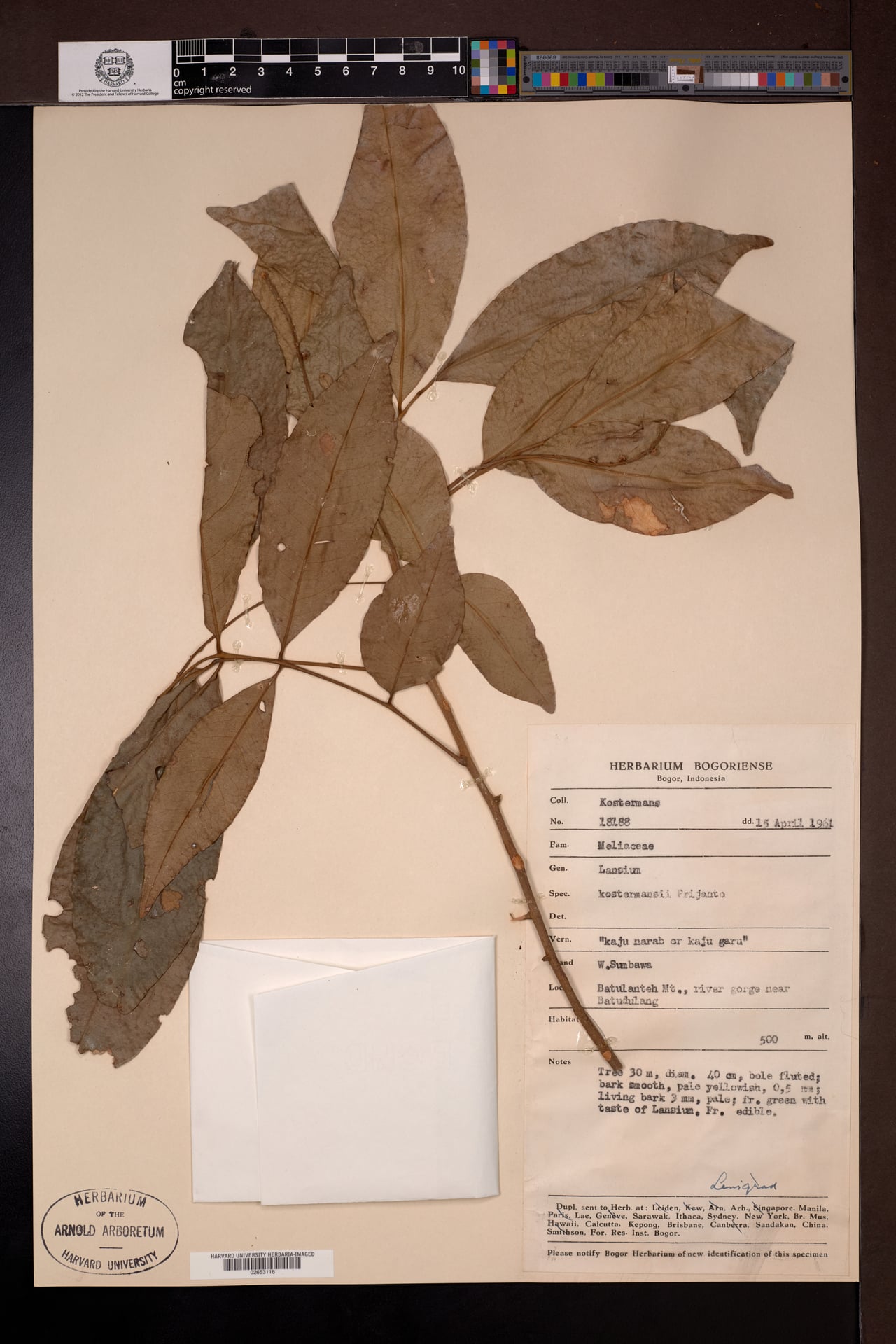
Aglaia silvestris
(Roem.) Merrill
Goi nui
iNaturalist· cc-by
(c) Ian Cowie, some rights reserved (CC BY), uploaded by Ian Cowie
wikimedia· cc-by-sa
Wikimedia Commons - filibot.web
Summary
Source: WikipediaAglaia silvestris is a species of plant in the family Meliaceae. It is found in Cambodia, India, Indonesia, Malaysia, Papua New Guinea, the Philippines, the Solomon Islands, Thailand, and Vietnam. This plant initiated the naming of the Rocaglamide derivatives silvestrol and episilvestrol. In fact they were derived from the fruits and twigs of Aglaia foveolata.
Description
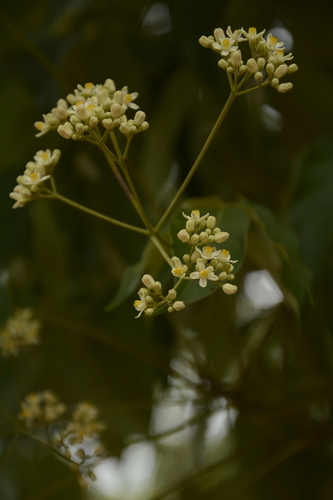
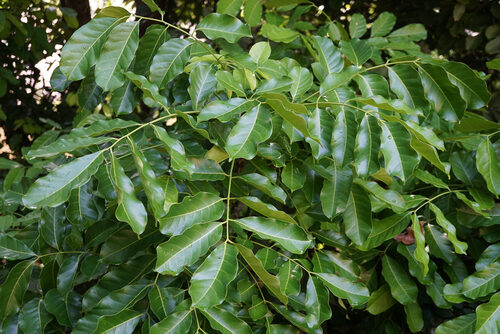
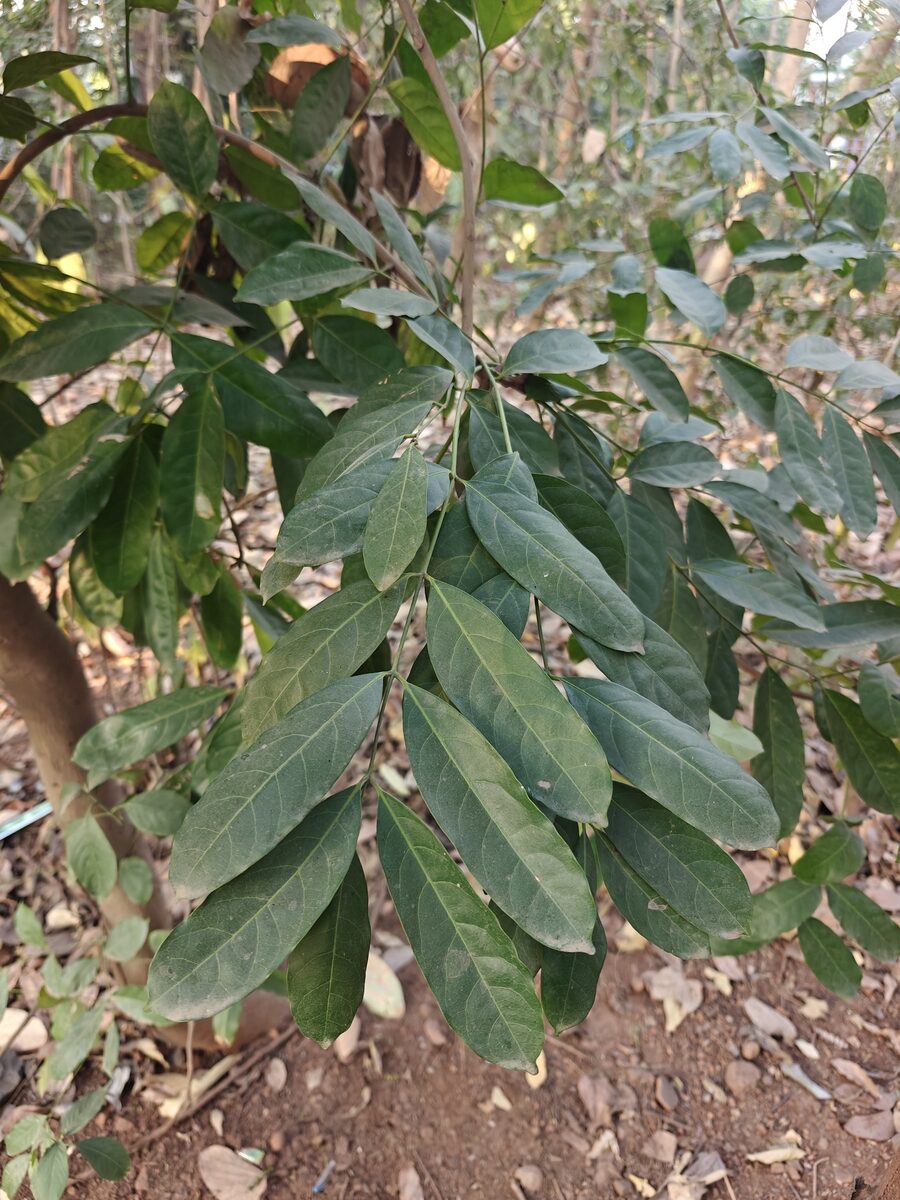
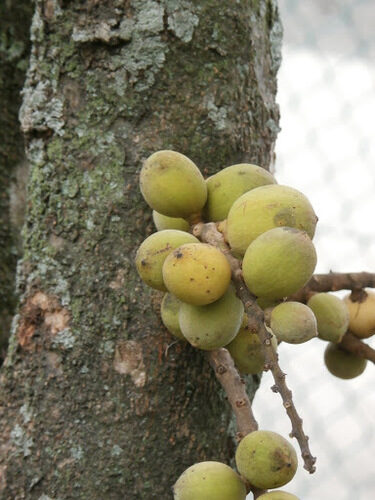
A tree. It grows up to 25-30 m high. The trunk is 30-40 cm across. It can have buttresses. The leaves are compound and alternate. The leaves are large and have leaves along the stalk and one at the end. They are 18-65 cm long. They are covered with pale brown scales. There are 5-19 leaflets. These are 7-24 cm long by 2-7 cm wide. The flowers are in a group in the axils of leaves. The flowers have 5 or 6 petals. They are yellow and 3-5 mm long. The fruit is a round scaly berry. It is yellow or orange. They are about 3 cm long. There are 1 or 2 brown seeds.
Edible Uses
The fruit aril is eaten fresh, the roots are used for soup, and the young leaves and flowers are eaten as a relish with fish.
Traditional Uses
The fruit is eaten. The roots are used for soup. The young leaves and flowers are eaten as a relish with fish.
This uses section is brief — help expand it
Medicinal Uses
The roots are used for soup, suggesting traditional use in food medicine preparations.
Distribution
A tropical plant. It grows in deep, fertile, wet soils. It grows up to 2,100 m above sea level. It grows in evergreen and mixed deciduous forests usually near streams. It can be on limestone or sandstone bedrock.
Where It Grows
Andamans, Asia, Australia, Cambodia, India, Indochina, Indonesia, Laos, Malaysia, Pacific, Papua New Guinea, PNG, Philippines, SE Asia, Solomon Islands, Thailand, Vietnam,
Cultivation
Plants are grown from fresh seed.
Other Uses
The genus 'Aglaia' is the only source of the group of about 50 known representatives of compounds that bear a unique cyclopenta[b]tetrahydrobenzofuran skeleton. These compounds are more commonly called rocaglate or rocaglamide derivatives, or flavaglines, and most have been found to have potent insecticidal properties, antifungal, antiviral, antibacterial or anthelmintic bioactivity. Several of them exhibit pronounced cytotoxic activity against a range of human cancers. Since the first representative in this group was only discovered in 1982, this is one of the few recent examples of a completely new class of plant secondary metabolites of biological promise (see B. G. Wang et al., Biochem. Syst. Ecol. 32: 1223-1226. 2004; L.W. Chaidir et al., J. Nat. Prod. 64: 1216-1220. 2001). The heartwood is a pale yellowish-brown to almost white; the sapwood is a pale reddish-brown. The wood is light in weight, fragrant. It is used for spear shafts, axe handles, boards in houses etc. The buttresses are used in house building.
Production
In Thailand it flowers almost all year round.
Notes
There are about 104 Aglaia species. They occur in Asia and the Pacific.
Synonyms
Also Known As
Chan cha mot, Chan samot
References (7)
- Argent, G et al, nd, Manual of the Larger and More important non Dipterocarp Trees of Central Kalimantan Indonesia. Volume 2 Forest Research Institute, Samarinda, Indonesia. p 412
- Bircher, A. G. & Bircher, W. H., 2000, Encyclopedia of Fruit Trees and Edible Flowering Plants in Egypt and the Subtropics. AUC Press. p 15 (Also as Aglaia baillonii). p 14 (As Aglaia pyramidata)
- Cooper, W. and Cooper, W., 2004, Fruits of the Australian Tropical Rainforest. Nokomis Editions, Victoria, Australia. p 285
- Forest Inventory and Planning Institute, 1996, Vietnam Forest Trees. Agriculture Publishing House p 500
- Phon, P., 2000, Plants used in Cambodia. © Pauline Dy Phon, Phnom Penh, Cambodia. p 15 (As Aglaia pyramidata)
Show all 7 references Hide references
- Slik, F., www.asianplant.net
- Wongprasert, T. et al, 2011, A Synoptic Account of the Meliaceae of Thailand. Thai For. Bull. 39:210-266