Aglaia rimosa
(Blanco) Merr.
Bayanti
iNaturalist· cc-by-nc
(c) Han-Ting Liu, some rights reserved (CC BY-NC), uploaded by Han-Ting Liu
iNaturalist· cc-by
(c) 胡正恆(Jackson Hu), some rights reserved (CC BY), uploaded by 胡正恆(Jackson Hu)
iNaturalist· cc-by-nc
(c) BunnyTailGra22 | 兔尾草, some rights reserved (CC BY-NC), uploaded by BunnyTailGra22 | 兔尾草
Summary
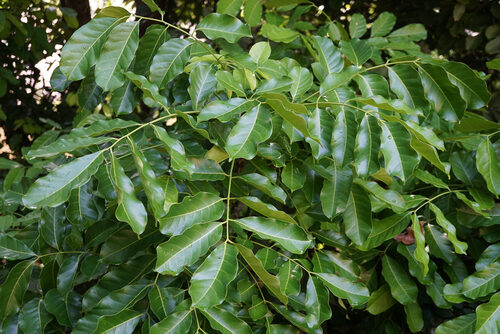
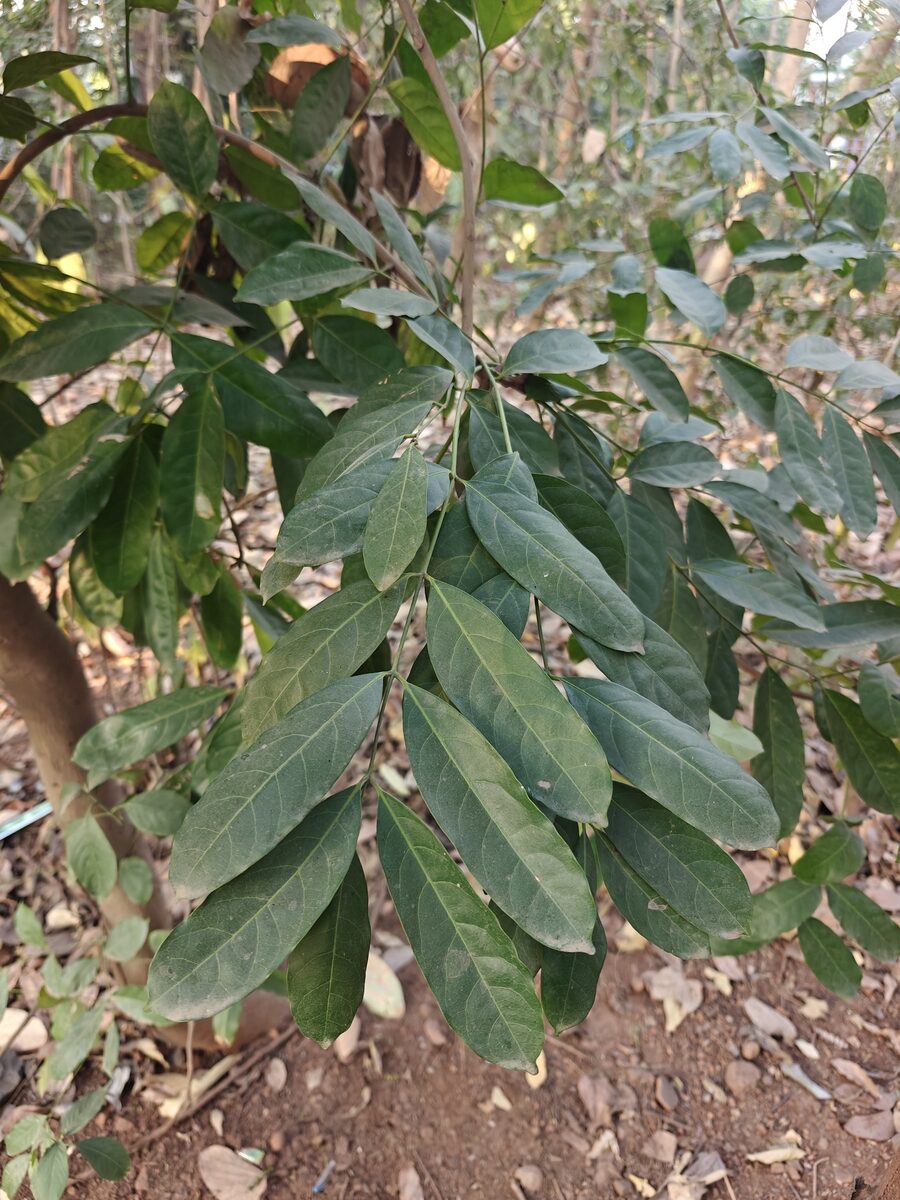
Source: WikipediaAglaia rimosa is an evergreen small tree in the family Meliaceae. It is found in Indonesia, Papua New Guinea, the Philippines, and Taiwan (Hengchun Peninsula and Orchid Island ). Aglaia rimosa "grows primarily in the wet tropical biome".The official name of Aglaia rimosa in Taiwan is Large-leaved aglaia, because compared with the other two species native to Taiwan, Aglaia elaeagnoidea and Aglaias chittagonga, the leaflet of Aglaia rimosa is larger than their leaflet, all three are imparipinnate.The flowers of Aglaia rimosa have fragrance, but it is lighter than that of Aglaia odorata.The anticancer compound Rocaglamide (RocA) was originally extracted from Aglaia rimosa by researchers in Taiwan.
Description
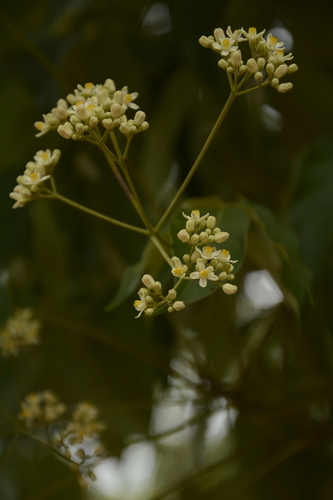
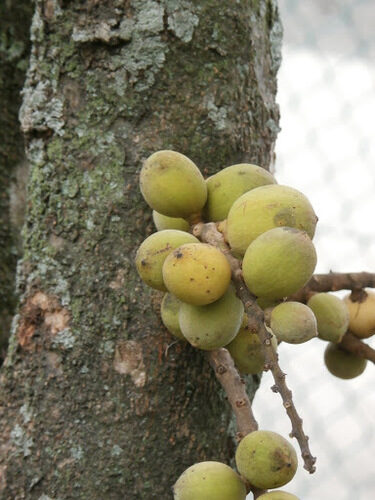
A small tree. The leaves are alternate with about 7 leaflets. The lower surface is pale green. The flower cluster is a loose and irregular one which is at the end and relatively coarse and covered with brown scales. The flowers are many and nearly round on stout stalks and they are yellow. The fruit are 2.5 cm long and densely covered with scales. They have one seed. The aril is fleshy and yellow.
Edible Uses
The Tao people on Orchid Island use Aglaia rimosa to make boat rowlock or pillars for houses.This is probably why the Tao people called it "maraboa"/four limbs towards the sky. The fruit of Aglaia rimosa is edible. Aglaia rimosa is also an easy-to-cultivate landscape plant. Aglaia rimosa has anticancer components: rocaglamide.
Traditional Uses
The fruit are eaten raw.
This uses section is brief — help expand it
Medicinal Uses
The genus 'Aglaia' is the only source of the group of about 50 known representatives of compounds that bear a unique cyclopenta[b]tetrahydrobenzofuran skeleton. These compounds are more commonly called rocaglate or rocaglamide derivatives, or flavaglines, and most have been found to have potent insecticidal properties, antifungal, antiviral, antibacterial or anthelmintic bioactivity. Several of them exhibit pronounced cytotoxic activity against a range of human cancers. Since the first representative in this group was only discovered in 1982, this is one of the few recent examples of a completely new class of plant secondary metabolites of biological promise (see B. G. Wang et al., Biochem. Syst. Ecol. 32: 1223-1226. 2004; L.W. Chaidir et al., J. Nat. Prod. 64: 1216-1220. 2001).
Distribution
It is a tropical plant. It is found throughout the country of the Philippines especially in the northern part of Luzon. It is in forests at low and medium altitudes. It can be near the seashore.
Where It Grows
Asia, Pacific, Papua New Guinea, PNG, Philippines, SE Asia, Taiwan,
Cultivation
A dioecious species, both male and female forms need to be grown if fruit and seed are required.
Other Uses
The genus 'Aglaia' is the only source of the group of about 50 known representatives of compounds that bear a unique cyclopenta[b]tetrahydrobenzofuran skeleton. These compounds are more commonly called rocaglate or rocaglamide derivatives, or flavaglines, and most have been found to have potent insecticidal properties, antifungal, antiviral, antibacterial or anthelmintic bioactivity. Several of them exhibit pronounced cytotoxic activity against a range of human cancers. Since the first representative in this group was only discovered in 1982, this is one of the few recent examples of a completely new class of plant secondary metabolites of biological promise (see B. G. Wang et al., Biochem. Syst. Ecol. 32: 1223-1226. 2004; L.W. Chaidir et al., J. Nat. Prod. 64: 1216-1220. 2001). The heartwood is red-brown; the sapwood is white to orange-yellow. The wood is used for local house construction. We do not have any more specific information on the wood of this species, but the general description of wood from trees in this genus is as follows:- The heartwood is pale red to deep coppery red; it is clearly but not sharply distinguished from the pinkish or pale red sapwood. The texture is fine and dense; the grain often distinctly crossed and generally wavy, forming a regular diagonal wavy ribbon on radial sections; on tangential sections, an irregular, curly figure, marked with characteristic fine zigzag lines; most species have a distinct, even pungent, aromatic odour resembling both cedar and camphor. The wood is hard to very hard; heavy to very heavy; durable, the heartwood rarely if ever being attacked by termites, nor even the sapwood by beetles. It seasons well. It can be rather difficult to work, the curly and wavy grain requiring a very sharp and fine-set plane to surface it well; it can, however, take a very smooth surface under sharp tools. An attractive, strong and durable wood, individual species rarely come into the market, except in occasional very small lots. They are often well known locally for their strength and durability, being favourites for house posts, beams, window sills, windows, agricultural implements, etc. When available in sufficient size, the wood is suitable for a wide range of uses, including posts; ties; bridge and wharf building; beams, joists, rafters; flooring; sheathing and ceiling; fine furniture and cabinetwork.
Notes
There are about 104 Aglaia species. They occur in Asia and the Pacific.
Synonyms
Also Known As
Adioas, Taba-taba
References (6)
- Altschul, S.V.R., 1973, Drugs and Foods from Little-known Plants. Notes in Harvard University Herbaria. Harvard Univ. Press. Massachusetts. no. 2028 & 2029 Aglaia sp in Philippines where seeds eaten. (As Aglaia sp.)
- Conn, B. & Damas, K.. Guide to trees of Papua New Guinea. http:/www.pngplants.org/PNGtrees
- French, B., 1986, Food Plants of Papua New Guinea, Asia Pacific Science Foundation p (As Aglaia sp.)
- Monsalud, M.R., Tongacan, A.L., Lopez, F.R., & Lagrimas, M.Q., 1966, Edible Wild Plants in Philippine Forests. Philippine Journal of Science. p 493 (As Aglaia llanosiana)
- Powell, J.M., Ethnobotany. In Paijmans, K., 1976, New Guinea Vegetation. Australian National University Press. p 108 (As Aglaia sp.)
Show all 6 references Hide references
- Verheij, E. W. M. and Coronel, R.E., (Eds.), 1991, Plant Resources of South-East Asia. PROSEA No 2. Edible fruits and nuts. Pudoc Wageningen. p 313 (As Aglaia llanosiana)