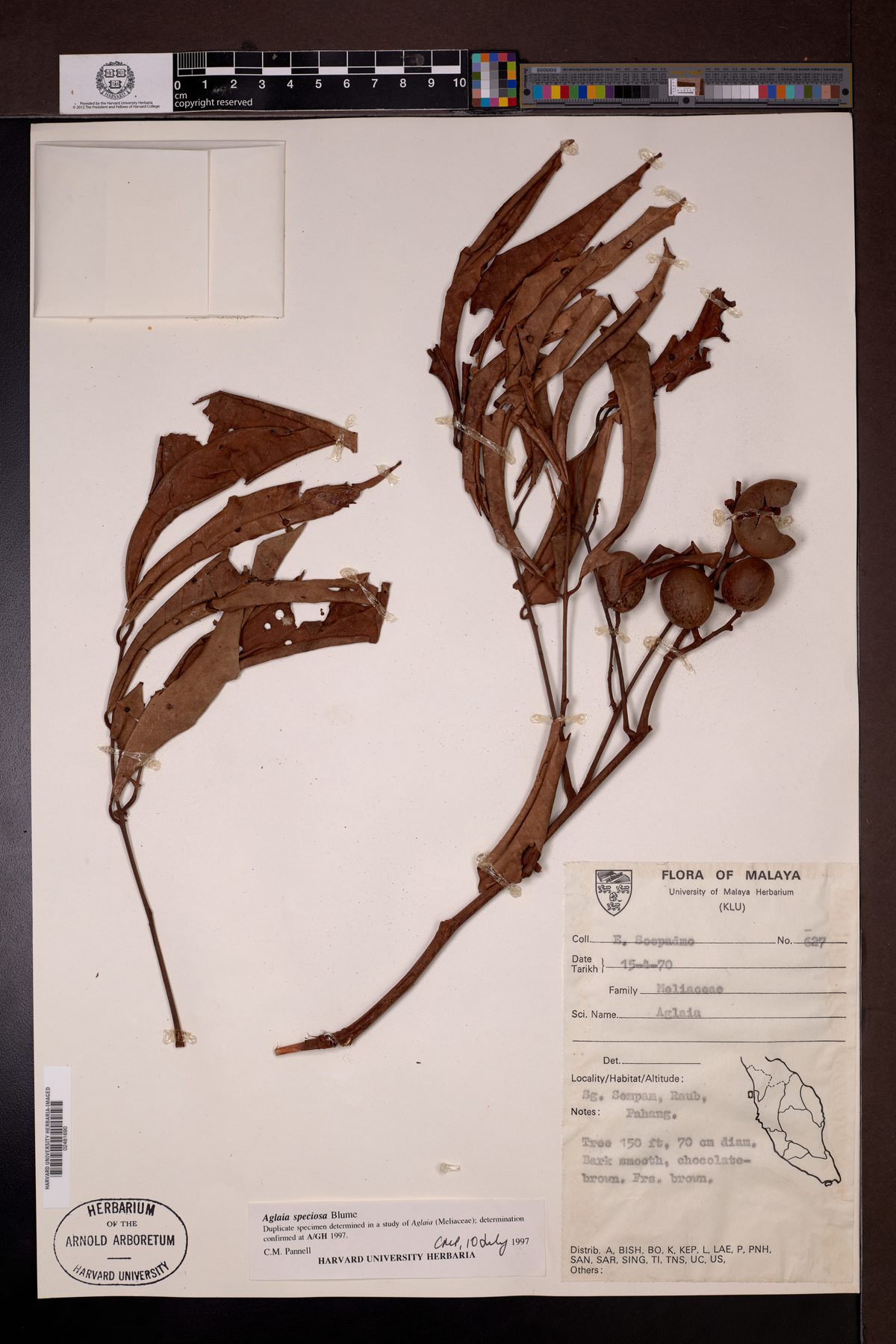
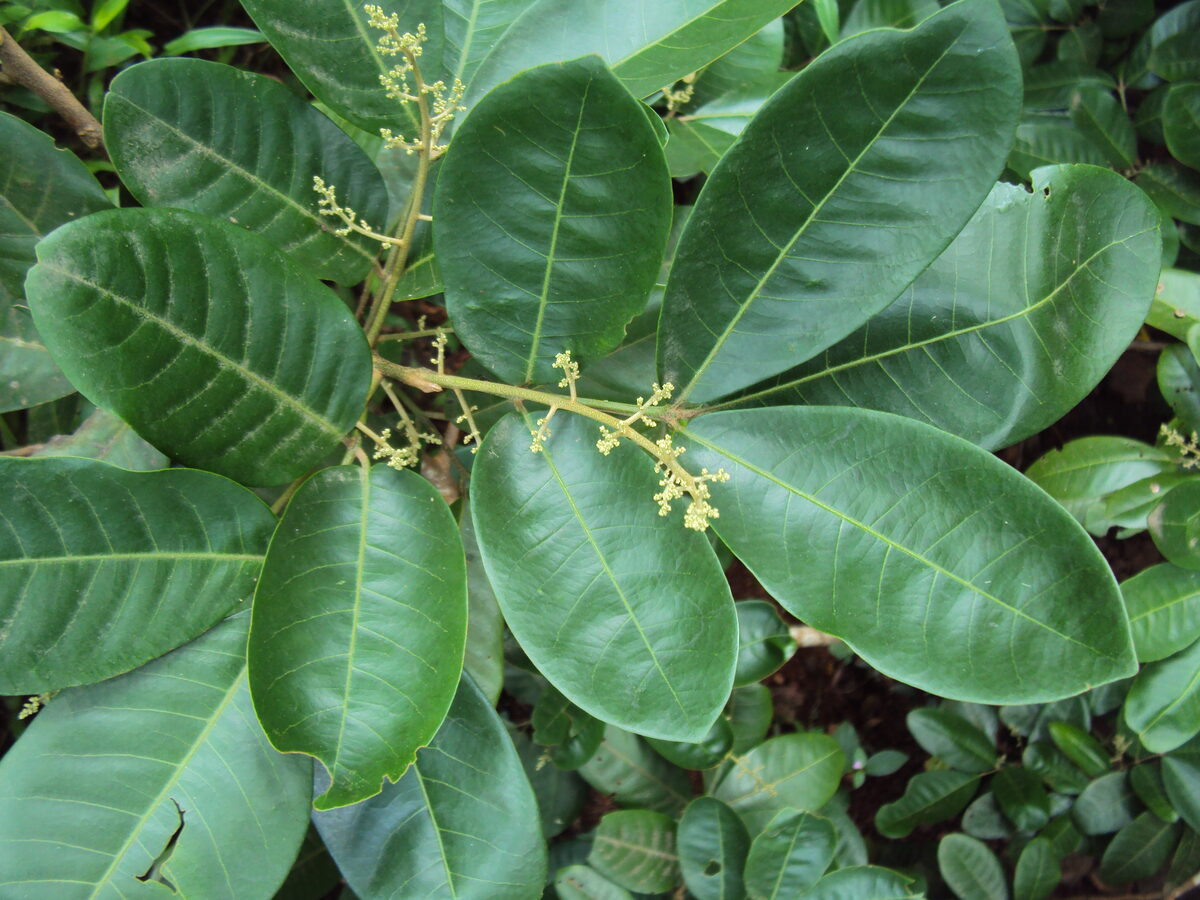
Aglaia oligophylla
Miq.
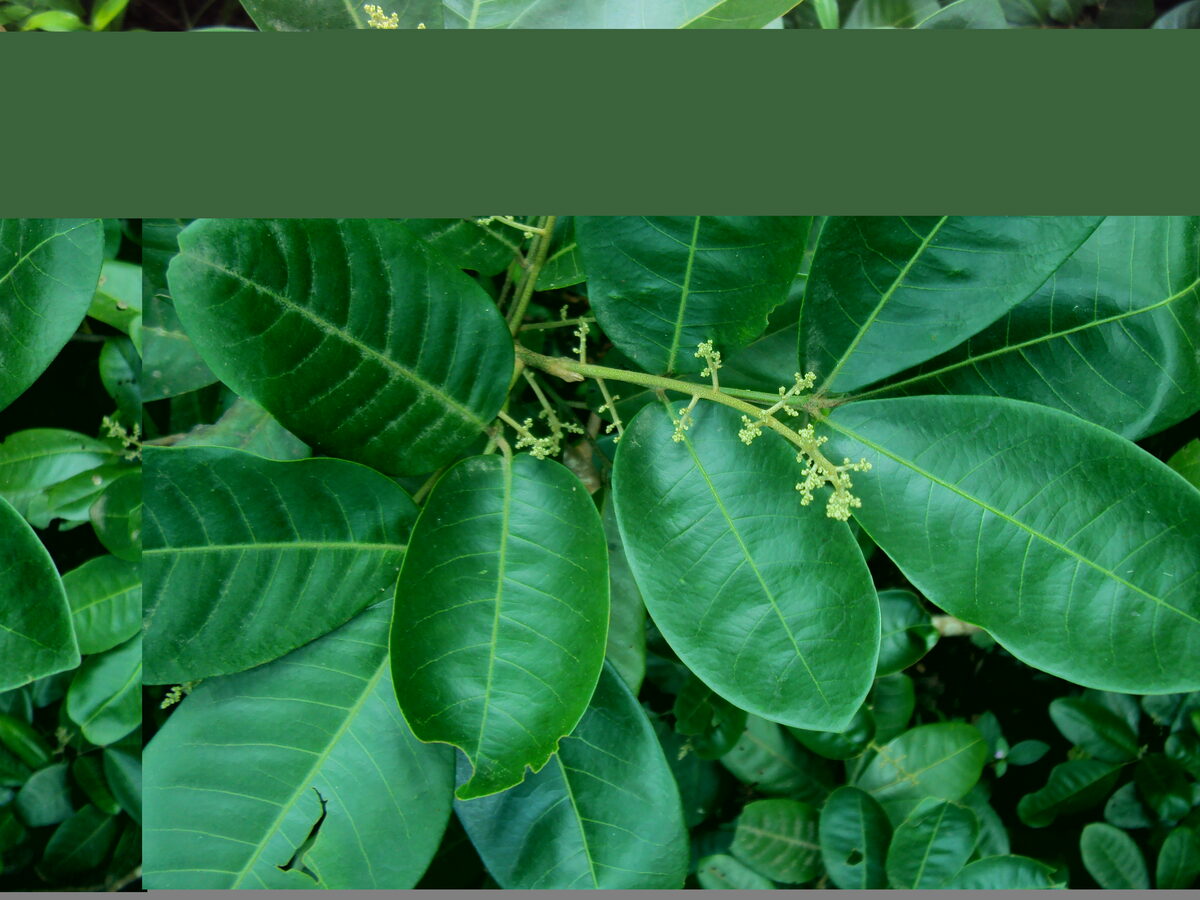
iNaturalist· cc-by-nc
(c) Akmal Idham, some rights reserved (CC BY-NC), uploaded by Akmal Idham
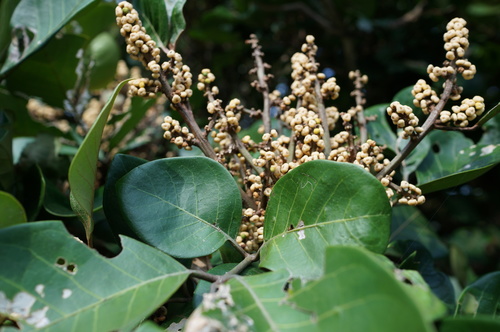
iNaturalist· cc-by-nc
(c) Andreas Berger, some rights reserved (CC BY-NC), uploaded by Andreas Berger
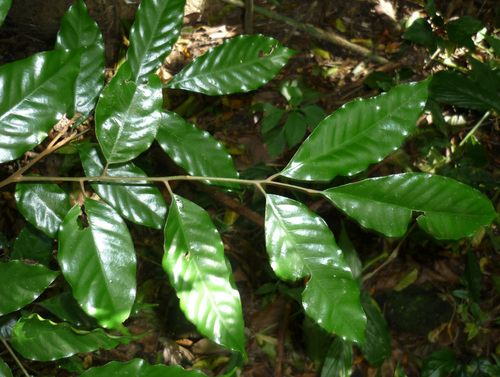
iNaturalist· cc-by-nc
(c) Andreas Berger, some rights reserved (CC BY-NC), uploaded by Andreas Berger
Summary
Source: WikipediaAglaia oligophylla is a species of plant in the family Meliaceae. It is found in Brunei, India, Indonesia, Malaysia, the Philippines, Singapore, and Thailand.
Description
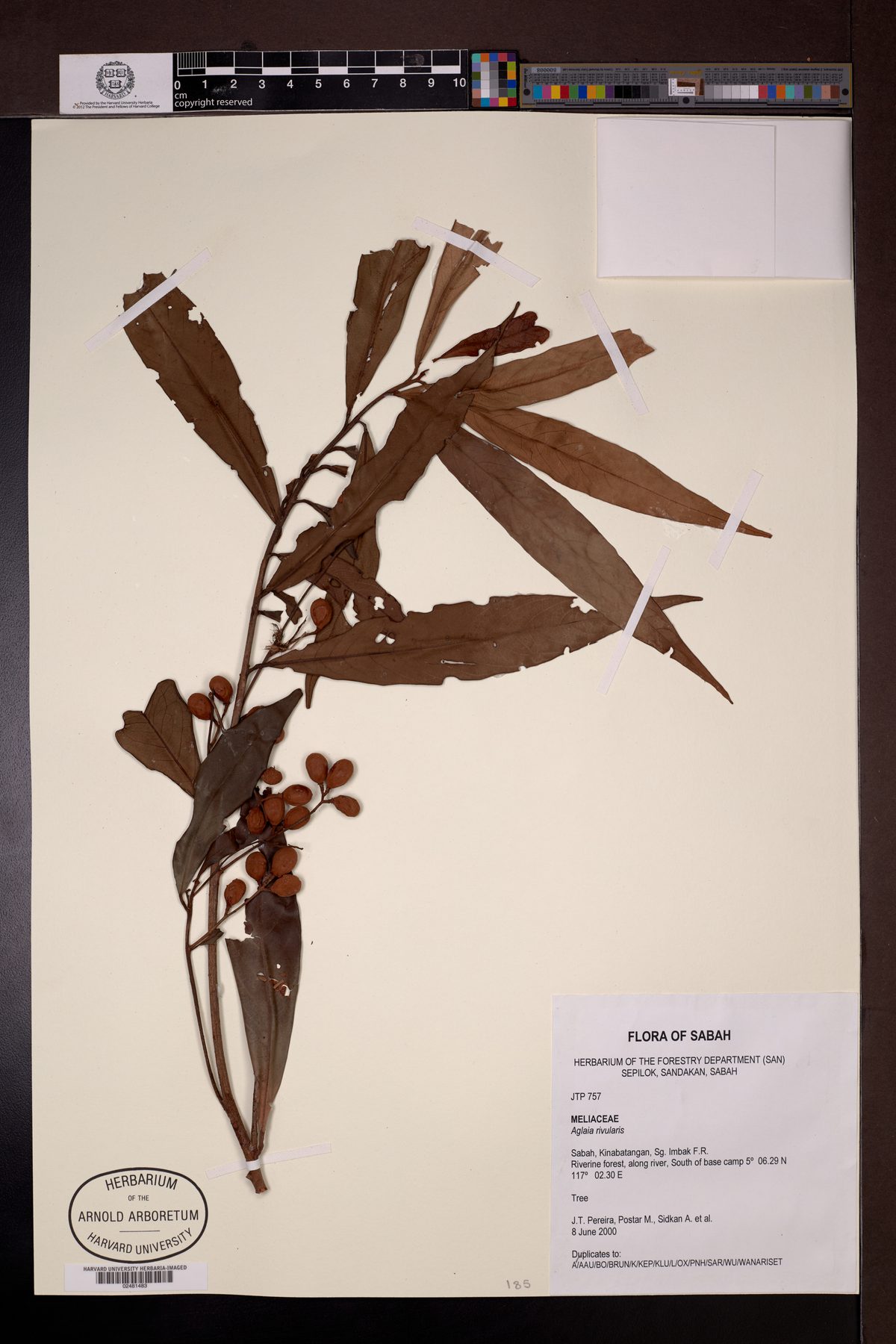
A small tree. It grows 7-20 m tall. The trunk is 15 cm across. The leaves are compound. There are 3-5 pairs of leaflets. The leaflets are leathery. They are oblong and taper to the tip. They are shiny on the upper surface. The fruit are reddish and have a covering. The fruit is a round berry. It is 1.5 cm across.
Edible Uses
The fruits, which are formed in bunches, are edible with an acid flavour. A sweet flavour. The translucent, gelatinous fleshy coating (aril) surrounding the seed is eaten. The fruit is about 1 - 3cm in diameter, containing 1 or 2 seeds.
Traditional Uses
The layer around the seed (aril) is edible. The fruit have an acid, edible juicy pulp.
This uses section is brief — help expand it
Medicinal Uses
The genus 'Aglaia' is the only source of the group of about 50 known representatives of compounds that bear a unique cyclopenta[b]tetrahydrobenzofuran skeleton. These compounds are more commonly called rocaglate or rocaglamide derivatives, or flavaglines, and most have been found to have potent insecticidal properties, antifungal, antiviral, antibacterial or anthelmintic bioactivity. Several of them exhibit pronounced cytotoxic activity against a range of human cancers. Since the first representative in this group was only discovered in 1982, this is one of the few recent examples of a completely new class of plant secondary metabolites of biological promise (see B. G. Wang et al., Biochem. Syst. Ecol. 32: 1223-1226. 2004; L.W. Chaidir et al., J. Nat. Prod. 64: 1216-1220. 2001).
Distribution
It is a tropical plant. It grows in low altitude forests. It is usually near streams in evergreen forest. In Thailand it grows from sea level to 800 m above sea level.
Where It Grows
Asia, Andamans, India, Indochina, Indonesia, Laos, Malaysia, Myanmar, Philippines, SE Asia, Thailand, Vietnam,
Cultivation
The plant is often found in the wild in Kerangas forest - a type of moist, heath forest found on acidic, sandy soils that are low in nutrients, especially nitrogen. A dioecious species, both male and female forms need to be grown if fruit and seed are required.
Other Uses
The genus 'Aglaia' is the only source of the group of about 50 known representatives of compounds that bear a unique cyclopenta[b]tetrahydrobenzofuran skeleton. These compounds are more commonly called rocaglate or rocaglamide derivatives, or flavaglines, and most have been found to have potent insecticidal properties, antifungal, antiviral, antibacterial or anthelmintic bioactivity. Several of them exhibit pronounced cytotoxic activity against a range of human cancers. Since the first representative in this group was only discovered in 1982, this is one of the few recent examples of a completely new class of plant secondary metabolites of biological promise (see B. G. Wang et al., Biochem. Syst. Ecol. 32: 1223-1226. 2004; L.W. Chaidir et al., J. Nat. Prod. 64: 1216-1220. 2001). The sapwood is pale orange-brown or pale yellow. The wood is used as timber.
Production
In Thailand it mostly flowers March to June and fruits April to August.
Notes
There are about 104 Aglaia species. They occur in Asia and the Pacific.
Synonyms
Also Known As
Ansa, Belangkas hutan, Langsat monyet, Mana-lau, Manatan, Pasak lingga, Potian, Sadapan luau, Segera, Soi-hang, Ta maeo pa
References (9)
- Argent, G et al, nd, Manual of the Larger and More important non Dipterocarp Trees of Central Kalimantan Indonesia. Volume 2 Forest Research Institute, Samarinda, Indonesia. p 412
- Bircher, A. G. & Bircher, W. H., 2000, Encyclopedia of Fruit Trees and Edible Flowering Plants in Egypt and the Subtropics. AUC Press. p 14 (As Aglaia euphorioides) (Also as Aglaia oligantha)
- Burkill, I.H., 1966, A Dictionary of the Economic Products of the Malay Peninsula. Ministry of Agriculture and Cooperatives, Kuala Lumpur, Malaysia. Vol 1 (A-H) p 73 (As Aglaia oligantha)
- Dodo, 2015, Keanekaragaman dan konservasi Tumbuhan Buah Langka Indonesia. Pusat Konservasi Tumbuhan Kebun Raya – LIPI. Warta Kebun Raya 13(2)
- Milow, P., et al, 2013, Malaysian species of plants with edible fruits or seeds and their evaluation. International Journal of Fruit Science. 14:1, 1-27
Show all 9 references Hide references
- Slik, F., www.asianplant.net
- Verheij, E. W. M. and Coronel, R.E., (Eds.), 1991, Plant Resources of South-East Asia. PROSEA No 2. Edible fruits and nuts. Pudoc Wageningen. p 313
- Wongprasert, T. et al, 2011, A Synoptic Account of the Meliaceae of Thailand. Thai For. Bull. 39:210-266
- World Checklist of Useful Plant Species 2020. Royal Botanic Gardens, Kew