Stereospermum neuranthum
Kurz
iNaturalist· cc-by-nc
(c) Wangworn Sankamethawee, some rights reserved (CC BY-NC), uploaded by Wangworn Sankamethawee
Summary
Source: WikipediaStereospermum neuranthum is the accepted name of an Asian tree species in the family Bignoniaceae. It is found in sub-tropical and tropical seasonal forests up to 1600 m in: southern China, northeast India, Myanmar, Thailand, Cambodia, Laos and Vietnam. Names include quao núi (also: ké núi, quao núi quả bốn cạnh) in Viet Nam; in China it is called 毛叶羽叶楸 mao ye yu ye qiu.
Description
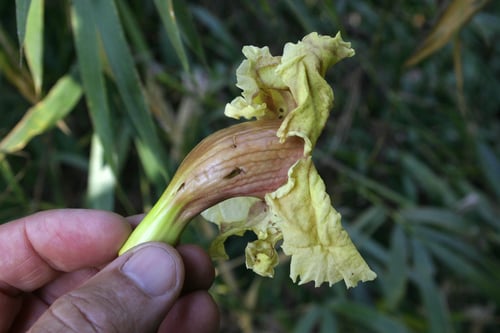
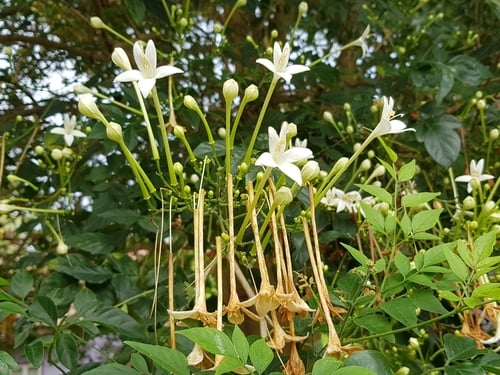
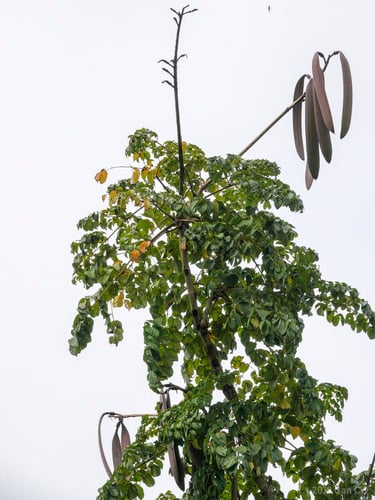
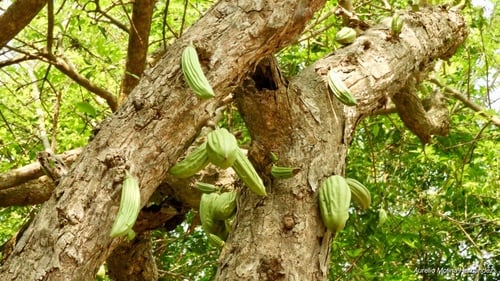
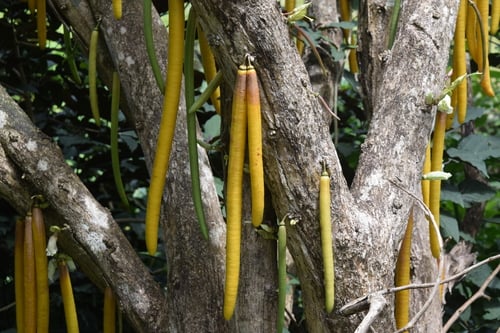
A tree. It loses its leaves during the year. It grows 12 m tall. The young branches are hairy. The leaves have 3-7 leaflets. These are broadly oval and 8-14 cm long by 5-10 cm wide. They are very hairy underneath. The flowers are in flat topped groups. They are pale purple. The fruit are long curved capsules. They are 20-47 cm long.
Distribution
It is a tropical plant. It grows on slopes and in forests between 500-1,600 m above sea level. In Yunnan.
Where It Grows
Asia, Indochina, Laos, Myanmar, SE Asia, Thailand,
Cultivation
The Asiatic species of Stereospermum are all deciduous trees that are most often located at lower elevations in the tropics and subtropics, growing in regions with a marked dry season and generally at elevations between 200 - 1,000 metres. Species in this genus generally grow best in a sunny position in a fertile, moist, well-drained soil.
Other Uses
The greyish-brown wood is hard and fairly heavy. It does not form heartwood. A useful timber.
Also Known As
Kandan, Latsen, Thanbe, Thande
References (1)
- Anderson, E. F., 1993, Plants and people of the Golden Triangle. Dioscorides Press. p 222