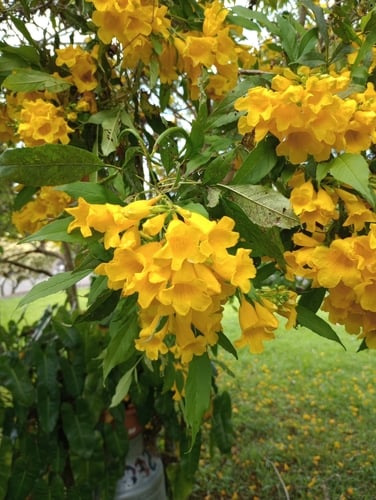
Campsis grandiflora
(Thunb.) K. Schum.
Chinese trumpet creeper
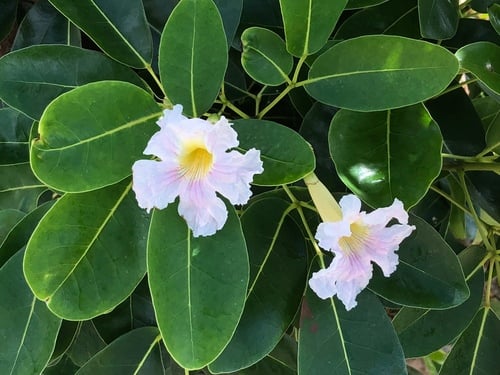
iNaturalist· cc-by
(c) Thomas Mesaglio, some rights reserved (CC BY)
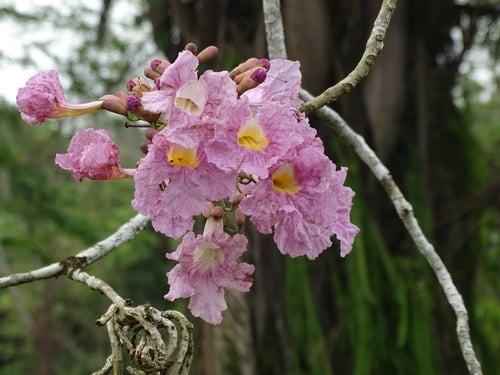
iNaturalist· cc-by
(c) Thomas Mesaglio, some rights reserved (CC BY)
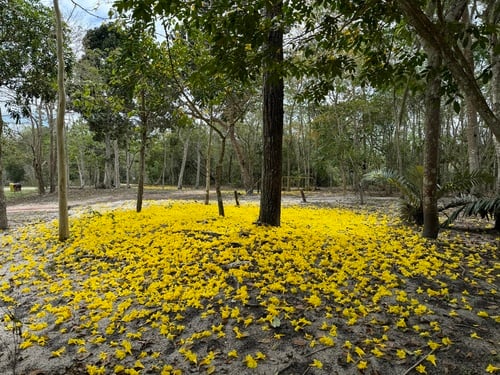
iNaturalist· cc-by
(c) Thomas Mesaglio, some rights reserved (CC BY)
Summary
Source: WikipediaCampsis grandiflora, commonly known as the Chinese trumpet vine, is a fast-growing, deciduous creeper with large, orange, trumpet-shaped flowers in summer. It can grow to a height of 10 meters. A native of East Asia, it is less hardy than its relative Campsis radicans. Campsis grandiflora prefers moist, nutrient-rich soil and a position with full sun and support to climb. The dark green leaves have serrated edges.
Description
A woody vine. The leaves have 7-9 leaflets. The leaflets are oval and 3-6 cm long by 2-3 cm wide. The base is broadly wedge shaped. The flowers are in a short panicles at the top of the plant. The flowers are red.
Edible Uses
No edible uses are known for this plant.
Medicinal Uses
The flowers and whole plant act as a blood tonic, carminative, depurative, diuretic, and febrifuge, and are used to treat women's complaints. A decoction of the flowers addresses menstrual disorders, rheumatoid pains, traumatic injuries, difficult urination, pruritis, and oozing dermaphytoses.
Distribution
It is a tropical plant. In Yunnan.
Where It Grows
Asia, China, India, Indochina, Japan, Korea, Myanmar, Pakistan, SE Asia, St Helena, Taiwan, Vietnam,
Propagation
Sow seed in spring in a greenhouse at 10°C. Two months of stratification at 5°C improves germination. Prick seedlings into individual pots once large enough to handle and grow on under glass through at least their first winter, then plant out in late spring or early summer after the last frost. Take cuttings of nearly ripe wood, 7–10cm long, in July or August in a frame — these are slow to root but give a fair success rate. Root cuttings 5cm long taken in December yield fair to good results. Suckers can be divided during the dormant season. Layering in winter is also effective, and plants frequently self-layer.
Other Uses
Plants can be left to scramble along the ground, rooting at intervals along the branches to form effective ground cover. Space plants approximately 2.5 metres apart in each direction.
Synonyms
References (1)
- Liu, Yi-tao, & Long, Chun-Lin, 2002, Studies on Edible Flowers Consumed by Ethnic Groups in Yunnan. Acta Botanica Yunnanica. 24(1):41-56