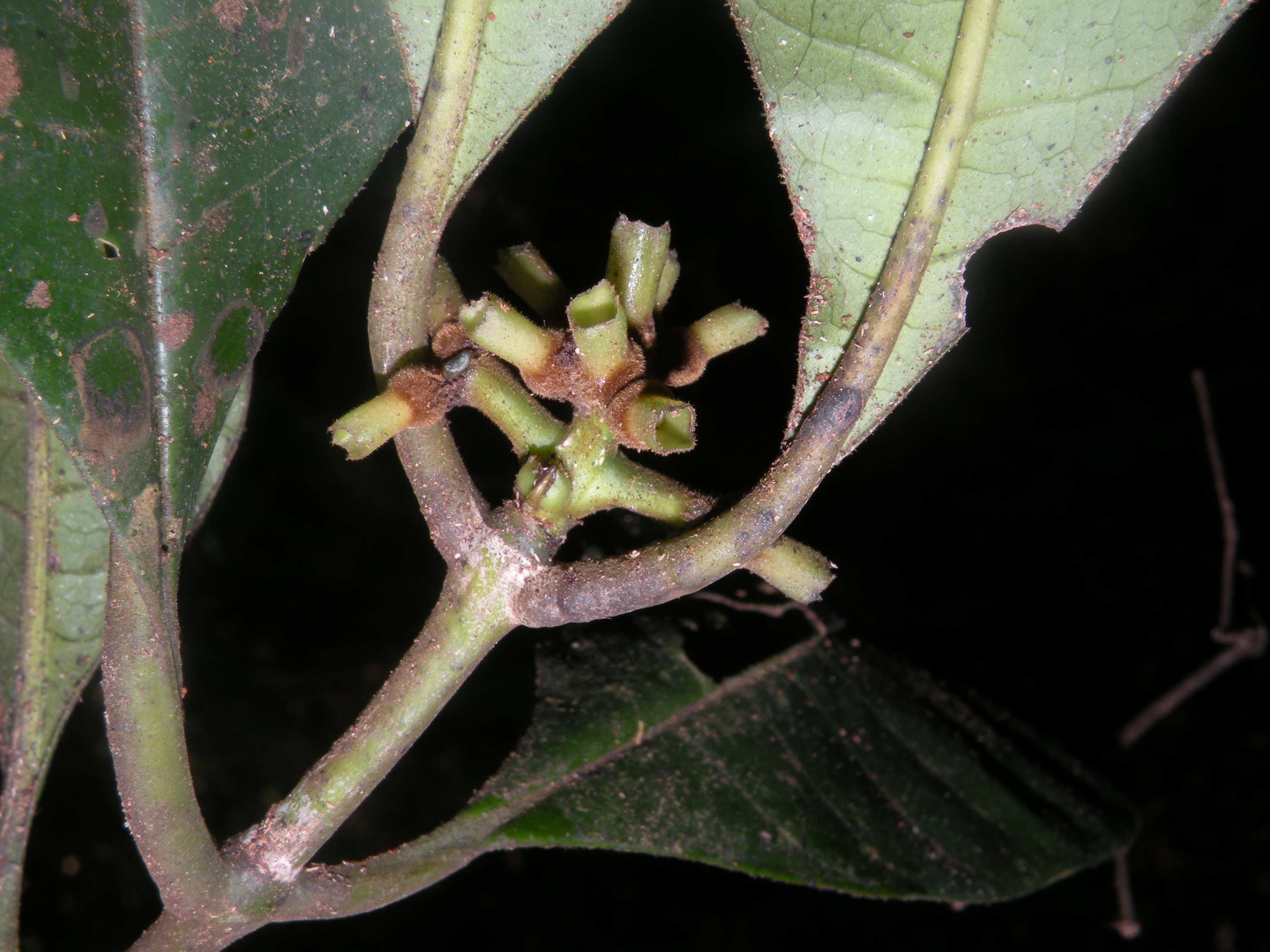
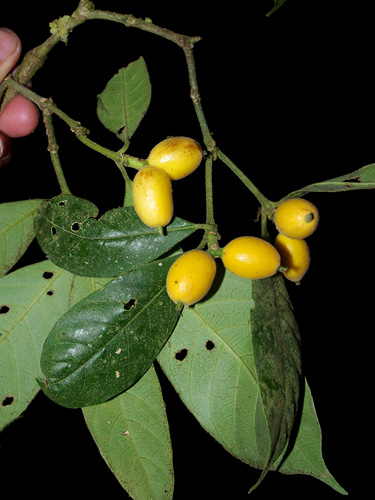
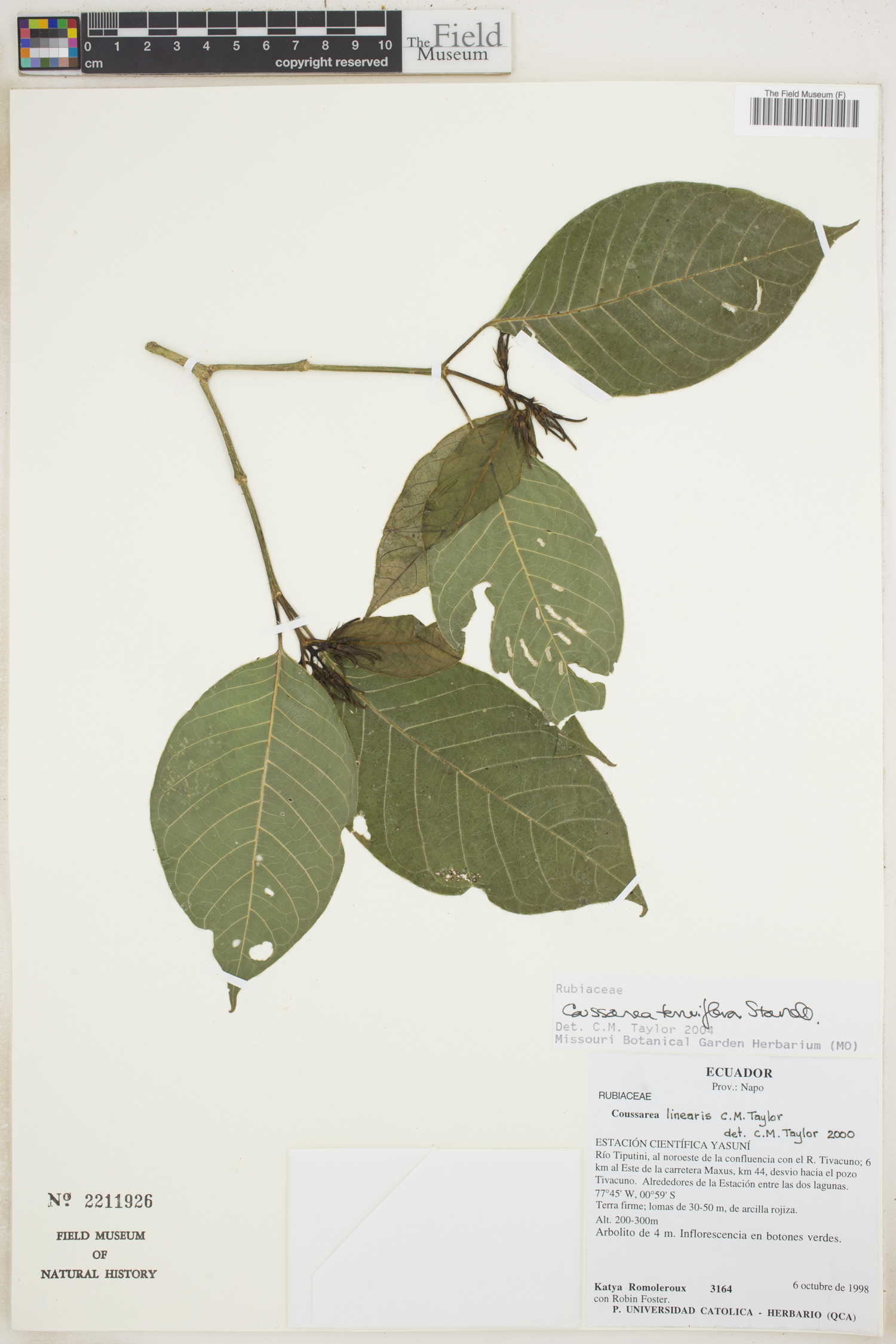
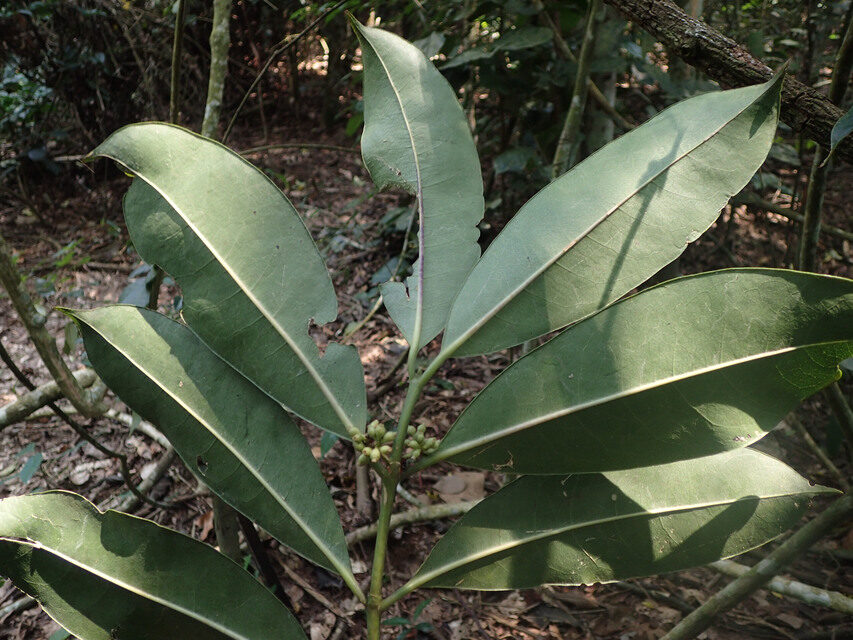
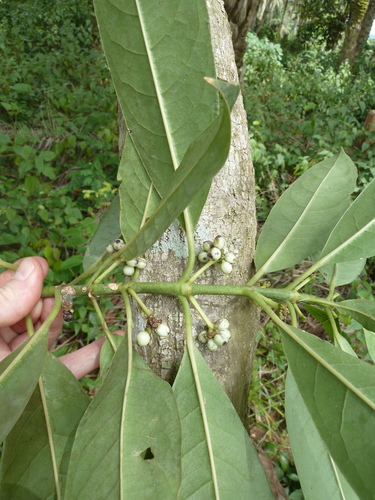
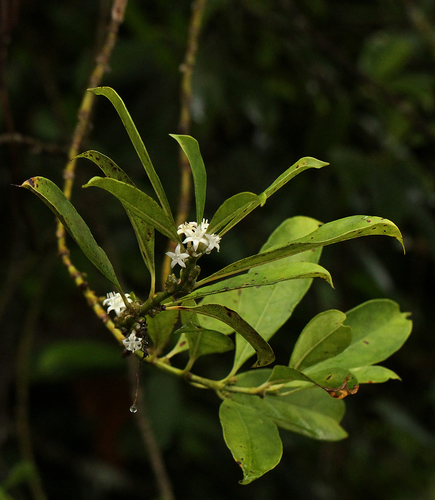
Hymenodictyon orixense
(Roxb.) Mabberley
Mountain sage tree
iNaturalist· cc-by
(c) Siddarth Machado, some rights reserved (CC BY), uploaded by Siddarth Machado
iNaturalist· cc-by-nc
(c) Arun N, some rights reserved (CC BY-NC)
iNaturalist· cc-by-nc
(c) Arun N, some rights reserved (CC BY-NC)
Summary
Source: WikipediaHymenodictyon orixense (syn. Hymenodictyon excelsum) is a species of flowering plant in the family Rubiaceae. It is found in the Indian Subcontinent, south-central China, Mainland Southeast Asia, and the Philippines.
Description
A tree. It loses its leaves during the year. It grows 25 m tall. The bark is smooth and grey. The leaves are often grouped near the ends of branches. The leaves are narrowly oval and 9-22 cm long by 6-14 cm wide. The flowers are near the ends of branches. They are white or brown. The fruit is an oval capsule 2-3 cm long. There are many flat seeds.
Medicinal Uses
The leaves are used medicinally to relieve tooth ache.
Distribution
It is a tropical plant. It grows in forests along rivers between 100-1,700 m above sea level. In Sichuan and Yunnan.
Where It Grows
Asia, Bangladesh, Cambodia, China, Himalayas, India, Indochina, Indonesia, Laos, Malaysia, Myanmar, Nepal, Philippines, SE Asia, Thailand, Vietnam,
Cultivation
Plants can be grown by seeds.
Propagation
Seed - direct seeding is not recommended as the seed is very small (about 170 000 seeds/kg) and easily washed away. The seed usually germinates easily, but loses its viability within a year. It should be sown in seed-beds and lightly covered with fine soil or fine sand and watered frequently, but sparingly. The first seedlings appear after 10 days, when 2 - 3 months old they can be pricked out into containers. The more vigorous seedlings can be planted out after one year, others should be kept in the nursery for another year. Seedlings are light-demanding and easily killed by weeds.
Other Uses
The heartwood is white when fresh, becoming yellow-grey or pale grey-brown on exposure, not clearly demarcated from the sapwood; grain straight; texture moderately fine to slightly coarse and even. The wood is soft to moderately hard and moderately strong. It works very easily and turns well. The wood is not durable when exposed to the weather or in contact with the ground and is moderately resistant to preservative treatment. It is somewhat liable to borers, especially when left debarked. The wood is used locally in house building, e.g. for planks, and sometimes for boats; it is also used for boxes, scabbards, packing-cases, implements, toys and matches. In India it has been recommended for cheaper grades of furniture, warper bobbins and wood-wool board.
Notes
The leaf is used as medicine to relieve tooth ache.
Synonyms
Also Known As
Bridle couch tree, Dumsa-gyaw, Itthilei, Kadappu, Khu-than, Kuthan, Mai-son-pu, Malam kall, Nicham kadambu, Nirkadambam, Ovlok, Peruntholi, Pohon aligango, Pohon sage gunung, Vellai-kadambu, Vellakadamba, Vetkadampu
References (5)
- Anderson, E. F., 1993, Plants and people of the Golden Triangle. Dioscorides Press. p 213
- Kachenchart, B., et al, 2008, Phenology of Edible Plants at Sakaerat Forest. In Proceedings of the FORTROP II: Tropical Forestry Change in a Changing World. Bangkok, Thailand.
- Masoodi, H. U. R. & Sundriyal, R. C., 2020, Richness of non-timber forest products in Himalayan communities—diversity, distribution, use pattern and conservation status. Journal of Ethnobiology and Ethnomedicine 16:56 (As Hymenodictyon excelsum)
- Sukarya, D. G., (Ed.) 2013, 3,500 Plant Species of the Botanic Gardens of Indonesia. LIPI p 335
- Turreira Garcia, N., et al, 2017, Ethnobotanical knowledgeof the Kuy and Khmer people in Prey Lang, Cambodia. Cambodian Journal of Natural History 2017 (1): 76-101