Semecarpus australiensis
Engl.
Tar tree, Marking nut, Australian cashew nut
iNaturalist· cc-by-sa
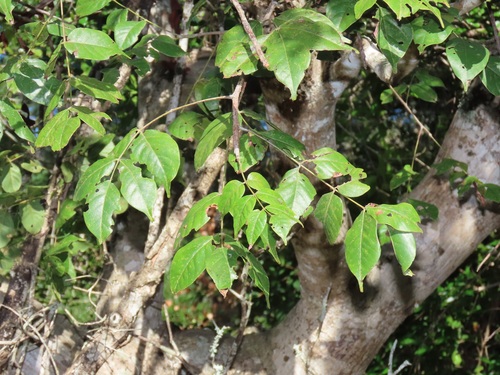
(c) Steve Fitzgerald, some rights reserved (CC BY-SA), uploaded by Steve Fitzgerald
iNaturalist· cc-by
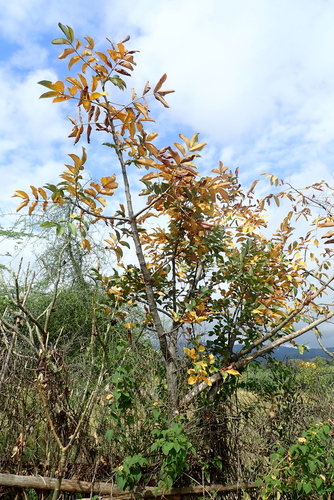
(c) coenobita, some rights reserved (CC BY), uploaded by coenobita
iNaturalist· cc-by
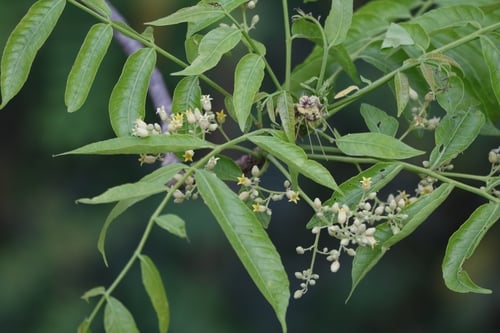
(c) coenobita, some rights reserved (CC BY), uploaded by coenobita
Summary
Source: WikipediaSemecarpus australiensis, commonly known as the tar tree, native cashew, marking nut, or cedar plum, is a species of tree in the cashew and mango family Anacardiaceae, native to parts of Melanesia and northern Australia. Contact with the plant can cause serious allergic reactions, a common characteristic of this family.
Description
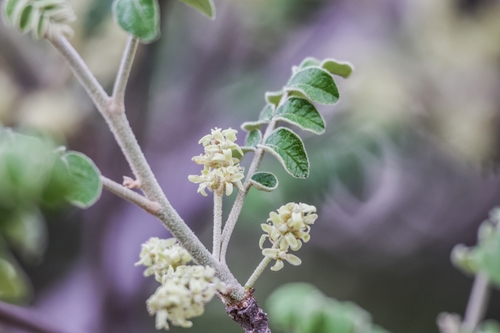
A small evergreen tree, although it can lose many of its leaves during the year. It grows to 5-10 m tall and spreads to 2 m wide. Trees can be 40 m high. It has a dense round crown. The stem is erect and branching. The bark is smooth and brown. The leaves are simple and oblong. They are produced alternately along the branch. They are 10-30 cm long and 4-12 cm wide. The leaves are dark green above and much paler underneath. The veins are prominent and raised underneath the leaf. The leaf stalk is 1-2.5 cm long. Male and female flowers occur on separate trees. The flowers are very small and greenish white and at the ends of branches. The flowering branches can be 10-30 cm long and flowers 0.5 cm across. Male flowers do not have stalks and are smaller than female flowers. The fruit are round and brown. They are 2-3 cm wide. They have a coarse leathery skin. They are attached to a swollen fleshy orange base. They contain one seed.
Edible Uses
The fruit kernel is eaten after careful preparation and cooking. The fleshy fruit stalk is eaten when fully ripe and after peeling.
Traditional Uses
The fruit kernel is eaten after careful preparation and cooking. The fleshy fruit stalk is eaten when fully ripe and after peeling. Caution: Parts of the plant are highly toxic.
Known Hazards
Like many other species in the family Anacardiaceae, this tree may cause severe allergic responses after contact with it. The agents responsible for the allergies are resinous phenolic compounds found in most parts of the plant, including the fruits and the exudate from the trunk and branches. Direct contact with the tree is not necessary to elicit the allergic response; in March 1954, an article appeared in the local newspaper in Cairns, Australia, describing how a number of children suffered rashes after swimming in a stream beneath a tar tree.
Distribution
It is a tropical plant. It does best in sandy, moist soils. They need to be well-drained. It needs an open sunny position. It is damaged by drought and frost. Plants grow naturally in coastal areas in monsoon forests. They normally grow in areas with a seasonal climate. In Townsville palmetum.
Where It Grows
Australia*, Pacific, Papua New Guinea, PNG, Torres Strait,
Cultivation
Plants are grown by seed. Seed need to be planted fresh.
Production
In Australia, flowering is August to October and fruiting from November to January (February).
Notes
The sap can irritate the skin.
Synonyms
Also Known As
Dua, Kajuwiji, Mepa
References (24)
- Bodkin, F., 1991, Encyclopedia Botanica. Cornstalk publishing, p 924
- Brock, J., 1993, Native Plants of Northern Australia, Reed. p 297 (Photo)
- Checklist of NT Vascular Plant Species. January 2003.
- Cherikoff V. & Isaacs, J., The Bush Food Handbook. How to gather, grow, process and cook Australian Wild Foods. Ti Tree Press, Australia p 201
- Cooper W & Cooper W T, 1994, Fruits of the Rain Forest. RD Press p 256
Show all 24 references Hide references
- Cooper, W. and Cooper, W., 2004, Fruits of the Australian Tropical Rainforest. Nokomis Editions, Victoria, Australia. p 18
- Cribb, A.B. & J.W., 1976, Wild Food in Australia, Fontana. p 58
- Ding Hou, 1978, Anacardiaceae in Flora Malesiana Series 1 Vol 8(3) p 510
- Fell, D.G. & Stanton, D.J., 2015: The vegetation and flora of Mabuyag, Torres Strait, Queensland. Memoirs of the Queensland Museum – Culture 8(1):1-33. Brisbane. ISSN 1440-4788.
- Henty, E.E., 1980, Harmful Plants in Papua New Guinea. Botany Bulletin No 12. Division Botany, Lae, Papua New Guinea. p13
- Hinton, B & B., 1982, A Wilderness in Bloom. Wildflowers of tropical Australia. p 23
- Isaacs, J., 1987, Bush Food, Aboriginal Food and Herbal Medicine. Weldons. p 85
- Jackes, B.R., 2001, Plants of the Tropics. Rainforest to Heath. An Identification Guide. James Cook University. p 39
- Janick, J. & Paul, R. E. (Eds.), 2008, The Encyclopedia of Fruit & Nuts. CABI p 29
- Low, T., 1991, Wild Food Plants of Australia. Australian Nature FieldGuide, Angus & Robertson. p 96
- Low, T., 1992, Bush Tucker. Australia’s Wild Food Harvest. Angus & Robertson. p 91
- Morley, B.D., & Toelken, H.R., (Eds), 1983, Flowering Plants in Australia. Rigby. p 190
- Mua Bioversity Profile, 2013, Profile for Management of the Habitats and Related Ecological and Cultural Resources of Mua Island. Torres Strait Regional Authority Land & Sea Management Unit. p 152
- Scarth-Johnson, V., 2000, National Treasures. Flowering Plants of Cooktown and Northern Australia. Vera Scarth-Johnson Gallery Association. Cooktown, Australia. p 122
- Smith, N. M., 1991, Ethnobotanical Field Notes from the Northern Territory, Australia, J. Adelaide Bot. Gard. 14(1): 1-65
- Tiwi Plants and Animals. 2001, Aboriginal flora and fauna knowledge from Bathurst and Melville Islands, northern Australia. Northern Territory Botanical Bulletin; No. 24 p 78
- Townsend, K., 1994, Across the Top. Gardening with Australian Plants in the tropics. Society for Growing Australian Plants, Townsville Branch Inc. p 333
- World Checklist of Useful Plant Species 2020. Royal Botanic Gardens, Kew
- Yunupinu Banjgul, Laklak Yunupinu-Marika, et al. 1995, Rirratjinu Ethnobotany: Aboriginal Plant Use from Yirrkala, Arnhem Land, Australia. Northern Territory Botanical Bulletin No 21. Parks and Wildlife Commission of the Northern Territory. p 69