Senegalia caffra
(Thunb.) P.J.H. Hurter & Mabb.
Common hook thorn
iNaturalist· cc-by-nc
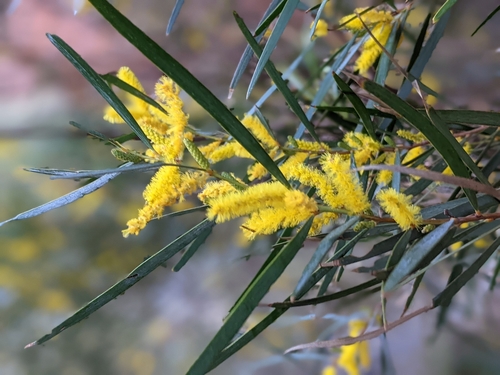
(c) Reuben Heydenrych, some rights reserved (CC BY-NC)
iNaturalist· cc-by-nc
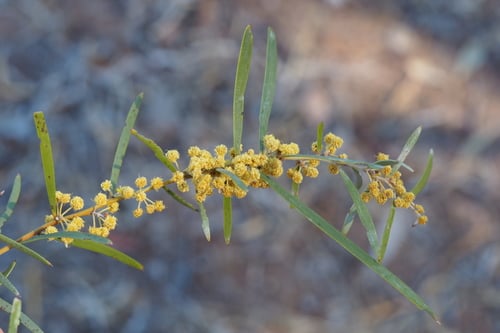
(c) anneliselr, some rights reserved (CC BY-NC)
iNaturalist· cc-by-nc
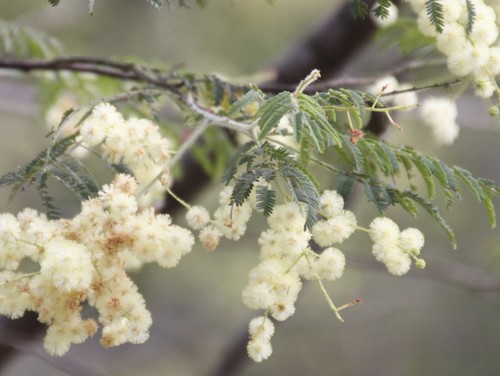
(c) anneliselr, some rights reserved (CC BY-NC)
Description
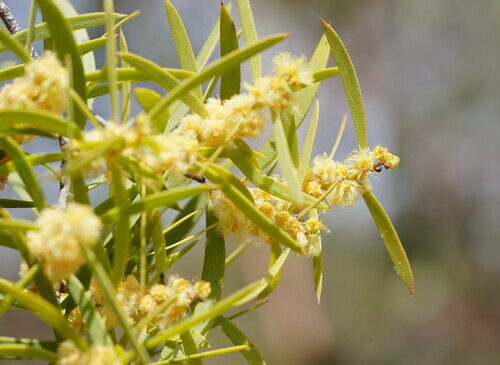
A tree. It grows 14 m high. The crown is irregular and spreading. The trunk is often twisted. The bark is greyish-brown and smooth when young. It peels off in long strips. The branches have short, sharp, hooked thorns that occur in pairs. The leaves are bright green and droop. It loses its leaves during the year. The leaves are compound and feathery with many leaflets. The flowers are cream coloured spikes. The fruit are narrow, straight seed pods. The seeds are brown. They are small and flat.
Edible Uses
The leaves are edible.
Medicinal Uses
Parts of the tree are used by the Bantu in traditional herbal medicine for curing a large range of complaints. A decoction of the leaves is drunk to treat colds and fever. A leaf decoction, combined with milk, is used as an enema to treat abdominal complaints in children. The leaves are sometimes chewed for the same purpose. A bark infusion is administered as a blood purifier. A number of proteracacinidins (proanthocyanidins) have been isolated from the heartwood, and several cyanogenic glycosides from the leaves The magical uses in South Africa are numerous. A sprig is placed over a bed to war off evil. It is used in money and love spells and the burned wood stimulates psychic powers
Known Hazards
The leaves and pods are eaten by livestock, but may cause poisoning. Especially in times of drought, many Acacia species can concentrate high levels of the toxin Hydrogen cyanide in their foliage, making them dangerous for herbivores to eat.
Distribution
It is a tropical and subtropical plant. It grows from the coast to the high veld grasslands. It can survive fire. It can tolerate frost and drought. In Indonesia it grows up to 2,000 m above sea level.
Where It Grows
Africa, Asia, Botswana, East Africa, Eswatini, Indonesia, Mozambique, SE Asia, South Africa, Southern Africa, Swaziland, Zimbabwe,
Cultivation
Plants are easy to grow from seeds. The seeds need hot water treatment before they will germinate. The hot water can simply be poured over them. They are best sown directly as the taproot limits transplanting.
Propagation
Seed - it has a hard seedcoat and may benefit from scarification before sowing to speed up germination. This can usually be done by pouring a small amount of nearly boiling water on the seeds (being careful not to cook them!) and then soaking them for 12 - 24 hours in warm water. By this time they should have imbibed moisture and swollen - if they have not, then carefully make a nick in the seedcoat (being careful not to damage the embryo) and soak for a further 12 hours before sowing. It is best to sow directly into deep pots as the young plant quickly forms a long taproot and is sensitive to transplanting.
Other Uses
The bark is a source of tannins. Baskets are made from the twigs. The heartwood is dark brown; it is distinctly demarcated from the creamy sapwood. The texture is moderately fine to moderately coarse, the wood is heavy, dense and hard. It seasons without serious defects. Beautifully grained, it is used for making furniture and fence poles. The beautiful root wood is highly valued locally for making tobacco pipes. The wood is used as a fuel. The plant has a light canopy and also fixes atmospheric nitrogen, allowing many plants to grow successfully close to its trunk and thus making it an excellent tree for agroforestry systems.
Notes
Also as Mimosaceae.
Synonyms
Also Known As
Cat thorn, Gewone haakdoring, Katdoring, Mbenyasehloka, Morulhare, Morutihatsane, Morutihatshana, Morutlhare, Morutlharsana, Morutlhatana, Moritilhware, Mositsane, Motholo, Muguhwa, Mukuka, Mupumpu, Ndhengha, Pohon akasia durikait, Tole, umTholo, Uhagabitsh, Umgamanzi, Umkaya, Umnga, Umtholo
References (6)
- Fox, F. W. & Young, M. E. N., 1982, Food from the Veld. Delta Books. p 199 (As Acacia caffra)
- Plowes, N. J. & Taylor, F. W., 1997, The Processing of Indigenous Fruits and other Wildfoods of Southern Africa. in Smartt, L. & Haq. (Eds) Domestication, Production and Utilization of New Crops. ICUC p 184 (As Acacia caffra)
- Ruiters-Welcome, A. K., 2019, Food plants of southern Africa. Ph.D. thesis. Univ. of Johannesburg p 60
- Sukarya, D. G., (Ed.) 2013, 3,500 Plant Species of the Botanic Gardens of Indonesia. LIPI p 98 (As Acacia caffra)
- van Wyk, Ben-Erik, 2019, The diversity and multiple uses of southern African legumes. Australian Systematic Botany, 2019, 32, 519–546
Show all 6 references Hide references
- Welcome, A. K. & Van Wyk, B.-E., 2019, An inventory and analysis of the food plants of southern Africa. South African Journal of Botany 122 (2019) 136–179