Senna petersiana
(Bolle) Lock
Eared Senna, Monkey pod, Dwarf cassia
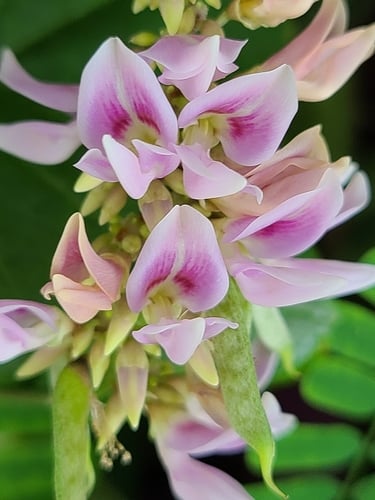
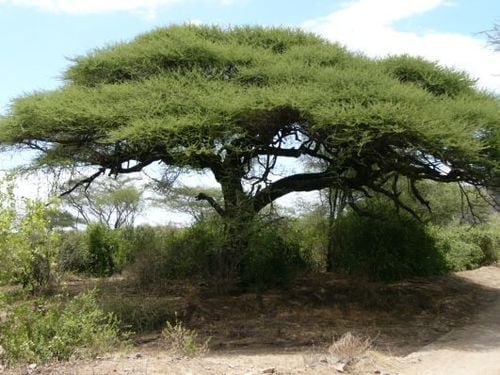
iNaturalist· cc-by-nc
(c) Daniël Erasmus, some rights reserved (CC BY-NC), uploaded by Daniël Erasmus
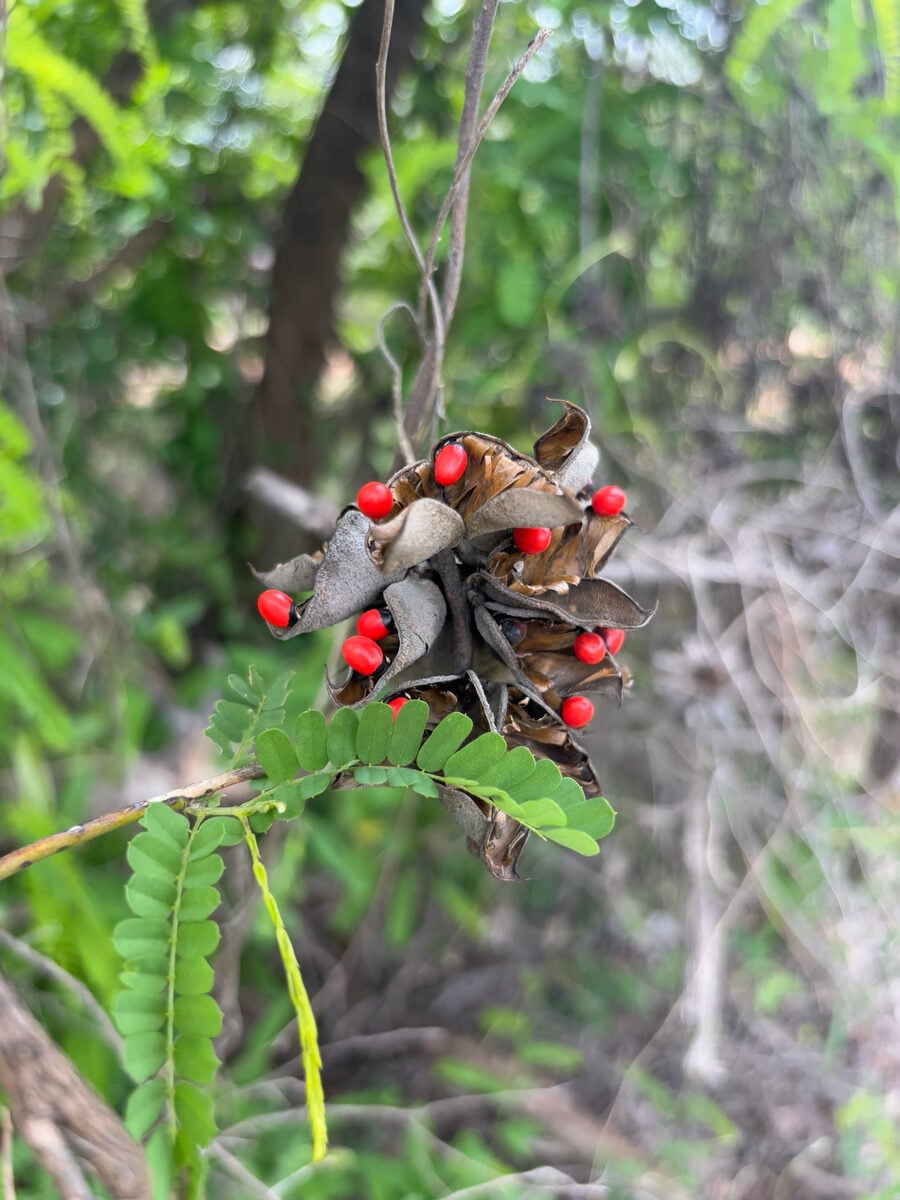
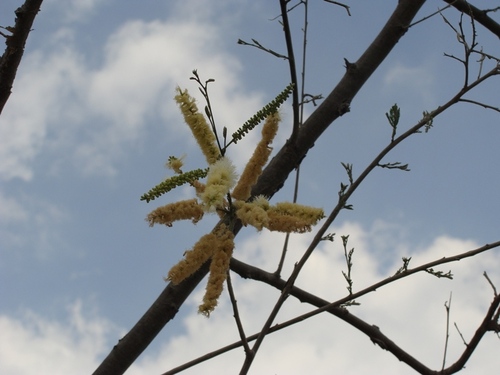
iNaturalist· cc-by-nc
(c) william_gummow, some rights reserved (CC BY-NC)
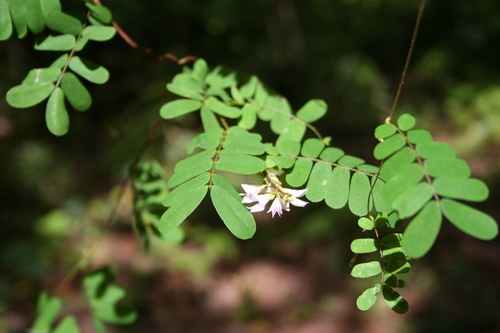
iNaturalist· cc-by-nc-sa
(c) Rob Palmer, some rights reserved (CC BY-NC-SA)
Summary
Source: WikipediaSenna petersiana, the monkey pod or eared senna, is an African deciduous shrub or small tree. The leaves are compound with about 12 opposite lanceolate leaflets, dark green above and lighter below. Its copious bright yellow flowers are carried on erect multi-branched inflorescences. The species was formerly placed in the genus Cassia. It occurs naturally in Cameroon, Central African Republic, DRC, South Sudan, Ethiopia, Kenya, Tanzania, Mozambique, Zimbabwe, South Africa and Eswatini. It was introduced to several Indian Ocean islands and became naturalized in far northern Madagascar. There are little to no animals containing it in their diet, however it is beneficial in medicine for treating constipation, intestinal worms and possibly diabetes. It is also thought to help fight against MCF-7 Cancer cells.
Description
A shrub or small tree that loses its leaves during the year. It grows 7 m high. It is slightly hairy. The stems are slender and grey. The leaves are up to 15-26 cm long. These have leafy structures (stipules) at their base. They have 6-11 pairs of leaflets. The leaflets have short stalks and taper to the tip. They are 4 cm long by 1.5 cm wide. They are dark green and glossy but can be slightly hairy underneath. There is a gland between each pair of leaflets. The flowers are in groups 15 cm long in the axils of leaves. They are also in large branching groups at the ends of branches. They are yellow and have a scent. The fruit are pods 20 cm long and 1.2 cm wide. They hang down. They are dark coloured and have a thickened edge and are slightly curved. They have many seeds. The seeds are edible.
Edible Uses
The sweet pods are eaten raw or boiled into a gruel. The seeds are eaten fresh and are particularly popular with children. The fruit and seeds are fermented to make an alcoholic drink.
Traditional Uses
The pod is eaten raw. It is sweet. The pods are also boiled to make a gruel. The fruit and seeds are fermented to make an alcoholic drink. The seeds are eaten and popular with children.
Medicinal Uses
The plant is widely used as a purgative to treat constipation, stomach-ache and intestinal worms by drinking an infusion or decoction of the roots, or less often, by using fresh leaves. In southern Africa medicinal uses include the treatment of malaria, schistosomiasis, gonorrhoea and syphilis. The roots are used to treat malaria. The active constituents of leaves, bark, roots and pods are anthraquinone glycosides. These compounds are responsible for the purgative activity. The seeds contain the flavone luteolin. The ethanol extract of the seeds and luteolin were tested for antiviral activity and showed some activity at the highest non-toxic concentrations; luteolin also showed antibacterial activity. The methanol and water extract of the leaves showed some schistosomicidal activity in vitro. Both leaves and roots have shown antimalarial activity in vitro.
Distribution
It is a tropical plant. It grows from sea level to 2,500 m altitude. It can grow in arid places. A plant of tropical and warm climates. In Brisbane Botanical Gardens.
Where It Grows
Africa, Australia, Cameroon, Central Africa, Central African Republic, CAR, Congo, East Africa, Eswatini, Ethiopia, Kenya, Madagascar, Malawi, Mozambique, Rwanda, South Africa, Southern Africa, Sudan, Swaziland, Tanzania, Uganda, Zambia, Zimbabwe,
Cultivation
Although many species within the family Fabaceae have a symbiotic relationship with soil bacteria, this species is said to be devoid of such a relationship and therefore does not fix atmospheric nitrogen.
Propagation
Seed - it has a hard seedcoat and may benefit from scarification before sowing in order to speed up and improve germination. This can usually be done by pouring a small amount of nearly boiling water on the seeds (being careful not to cook them!) and then soaking them for 12 - 24 hours in warm water. By this time they should have imbibed moisture and swollen - if they have not, then carefully make a nick in the seedcoat (being careful not to damage the embryo) and soak for a further 12 hours before sowing.
Other Uses
The wood is light in weight. It is used to make tool handles. The wood used for fuel.
Other Information
It is eaten especially by children.
Notes
Also as Caesalpinaceae.
Synonyms
Also Known As
Aiuandet, Bwembanyani, Chebaywa, Gudimoch, Kivukelele, Leleba-mar, Lifahlawane, Lijoye, Mbaraka, Mpatsachokolo, Mtakanyere, Mulambadivhum Munambinambi, Munembenembe, Nembe-nembe, Nembenembe, Ntantanyerere, Ntelewe, Ntowe Mnyasole, Pelepago, Peperepe, Wiwoo wiwoo
References (24)
- Asfaw, Z. and Tadesse, M., 2001, Prospects for Sustainable Use and Development of Wild Food Plants in Ethiopia. Economic Botany, Vol. 55, No. 1, pp. 47-62
- FAO, 1988, Traditional Food Plants, FAO Food and Nutrition Paper 42. FAO Rome p 159 (As Cassia petersiana)
- Fowler, D. G., 2007, Zambian Plants: Their Vernacular Names and Uses. Kew. p 31
- Fox, F. W. & Young, M. E. N., 1982, Food from the Veld. Delta Books. p 205 (As Cassia petersiana)
- Grubben, G. J. H. and Denton, O. A. (eds), 2004, Plant Resources of Tropical Africa 2. Vegetables. PROTA, Wageningen, Netherlands. p 564
Show all 24 references Hide references
- Le Houerou, H. N., (Ed.), 1980, Browse in Africa. The current state of knowledge. International Livestock Centre for Africa, Ethiopia. p 162 (As Cassia petersiana)
- Long, C., 2005, Swaziland's Flora - siSwati names and Uses http://www.sntc.org.sz/flora/
- Magwede, K., van Wyk, B.-E., & van Wyk, A. E., 2019, An inventory of Vhavenḓa useful plants. South African Journal of Botany 122 (2019) 57–89
- Palgrave, K.C., 1996, Trees of Southern Africa. Struik Publishers. p 288 (As Cassia petersiana)
- Palmer, E and Pitman, N., 1972, Trees of Southern Africa. Vol. 2. A.A. Balkema, Cape Town p 881 (As Cassia petersiana)
- W. C. H. Peters, Naturw. Reise Mossambique 6(1):13. 1861 (As Cassia petersiana)
- Peters, C. R., O'Brien, E. M., and Drummond, R.B., 1992, Edible Wild plants of Sub-saharan Africa. Kew. p 124
- Plowes, N. J. & Taylor, F. W., 1997, The Processing of Indigenous Fruits and other Wildfoods of Southern Africa. in Smartt, L. & Haq. (Eds) Domestication, Production and Utilization of New Crops. ICUC p 187 (As Cassia petersiana)
- Royal Botanic Gardens, Kew (1999). Survey of Economic Plants for Arid and Semi-Arid Lands (SEPASAL) database. Published on the Internet; http://www.rbgkew.org.uk/ceb/sepasal/internet [Accessed 26th April 2011]
- Ruiters-Welcome, A. K., 2019, Food plants of southern Africa. Ph.D. thesis. Univ. of Johannesburg p 61
- Schmidt, E., Lotter, M., & McCleland, W., 2007, Trees and shrubs of Mpumalanga and Kruger National Park. Jacana Media p 192
- Swaziland's Flora Database http://www.sntc.org.sz/flora
- Tredgold, M.H., 1986, Food Plants of Zimbabwe. Mambo Press. p 93 (As Cassia petersiana)
- van Wyk, Ben-Erik, 2019, The diversity and multiple uses of southern African legumes. Australian Systematic Botany, 2019, 32, 519–546
- Welcome, A. K. & Van Wyk, B.-E., 2019, An inventory and analysis of the food plants of southern Africa. South African Journal of Botany 122 (2019) 136–179
- Williamson, J., 2005, Useful Plants of Malawi. 3rd. Edition. Mdadzi Book Trust. p 58 (As Cassia petersiana)
- Williamson, 1972, 1975,
- World Checklist of Useful Plant Species 2020. Royal Botanic Gardens, Kew
- Yimer, A., et al, 2021, Ethnobotanical study of wild edible plants used by Meinit Ethnic Community at Bench-Maji Zone, Southwest Ethiopia. Research Square. p 6