Jasminum stenolobum
Rolfe
Hairy jasmine
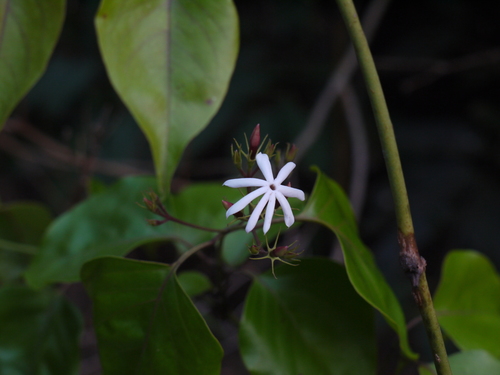
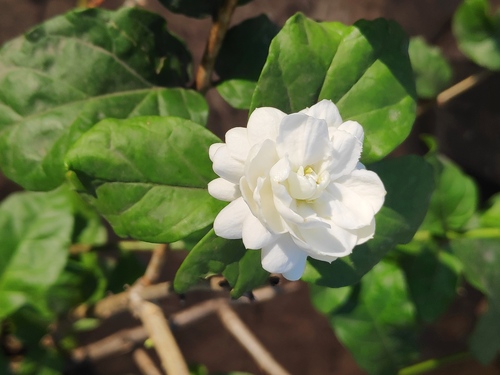
iNaturalist· cc-by-nc
(c) Grant Reed, some rights reserved (CC BY-NC), uploaded by Grant Reed
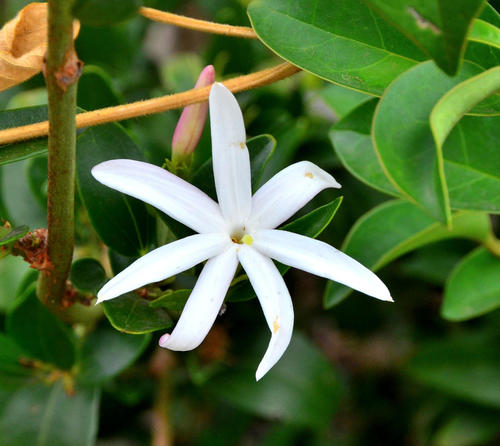
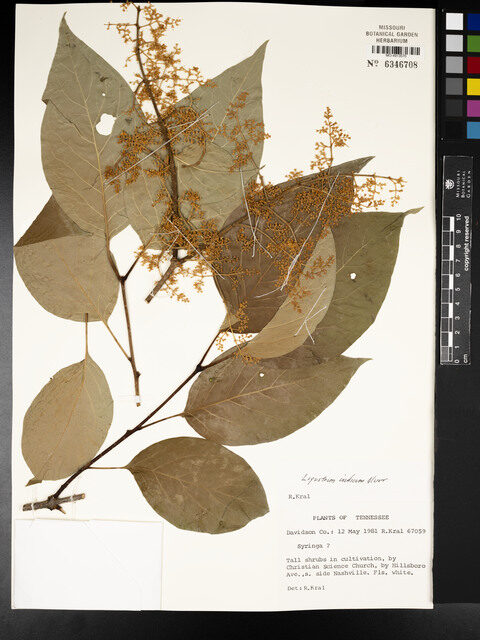
iNaturalist· cc-by-nc
(c) Bart Wursten, some rights reserved (CC BY-NC), uploaded by Bart Wursten
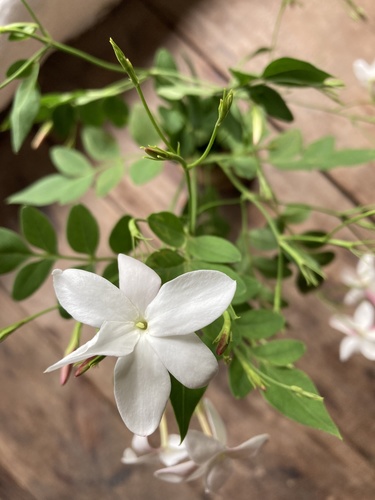
iNaturalist· cc0
no rights reserved, uploaded by Riana Fourie
Description
A small shrub. It lies along the ground. It can be a climber. It has underground stems or rhizomes. It can be 6 m high. The leaves are simple and hairy. They are dull olive green. The flowers are white and have a sweet scent. They are at the ends of the side twigs. The fruit are green but ripen to purple or black.
Edible Uses
The fruit are eaten when ripe, turning from green to purple or black.
Distribution
It is a tropical plant. It grows in dry sandy soil. It grows below 1,000 m above sea level. It can be in coastal regions and on termite mounds. It can grow in arid places.
Where It Grows
Africa, Botswana, East Africa, Kenya, Malawi, Mozambique, Tanzania, South Africa, Southern Africa, Zambia, Zimbabwe,
Synonyms
Also Known As
Lihlolenkomo
References (4)
- Fox, F. W. & Young, M. E. N., 1982, Food from the Veld. Delta Books. p 283
- Royal Botanic Gardens, Kew (1999). Survey of Economic Plants for Arid and Semi-Arid Lands (SEPASAL) database. Published on the Internet; http://www.rbgkew.org.uk/ceb/sepasal/internet [Accessed 4th May 2011]
- Schmidt, E., Lotter, M., & McCleland, W., 2007, Trees and shrubs of Mpumalanga and Kruger National Park. Jacana Media p 532
- World Checklist of Useful Plant Species 2020. Royal Botanic Gardens, Kew