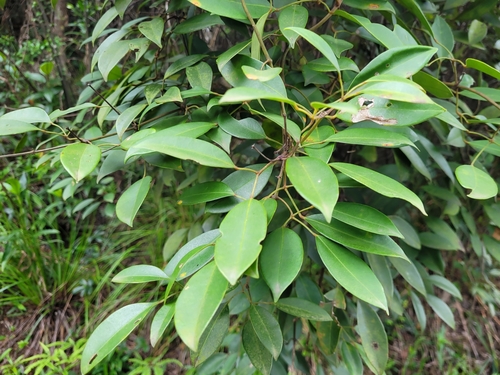
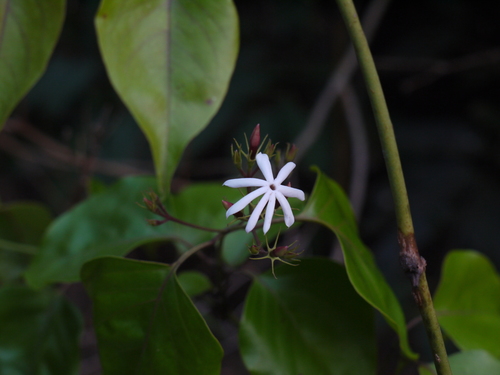
Jasminum officinale
L.
Poet's jasmine, Common jasmine, Jessamine
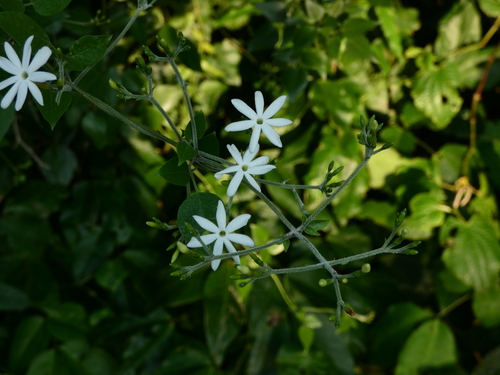
iNaturalist· cc-by-nc
(c) trala, some rights reserved (CC BY-NC)
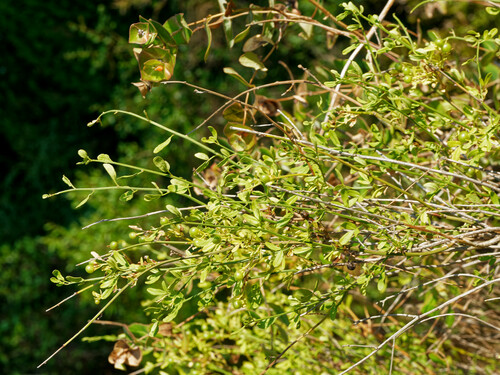
iNaturalist· cc-by-nc
(c) Ali Ali, some rights reserved (CC BY-NC), uploaded by Ali Ali
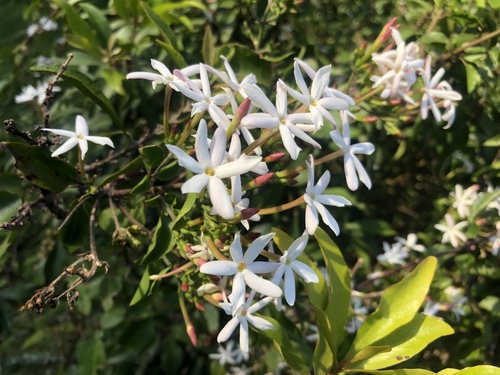
iNaturalist· cc-by-nc
(c) David Hocken, some rights reserved (CC BY-NC), uploaded by David Hocken
Summary
Source: WikipediaJasminum officinale, known as the common jasmine or simply jasmine, is a species of flowering plant in the olive family Oleaceae. It is native to the Caucasus and parts of Asia, also widely naturalized. It is also known as summer jasmine, poet's jasmine, white jasmine, true jasmine or jessamine, and is particularly valued by gardeners throughout the temperate world for the intense fragrance of its flowers in summer. It is also the National flower of Pakistan.
Description
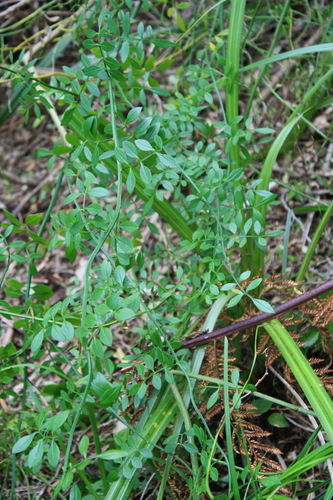
It is a deciduous shrub. It is twining and climbing. The stems are green. The leaves are divided into leaflets along the stalk. The leaves are 6 cm long. There are 5-9 leaflets. The flowers are white and fragrant. They are 2 cm across. The fruit are black berries. There are several named cultivated kinds.
Edible Uses
The fragrant flowers can be eaten fresh or used to flavour and scent tea. Dried flowers serve as a tea substitute. An essential oil from the flowers is used as a condiment in various foods — particularly Maraschino cherries, but also baked goods, ice cream, sweets, and chewing gum — imparting a bitter-sweet floral tone.
Traditional Uses
The flowers are eaten. They are also used for flavour or scent tea. They produce an essential oil that gives a bittersweet flavour to baked goods, ice cream, candy and chewing gum.
Medicinal Uses
Leaf juice is applied externally to corns and ear discharges. The leaves contain salicylic acid, a compound also found in the bark of Salix species and used as an analgesic and febrifuge. The root is used to treat ringworm. The flowers are aphrodisiac, antiseptic, antispasmodic, galactogogue, and tonic, and are primarily employed in aromatherapy. The essential oil's keyword in aromatherapy is 'aphrodisiac'; it is used in treating depression, nervous tension, impotence, frigidity, menstrual disorders, and weak digestion.
Known Hazards
Jasmine is "generally recognized as safe" (GRAS) as a food ingredient by the U.S. Food and Drug Administration. It is unknown whether jasmine consumption affects breastmilk, as the safety and efficacy of jasmine in nursing mothers or infants has not been adequately studied. Drinking small amounts of jasmine tea likely are not harmful during nursing. Allergic reactions to jasmine may occur.
Distribution
It is a Mediterranean climate plant. In Sichuan and Yunnan.
Where It Grows
Afghanistan, Algeria, Asia, Bangladesh, Bhutan, Britain, Bulgaria, Caucasus, Central Asia, China, Cuba, Dominican Republic, Europe, Fiji, France, Haiti, Himalayas, India, Iran, Italy, Mediterranean, Middle East, Nepal, Pacific, Pakistan, Portugal, Puerto Rica, Romania, Slovenia, Spain, Taiwan, Tajikistan, Tibet, Turkey, Türkiye, Yugoslavia,
Cultivation
Succeeds in a good well-drained loam, preferring a sunny position. Very shade tolerant, it succeeds on a north facing wall. Plants are hardy to about -15°c. They require the protection of a wall in northern Britain but are fully hardy in the south. Another report says that they are hardy to about -10°c, and that the stem tips are often killed back in the winter though the plant soon recovers. Climbs by means of twining. It is self-supporting and fast-growing. Any pruning is best carried out in late winter and early spring. A very ornamental plant, there are some named varieties. The flowers are very fragrant and the plant is sometimes cultivated for the essential oil in its flowers, the sub-species J. officinale grandiflorum (L.)Kobuski. is used. Flowers are produced on the current year's growth and also on older wood. Plants in this genus are notably resistant to honey fungus.
Propagation
Seed is best sown as soon as it is ripe in a cold frame. When large enough to handle, prick seedlings out into individual pots and grow on in the greenhouse for at least their first winter, then plant out in late spring or early summer after the last expected frosts. Cuttings of half-ripe wood taken in July or August in a frame root very easily. Cuttings of mature wood can be taken in November. Layering is also an option.
Other Uses
An essential oil extracted from the flowers is used in perfumery. Flowers are picked soon after opening each morning and used fresh for oil extraction. The plant also has parasiticide uses.
Other Information
It is cultivated.
Synonyms
Also Known As
Gessami, Ilessami
References (13)
- Bonet, M. A. & Valles, J., 2002, Use of non-crop food vascular plants in Montseny biosphere reserve (Catalonia, Iberian Peninsula). International Journal of Food Sciences and Nutrition (2002) 53, 225–248
- Brown, D., 2002, The Royal Horticultural Society encyclopedia of Herbs and their uses. DK Books. p 245
- Facciola, S., 1998, Cornucopia 2: a Source Book of Edible Plants. Kampong Publications, p 163
- Green, P. S., 2003, Synopsis of the Oleaceae from the Indian Sub-Continent. Kew Bulletin, Vol. 58, No. 2 (2003), pp. 257-295
- http://www.botanic-gardens-ljubljana.com/en/plants
Show all 13 references Hide references
- Kew Plants of the World Online
- Liu, Yi-tao, & Long, Chun-Lin, 2002, Studies on Edible Flowers Consumed by Ethnic Groups in Yunnan. Acta Botanica Yunnanica. 24(1):41-56
- Morton,
- Seidemann J., 2005, World Spice Plants. Economic Usage, Botany, Taxonomy. Springer. p 187
- Sp. pl. 1:7. 1753
- Wiersema, J. H. & Leon, B., 2013, World Economic Plants. A Standard Reference CRC Press. 2nd Ed. p 374
- World Checklist of Useful Plant Species 2020. Royal Botanic Gardens, Kew
- Zeven, A. C. & de West, J. M. J., 1982, Dictionary of cultivated plants and their regions of diversity. Wageningen. p 84