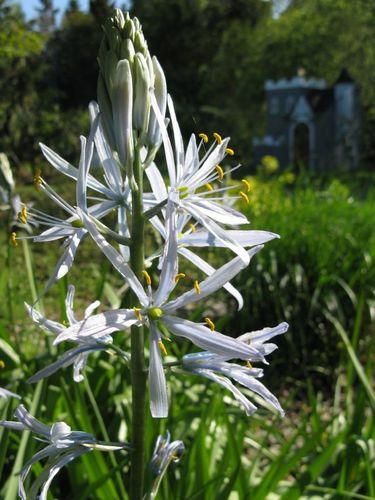
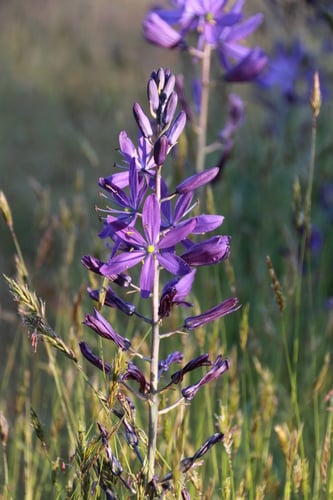
Drimia maritima
(L.) Stearn
Sea onion
iNaturalist· cc-by-nc
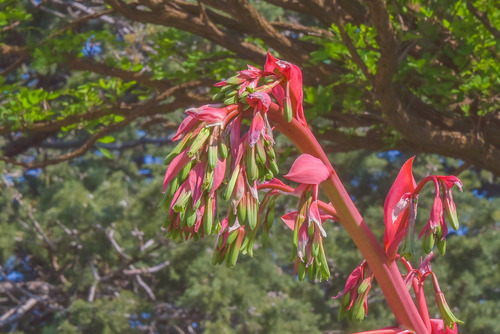
(c) Bianca Abma, some rights reserved (CC BY-NC), uploaded by Bianca Abma
iNaturalist· cc-by-nc
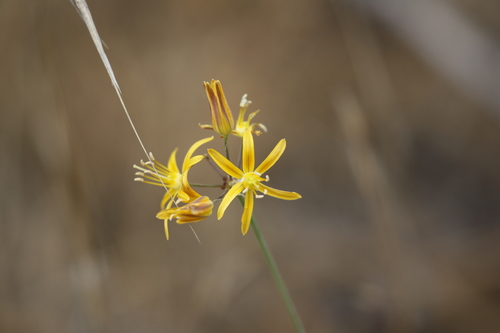
(c) Susanne Vogel, some rights reserved (CC BY-NC), uploaded by Susanne Vogel
iNaturalist· cc-by
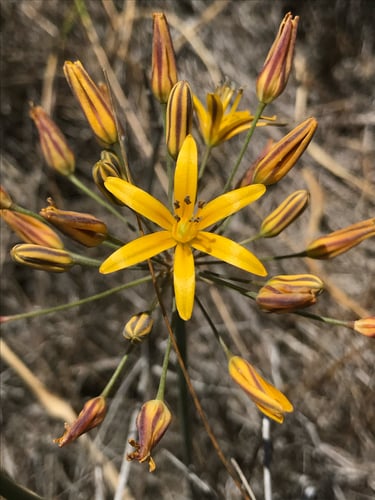
(c) Mehdi Chetibi, some rights reserved (CC BY), uploaded by Mehdi Chetibi
Summary
Source: WikipediaDrimia maritima (syn. Urginea maritima) is a species of flowering plant in the family Asparagaceae, subfamily Scilloideae (formerly the family Hyacinthaceae). This species is known by several common names, including squill, sea squill, sea onion, and maritime squill. It may also be called red squill, particularly a form which produces red-tinged flowers instead of white , though it is likely the red color noted is actually referring to the bulb itself, not the flowers. It is native to southern Europe, western Asia, and northern Africa.
Description
A bulbous herb in the Asparagaceae family found in Mediterranean climates, growing in dry and arid soils.
This description is brief — help expand it
Edible Uses
The roots are eaten as a vegetable, and the stems are used to make alcoholic drinks.
Traditional Uses
The stems are used to make alcoholic drinks. Caution: The plant has poisons. The roots are eaten as a vegetable.
This uses section is brief — help expand it
Known Hazards
The plant has been used as a poison and as a medicinal remedy. The main active compounds are cardiac glycosides, including unique bufadienolides such as glucoscillaren A, proscillaridine A, scillaren A, scilliglaucoside and scilliphaeoside. The plant can have a cardiac glycoside content of up to 3%. Scilliroside, the most important of the toxic compounds, is present in all parts of the plant. The broad leaves of this plant, when they completely dry out, lose their toxicity and are consumed by cattle and sheep. In Palestine and Israel, Arab farmers are known to use the plant to mark the butts and bounds of farm land, on account of the plant's distinct features. In Israel, it is traditionally considered a "harbinger of fall", and its Hebrew name "hatzav" shares a linguistic root with the words to dig or quarry, much like the bulb digs its roots into the ground. The plant has also been used as a poison. It is very bitter, so most animals avoid it. Rats, however, eat it readily, and then succumb to the toxic scilliroside. This has made the plant a popular rodenticide for nearly as long as it has been in use as a medicine. The bulbs are dried and cut into chips, which can then be powdered and mixed with rat bait. The plant was introduced as an experimental agricultural crop in the 20th century primarily to develop high-toxicity varieties for use as rat poison. Interest continued to develop as rats became resistant to coumarin-based poisons. It has also been tested as an insecticide against pests such as the red flour beetle (Tribolium castaneum).
Distribution
It is a Mediterranean climate plant. It grows in dry soils. It can grow in arid places.
Where It Grows
Africa, Albania, Algeria, Australia, Balkans, Canary Islands, Cyprus, Egypt, Europe, France, Greece, Iran, Israel, Italy, Jordan, Lebanon, Libya, Malta, Mediterranean, Middle East, Morocco, North Africa, Spain, Syria, Tunisia, Yugoslavia,
Notes
Also put in the family Hyacinthaceae.
Synonyms
Also Known As
Aansla, Cebolla, Igufil
References (4)
- Blanco-Salas, J., et al, 2019, Wild Plants Potentially Used in Human Food in the Protected Area “Sierra Grande de Hornachos” of Extremadura (Spain). Sustainability 2019, 11, 456 (As Urginea maritima)
- Ghanimi, R., et al, 2022, Ethnobotanical study on wild edible plants traditionally used by Messiwa people, Morocco. Journal of Ethnobiology and Ethnomedicine. 18:16
- Royal Botanic Gardens, Kew (1999). Survey of Economic Plants for Arid and Semi-Arid Lands (SEPASAL) database. Published on the Internet; http://www.rbgkew.org.uk/ceb/sepasal/internet [Accessed 16th April 2011] (As Urginea maritima)
- World Checklist of Useful Plant Species 2020. Royal Botanic Gardens, Kew