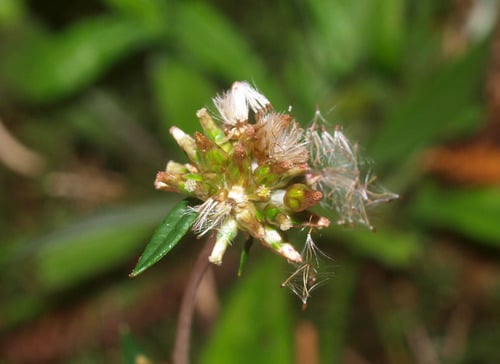
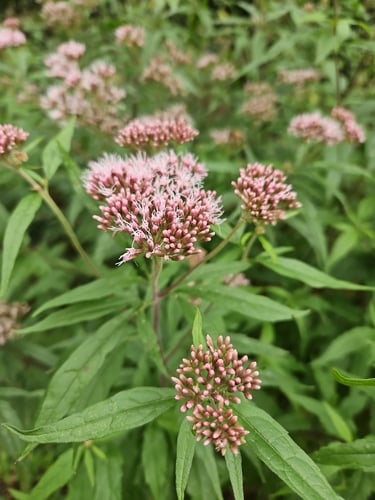
Thelesperma megapotamicum
(Sprengel) Kuntze
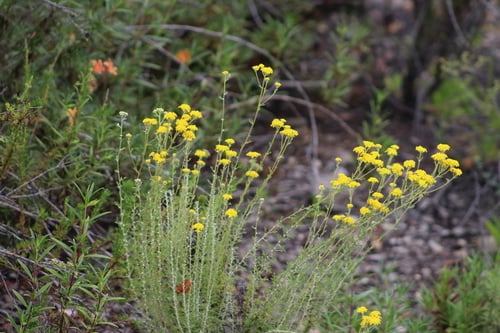
Hopi tea, Navajo tea, Greenthread
iNaturalist· cc-by-nc-sa
(c) Jerry Oldenettel, some rights reserved (CC BY-NC-SA)
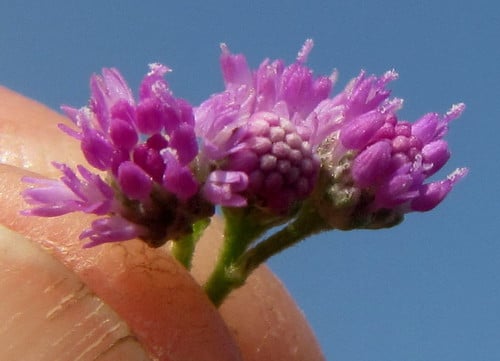
iNaturalist· cc-by-nc
(c) David Andreas de Rivera Tønnessen, some rights reserved (CC BY-NC), uploaded by David Andreas de Rivera Tønnessen
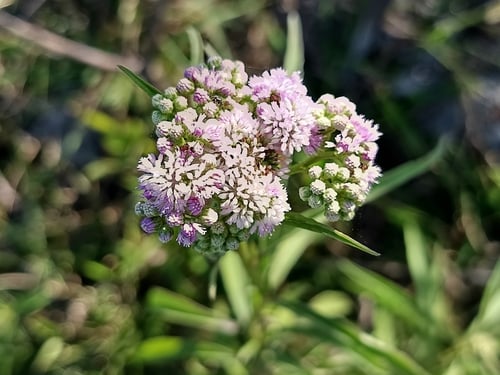
iNaturalist· cc-by-nc
(c) vckessler, some rights reserved (CC BY-NC)
Summary
Source: WikipediaThelesperma megapotamicum is a perennial, herbaceous (or slightly woody), flowering plant in the Asteraceae family native to sections of the Americas. It is known by the common names Hopi tea greenthread, rayless greenthread, Navajo tea, cota, and greenthread (a name it shares with other species in the genus).
Description
A herb. It has underground stems or rhizomes. It can keep growing from year to year. It grows 40-60 cm tall. The leaves are divided 2 or 3 times. The segments are 10-23 mm long by 0.2-0.6 mm wide.
Edible Uses
Flower buds are edible, though no further details are given. A tea made from fresh or dried leaves and flowering stems is a standout preparation — when well made it is delicious, with just a hint of mint in its aftertaste.
Traditional Uses
The leaves and dried flowers are used as a substitute for tea, The flower buds are eaten.
This uses section is brief — help expand it
Medicinal Uses
The plant has been used in treating tuberculosis in children. An infusion of the leaves and stems has been used as a nervous stimulant, and the same preparation has also been applied as a treatment for the teeth.
Distribution
It is a subtropical plant. It grows in dry soils. It can grow in arid places. In Argentina it grows from sea level to 1,200 m above sea level.
Where It Grows
Africa, Argentina, Brazil, Mexico, North America, Paraguay, South Africa, South America*, Uruguay, USA*,
Propagation
Sow seed in spring directly in situ, barely covering it. Water in during dry weather. Division may also be possible.
Other Uses
The flowers yield a yellow dye, reported as reddish-brown in some sources. The leaves and stems produce a brown dye, while the boiled roots yield an orange-yellow dye.
Synonyms
References (7)
- Beckstrom-Sternberg, Stephen M., and James A. Duke. "The Foodplant Database." http://probe.nalusda.gov:8300/cgi-bin/browse/foodplantdb.(ACEDB version 4.0 - data version July 1994) (As Thelesperma gracile)
- Facciola, S., 1998, Cornucopia 2: a Source Book of Edible Plants. Kampong Publications, p 44 (As Thelesperma gracile)
- https://www.fireflyforest.com/flowers/category/edible-plants/ Edible Plants – Southeastern Arizona Wildflowers and Plants
- Kermath, B. M., et al, 2014, Food Plants in the Americas: A survey of the domesticated, cultivated and wild plants used for Human food in North, Central and South America and the Caribbean. On line draft. p 861
- Moerman, D. F., 2010, Native American Ethnobotany. Timber Press. p 555
Show all 7 references Hide references
- Royal Botanic Gardens, Kew (1999). Survey of Economic Plants for Arid and Semi-Arid Lands (SEPASAL) database. Published on the Internet; http://www.rbgkew.org.uk/ceb/sepasal/internet [Accessed 14th April 2011]
- World Checklist of Useful Plant Species 2020. Royal Botanic Gardens, Kew