Artemisia tridentata
Nutt.
Big sagebrush
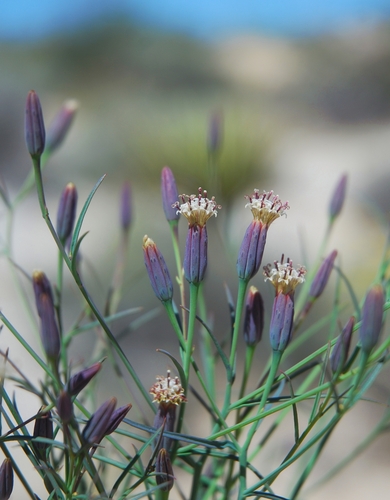
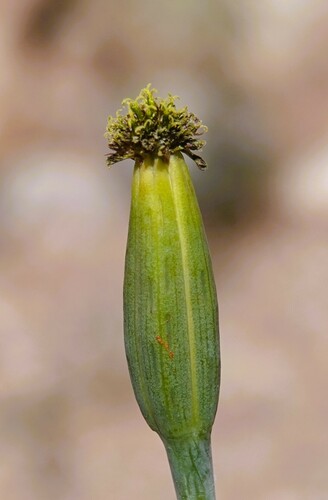
iNaturalist· cc-by-nc
(c) brak, some rights reserved (CC BY-NC)
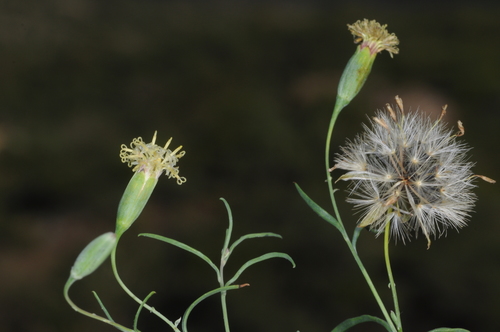
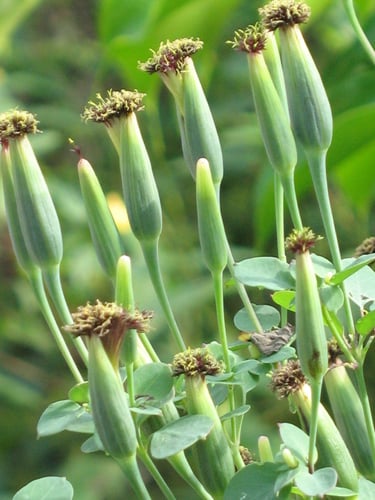
iNaturalist· cc-by-nc
(c) Jason Headley, some rights reserved (CC BY-NC), uploaded by Jason Headley
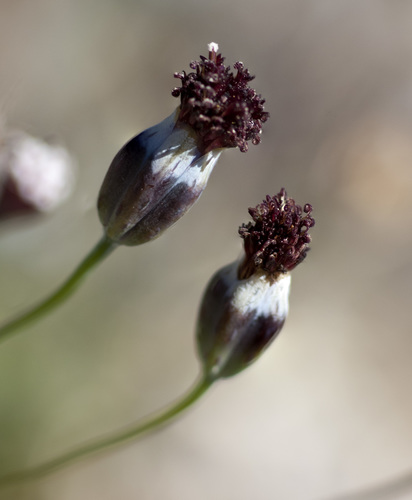
iNaturalist· cc-by-nc
(c) growbadlands, some rights reserved (CC BY-NC), uploaded by growbadlands
Summary
Source: WikipediaArtemisia tridentata, commonly called big sagebrush, Great Basin sagebrush or simply sagebrush (one of several related species of this name), is an aromatic shrub from the family Asteraceae. It grows in arid and semi-arid conditions, throughout a range of cold desert, steppe, and mountain habitats in the Intermountain West of North America. Big sagebrush and other Artemisia shrubs are the dominant plant species across large portions of the Great Basin. Sagebrush provides food and habitat for a variety of species, such as sage grouse, pronghorn antelope, grey vireo, pygmy rabbit, and mule deer. Several major threats exist to sagebrush ecosystems, including human settlements, conversion to agricultural land, invasive plant species, and wildfires. Native Americans have used the plant medicinally. It is also useful as firewood.
Description
A shrub. It grows 3 m tall and spreads 2.4 m wide. It has a short trunk. The stems are covered with white hairs. The leaves are fine and have 3 lobes. They are silvery and have an aroma. They are slightly sticky.
Edible Uses
Edible Parts: Leaves Seed Edible Uses: Condiment Tea Seeds are edible but variable — some reports say unpalatable and famine food, others note they were gathered in large amounts as a staple. Leaves are not edible except as bitter teas or medicine. Tea has strong medicinal taste (sage + paint). [2-3]. Leaves - cooked. The subspecies A. tridentata vaseyana has a pleasant mint-like aroma whilst some other subspecies are very bitter and pungent. The leaves are used as a condiment and to make a tea. Seed - raw or cooked. Oily. It can be roasted then ground into a powder and mixed with water or eaten raw. The seed is very small and fiddly to use.
Traditional Uses
The leaves are cooked as a flavouring and also to make a tea with sage like flavouring. The seed can be roasted then ground into a powder and mixed with water.
Medicinal Uses
Antirheumatic Antiseptic Digestive Disinfectant Febrifuge Miscellany Ophthalmic Poultice Sedative Skin Sage brush was widely employed by many native North American Indian tribes who used it to treat a wide range of disorders. It is little used in modern herbalism, though it certainly merits further investigation. The plant is antirheumatic, antiseptic, digestive, disinfectant, febrifuge, ophthalmic, poultice and sedative. A decoction of the leaves is used in the treatment of digestive disorders and sore throats. An infusion of the fresh or dried leaves is used to treat pneumonia, bad colds with coughing and bronchitis. It is used both internally and externally in the treatment of rheumatism. The crushed plant is used as a liniment on cuts, sores etc whilst a decoction of the leaves is used as an antiseptic wash for cuts, wounds and sores. A poultice of the steeped leaves is applied to sore eyes. The plant is burnt in the house in order to disinfect it.
Known Hazards
Although no reports of toxicity have been seen for this species, skin contact with some members of this genus can cause dermatitis or other allergic reactions in some people.
Distribution
It is a temperate to tropical plant. It suits hardiness zones 8-11.
Where It Grows
Australia, Britain, Canada, Central America, Europe, Mexico, North America, USA,
Cultivation
Habitat & Distribution: Dominant shrub of western U.S., especially Great Basin. Common in deserts, plateaus, and dry mountain foothills. Growth & Ecology: Large woody perennial shrub, highly aromatic. Provides habitat and forage for wildlife. Keystone shrub in sagebrush ecosystems. Cultivation: Thrives in dry, sandy, or rocky soils. Requires full sun. Drought-tolerant, poor tolerance to wet soils.Requires a sunny position and a well-drained soil that is not too rich. Requires a lime-free soil. There are a number of sub-species growing in different habitats from deep fertile soils to poor shallow ones. Plants are longer lived, more hardy and more aromatic when they are grown in a poor dry soil. Established plants are very drought tolerant. This species is not hardy in the colder areas of the country, it tolerates temperatures down to between -5 and -10°c. The young growth in spring, even on mature plants, is frost-tender and so it is best to grow the plants in a position sheltered from the early morning sun. The plant is very aromatic, especially after rain. The pollen of this species is one of the main causes of hayfever in N. America. Plants in this genus are notably resistant to honey fungus. Members of this genus are rarely if ever troubled by browsing deer. The aerial parts can be harvested in summer when they are in full bloom, while roots can be harvested in autumn. Artemisia typically flowers in summer. Artemisia species can vary in growth rate, but many are moderately fast-growing, reaching maturity within 1-2 years under optimal conditions. USDA zones 3–8. Extremely cold- and drought-hardy.
Propagation
Seed - surface sow from late winter to early summer in a greenhouse in a very free-draining soil, but making sure that the compost does not dry out. The sub-species A. tridentata vaseyana germinates better if given a cool stratification for 30 - 50 days. Other sub-species germinate in 1 - 2 weeks in a warm greenhouse. When large enough to handle, prick the seedlings out into individual pots and grow them on in the greenhouse for their first winter, planting them out in late spring or early summer. Cuttings of half-ripe wood, July/August in a frame. Very slow to root Division in spring or autumn. Layering.
Other Uses
Basketry Disinfectant Dye Fibre Friction sticks Fuel Hair Miscellany Paper Repellent Stuffing Tinder Agroforestry uses: Artemisia species are often used for soil improvement, as ground cover, and in companion planting due to their pest-repellent properties. Some species are also used for erosion control. An infusion of the leaves is used as a hair rinse, it treats dandruff and falling hair. An infusion of the plant repels insects, it is also disinfectant and so is used for washing walls, floors etc. A yellow to gold dye is obtained from the leaves, buds and stems combined. The fibrous bark is used for weaving mats, baskets, cloth etc., or as a stuffing material in pillows etc and as an insulation in shoes to keep the feet warm. A fibre obtained from the inner bark is used for making paper. The fibres are about 1.3mm long. The stems are harvested in late summer, the leaves removed and the stems steamed until the fibre can be stripped off. The fibre is then cooked for two hours with lye before being ball milled for 4 hours. The resulting paper is a light tan/gold colour. A bunch of the leafy stems can be tied together and used as a broom. The shredded bark is a fine tinder for starting fires. The stems make good friction sticks for making fires. The seeds are used during celebrations because, when thrown into a fire, they explode like crackers. Wood - hard, dense. It burns rapidly and well, even when green, and has a pleasant aromatic smell. Sagebrush provides food and habitat for a variety of species, such as sage grouse, pronghorn antelope, gray vireo, pygmy rabbit, and mule deer. 1. Nectary - Flowers rich in nectar and pollen: Yes – Artemisia species produce flowers that can provide nectar and pollen, attracting various pollinators, including bees. 2. Wildlife - Food (Fruit, Seeds, Leaf litter, Shelter, Nesting, Roosting): Yes – The leaves of some Artemisia species are consumed by various insects and herbivores. Additionally, the plant can provide cover for small wildlife. 3. Invertebrate Shelter (Overwintering sites, Leaf litter, Groundcover): Yes – The dense foliage can offer shelter and overwintering sites for beneficial insects, and the leaf litter can provide habitat for various invertebrates. 4. Pest Confuser (Smell): Yes – Many Artemisia species are aromatic and can confuse or repel pests due to their strong scent, which may deter some insects. Special Uses Scented Plants
Notes
There are about 300 Artemisia species.
Synonyms
Also Known As
Bonneville big sagebrush, Sage brush, Sawabi
References (11)
- Beckstrom-Sternberg, Stephen M., and James A. Duke. "The Foodplant Database." http://probe.nalusda.gov:8300/cgi-bin/browse/foodplantdb.(ACEDB version 4.0 - data version July 1994)
- Bircher, A. G. & Bircher, W. H., 2000, Encyclopedia of Fruit Trees and Edible Flowering Plants in Egypt and the Subtropics. AUC Press. p 42
- Bodkin, F., 1991, Encyclopedia Botanica. Cornstalk publishing, p 105
- Coutre, M. D., et al, 1986, Foraging Behaviour of a Contemporary Northern Great Basin Population. Journal of California and Great Bason Anthropology Vol. 8(2) pp 150-160
- Cundall, P., (ed.), 2004, Gardening Australia: flora: the gardener's bible. ABC Books. p 191
Show all 11 references Hide references
- MacKinnon, A., et al, 2009, Edible & Medicinal Plants of Canada. Lone Pine. p 142
- Plants for a Future database, The Field, Penpol, Lostwithiel, Cornwall, PL22 0NG, UK. http://www.scs.leeds.ac.uk/pfaf/
- Tozer, F., 2007, The Uses of Wild Plants. Green Man Publishing. p 36
- Trendafilova, A., et al, 2020, Research Advances on Health Effects of Edible Artemisia Species and Some Sesquiterpene Lactones Constituents. Foods 2021, 10, 65. p 5
- Trans. Amer. Philos. Soc. ser. 2, 7:398. 1841
- World Checklist of Useful Plant Species 2020. Royal Botanic Gardens, Kew