Platycarphella carlinoides
(Oliv. & Hiern) V. A. Funk & H. Rob.
Rivierkool
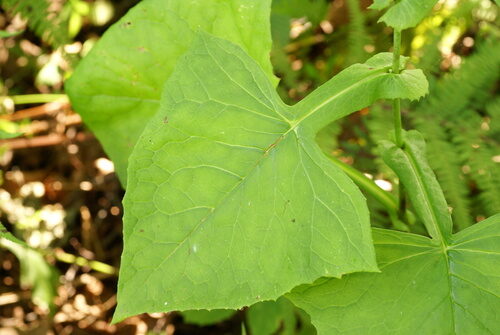
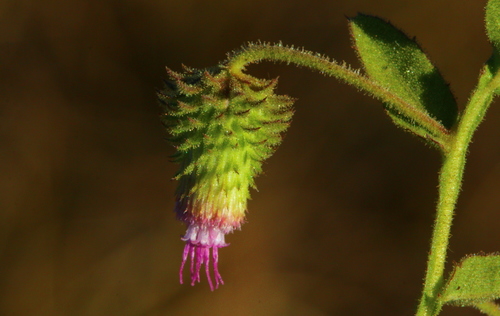
iNaturalist· cc-by-nc
(c) magdastlucia, some rights reserved (CC BY-NC), uploaded by magdastlucia
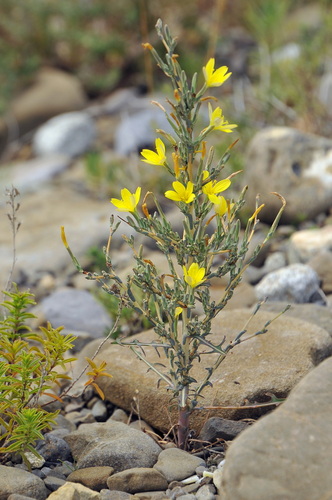
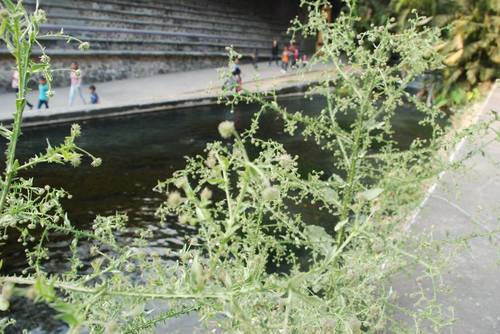
iNaturalist· cc-by-nc
(c) Alex Dreyer, some rights reserved (CC BY-NC), uploaded by Alex Dreyer
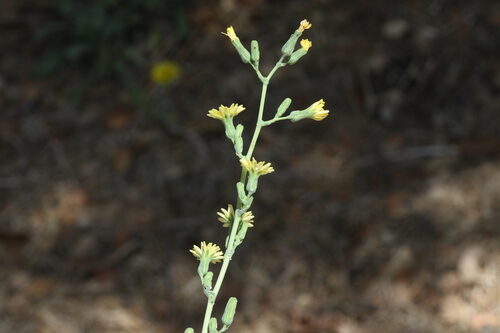
iNaturalist· cc-by-nc
(c) Alex Dreyer, some rights reserved (CC BY-NC), uploaded by Alex Dreyer
Description
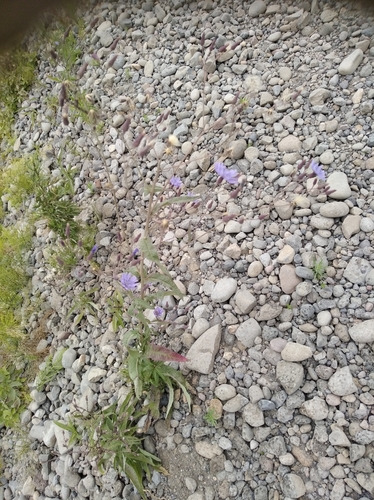
A herb. It has a taproot but no stem. It keeps growing from year to year. It grows 40 cm high. The leaves have a smell when crushed. The leaves spread out like a star in a ring. They do not have leaf stalks. The leaves can be 20 cm long. There can be teeth around the edge. The leaves are silvery grey underneath with felty hairs. The flower heads have many small disc florets. These flower heads to not have stalks and cover the head of the root. The flowers are purple.
Edible Uses
The taproot is eaten and has a cabbage-like flavor.
Traditional Uses
The taproot is eaten and tastes like a cabbage.
This uses section is brief — help expand it
Distribution
It is a subtropical plant. It grows in hot arid places. It grows in places with a marked dry season. The dry season can be 6-11 months. It can grow in stony and silty soils that are seasonally waterlogged. In southern Africa it grows between 700-1,650 m above sea level. It can grow in arid places.
Where It Grows
Africa, Botswana, Namibia, South Africa, Southern Africa,
Synonyms
Also Known As
Kurukua, Polsterpflanze
References (2)
- Royal Botanic Gardens, Kew (1999). Survey of Economic Plants for Arid and Semi-Arid Lands (SEPASAL) database. Published on the Internet; http://www.rbgkew.org.uk/ceb/sepasal/internet [Accessed 11th April 2011] (As Platycarpha carlinoides)
- World Checklist of Useful Plant Species 2020. Royal Botanic Gardens, Kew