Tragopogon pratensis
L.
Goatsbeard, Yellow goats beard
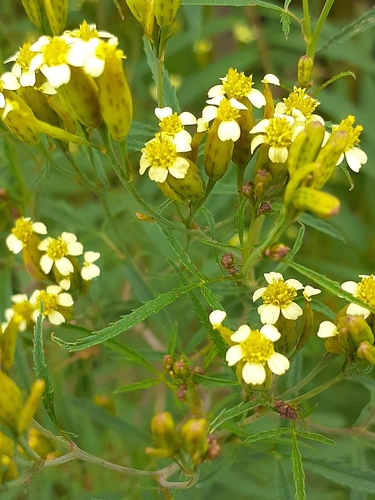
iNaturalist· cc-by-nc
(c) matthewjones, some rights reserved (CC BY-NC), uploaded by matthewjones
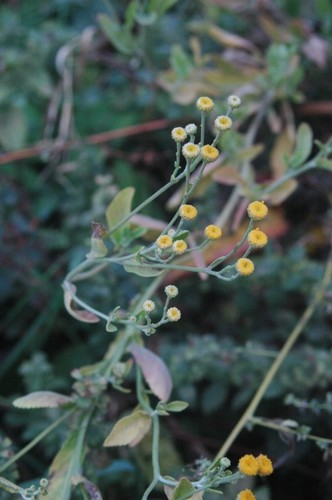
iNaturalist· cc-by-nc
(c) mervyngreening, some rights reserved (CC BY-NC)
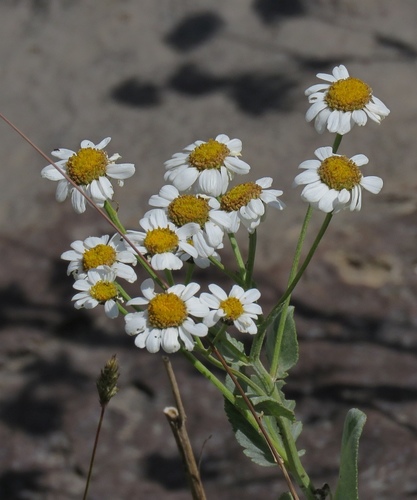
iNaturalist· cc-by-nc
(c) Blake Weis, some rights reserved (CC BY-NC), uploaded by Blake Weis
Summary
Source: WikipediaTragopogon pratensis (common names Jack-go-to-bed-at-noon, meadow salsify, showy goat's-beard or meadow goat's-beard) is a biennial plant in the family Asteraceae. It flowers between June and October. It is distributed across Europe and North America, commonly growing in fields. The root and buds are edible, and it has a milky latex.
Description
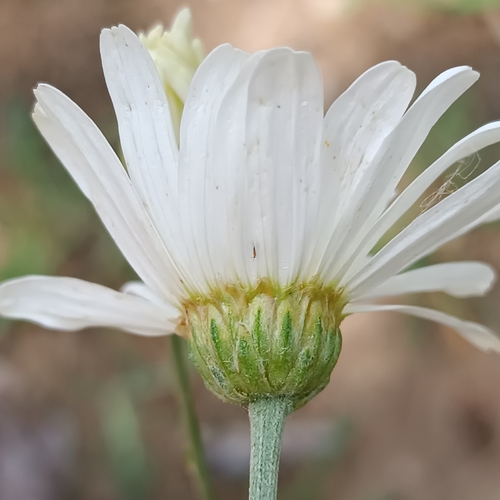
A tall herb. It can be an annual or grow for some years. It can have some hairs. The stems are usually not branched. It grows 70 cm tall. The stems grow upwards from a large taproot. The leaves are narrow and have a channel along them. The leaves on the stem partly clasp the stem. These leaves taper to a fine point. The flower heads are pale yellow. Each flower contains 8 sword shaped bracts. The fruit are round and fluffy. They are made up of several small nutlets. Each one has small feather like bristles.
Edible Uses
Goat's beard provides several edible parts. The roots, which owe their sweet flavour to their inulin content, can be eaten raw when young or cooked like parsnips or salsify when older; they are often blanched before use. Young leaves and shoots can be eaten raw in mixed salads or cooked in soups. For best flavour, leaves are harvested as they emerge in spring. The flowering stem, buds included, is cooked and served like asparagus.
Traditional Uses
The root has been used as a famine food. They are boiled for 20 minutes. The tender young leaves are eaten raw or boiled for 5 minutes. They are also used in soups. The flowering stems and buds are cooked and eaten.
Medicinal Uses
Goat's beard is considered a useful remedy for the liver and gallbladder, with a detoxifying effect that may also stimulate appetite and digestion. Its high inulin content — a nutrient built from fructose rather than glucose units — makes it a suitable food for diabetics, as it does not raise blood sugar levels. The root is astringent, depurative, diuretic, expectorant, nutritive, and stomachic. A syrup made from the root gives significant relief in cases of persistent coughs and bronchitis. A root decoction is used for heartburn, loss of appetite, and disorders of the breast or liver. Roots are harvested in autumn and dried for later use. The fresh juice of young plants is said to be an effective dissolver of bile, relieving the stomach without side effects.
Distribution
It is a temperate plant. It grows in waste places and along roadsides. in Argentina it grows from sea level to 500 m above sea level. It suits hardiness zone 9. It can tolerate some frost.
Where It Grows
Africa, Argentina, Asia, Australia, Balkans, Bosnia, Britain, Canada, Chile, China, Croatia, Czech Republic, Estonia, Europe, France, Greece, Haiti, Hungary, India, Inner MOngolia, Ireland, Italy, Luxembourg, Mediterranean, New Zealand, North Africa, North America, Poland, Slovenia, South America, Spain, Switzerland, Turkey, Türkiye, USA, West Indies,
Cultivation
Succeeds in ordinary garden soils, including heavy clays. Goat's beard was formerly cultivated as a vegetable, though it has now fallen into disuse. Grows well in the summer meadow. The flowers open at daybreak and close before noon.
Propagation
Sow seed in spring directly in situ. If the weather is dry at the time of sowing, water the seed in well.
Other Uses
An infusion of the petals is used to clear the skin and lighten freckles. A distilled water made from the plant is used in cleansing lotions for dry skin.
Other Information
It is a commercially cultivated vegetable.
Notes
There are about 50 Tragopogon species.
Nutrition
| Part | Moisture | kJ | kcal | Protein | Vit A | Vit C | Iron | Zinc |
|---|---|---|---|---|---|---|---|---|
| Leaves | 91.4 | 107 | 26 | 1.6 | — | — | — | — |
Synonyms
Also Known As
Barba di becco, Barbabouch, Barbouch, Bucks-beard, Jack-go-to-bed-at-noon, Kohv, Kozi brada lucni, Kozibrod meadow, Kozobrad, Lecherin, Meadow salsify, Piimhain, Showy goatsbeard, Travniška kozja brada, Yangnaizi, Yellow salsify
References (44)
- Abbet, C., et al, 2014, Ethnobotanical survey on wild alpine food plants in Lower and Central Valais (Switzerland). Journal of Ethnopharmacology 151 (2014) 624–634
- Ambasta, S.P. (Ed.), 2000, The Useful Plants of India. CSIR India. p 644
- Benvenuti, S. & Mazzoncini, M., 2021, The Biodiversity of Edible Flowers: Discovering New Tastes and New Health Benefits. Frontiers in Plant Science Article 569499.
- Blamey, M and Grey-Wilson, C., 2005, Wild flowers of the Mediterranean. A & C Black London. p 464
- Bodkin, F., 1991, Encyclopedia Botanica. Cornstalk publishing, p 991
Show all 44 references Hide references
- Bremness, L., 1994, Herbs. Collins Eyewitness Handbooks. Harper Collins. p 272
- Denes, A., et al, 2012, Wild plants used for food by Hungarian ethnic groups living in the Carpathian Basin. Acta Societatis Botanicorum Poloniae 81 (4): 381-396
- Elias, T.S. & Dykeman P.A., 1990, Edible Wild Plants. A North American Field guide. Sterling, New York p 106
- Ertug, F, Yenen Bitkiler. Resimli Türkiye Florası -I- Flora of Turkey - Ethnobotany supplement
- Esperanca, M. J., 1988. Surviving in the wild. A glance at the wild plants and their uses. Vol. 1. p 389
- Facciola, S., 1998, Cornucopia 2: a Source Book of Edible Plants. Kampong Publications, p 44
- Famine foods
- Food Composition Tables for the Near East. http://www/fao.org/docrep No. 331
- Hedrick, U.P., 1919, (Ed.), Sturtevant's edible plants of the world. p 652
- http://www.botanic-gardens-ljubljana.com/en/plants
- Irving, M., 2009, The Forager Handbook, A Guide to the Edible Plants of Britain. Ebury Press p 163
- Jia, X., et al, 2022, Ethnobotany of wild edible plants in multiethnic areas of the Gansu–Ningxia–Inner Mongolia junction zone. Journal of Ethnobiology and Ethnomedicine 18:53
- Kalle, R. & Soukand, R., 2012, Historical ethnobotanical review of wild edible plants of Estonia (1770s-1960s) Acta Societatis Botanicorum Poloniae 81(4):271-281
- Kays, S. J., and Dias, J. C. S., 1995, Common Names of Commercially Cultivated Vegetables of the World in 15 languages. Economic Botany, Vol. 49, No. 2, pp. 115-152
- Lim, T. K., 2015, Edible Medicinal and Non Medicinal Plants. Volume 9, Modified Stems, Roots, Bulbs. Springer p 82
- Luczaj et al, 2013, Wild vegetable mixes sold in the markets of Dalmatia (southern Croatia). Journal of Ethnobiology and Ethnomedicine. 8:2
- Luczaj, L. et al, 2013, Wild food plants used in the villages of the Lake Vrana Nature Park (northern Dalmatia, Croatia). Acta Societatis Botanicorum Poloniae, 82(4): 275-281
- Luczaj, L. et al, 2014, Wild Food Plants of Dalmatia (Croatia). in A. Pieroni, C. L. Quave (eds.), Ethnobotany and Biocultural Diversities in the Balkans, p 138
- Lukasz, L., 2016, Wild Edible Plants Traditionally Used in Poland.
- Mabey, R., 1973, Food for Free. A Guide to the edible wild plants of Britain, Collins. p 85
- MacKinnon, A., et al, 2009, Edible & Medicinal Plants of Canada. Lone Pine. p 331
- Martin, F.W. & Ruberte, R.M., 1979, Edible Leaves of the Tropics. Antillian College Press, Mayaguez, Puerto Rico. p 186
- Mattalia, G., et al, 2012, Traditional uses of wild food and medicinal plants among Brigasc, Kye ́, and Provenc ̧al communities on the Western Italian Alps. Genet Resour Crop Evol. Springer
- Paoletti, M.G., Dreon, A.L., and Lorenzoni, G.G., 1995, Pistic, Traditional Food from Western Friuli, NE Italy. Economic Botany 49(1) pp 26-30
- Pardo-de-Santayana, M., et al, 2005, The gathering and consumption of wild edible plants in the Campoo (Cantabria, Spain). International Journal of Food Sciences and Nutrition. 56(7): 529-542
- Pardo-de-Santayana et al, 2006, Diversity and selection of wild food plants. Proceedings of the IVth International Congress of Ethnobotany (ICEB) 2005) p 53
- Pardo-de-Santayana, M., et al, 2007, Traditional knowledge of wild edible plants used in the northwest of the Iberian Peninsula (Spain and Portugal): a comparative study. Journal of Ethnobiology and Ethnomedicine 2007, 3:27
- PARMENTIER
- Pieroni, A., 1999, Gathered wild food plants in the Upper Valley of the Serchio River (Garfagnana), Central Italy. Economic Botany 53(3) pp 327-341
- Pieroni, A.,& Giusti, M. E., 2009, Alpine Ethnobotany in Italy: Journal of Ethnobiology and Ethnomedicine. 5:32
- Plants for a Future database, The Field, Penpol, Lostwithiel, Cornwall, PL22 0NG, UK. http://www.scs.leeds.ac.uk/pfaf/
- Plants of Haiti Smithsonian Institute http://botany.si.edu
- Redzic, S. J., 2006, Wild Edible Plants and their Traditional Use in the Human Nutrition in Bosnia-Herzegovina. Ecology of Food and Nutrition, 45:189-232
- Simkova, K. et al, 2014, Ethnobotanical review of wild edible plants used in the Czech Republic. Journal of Applied Botany and Food Quality 88, 49-67
- Sp. pl. 2:789. 1753
- Tardio, J., et al, 2006, Ethnobotanical review of wild edible plants in Spain. Botanical J. Linnean Soc. 152, 27-71
- Terra, G.J.A., 1973, Tropical Vegetables. Communication 54e Royal Tropical Institute, Amsterdam, p 79
- USDA Plants Database (As Tragopogon lamottei)
- www.chileflora.com