Commiphora edulis
(Klotzsch) Engl.
Rough-leaved corkwood
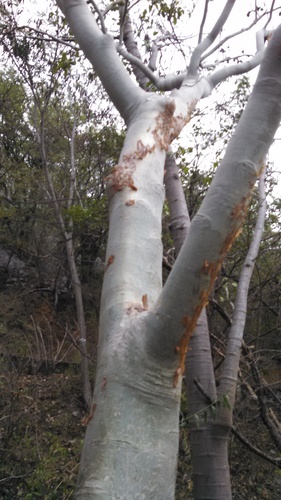
iNaturalist· cc-by-nc
(c) Bart Wursten, some rights reserved (CC BY-NC), uploaded by Bart Wursten
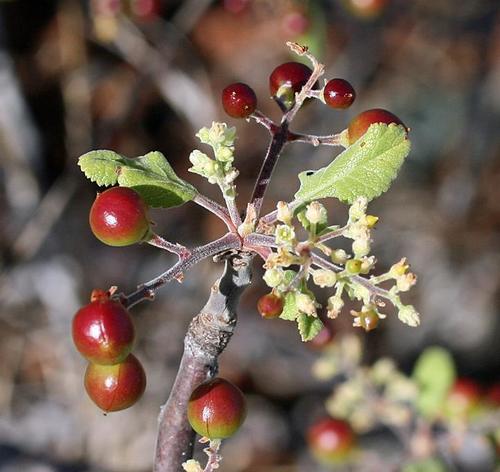
iNaturalist· cc-by-nc
(c) Troos van der Merwe, some rights reserved (CC BY-NC), uploaded by Troos van der Merwe
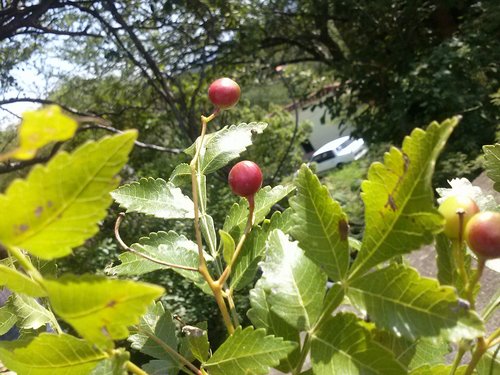
iNaturalist· cc-by-nc
(c) Troos van der Merwe, some rights reserved (CC BY-NC), uploaded by Troos van der Merwe
Description
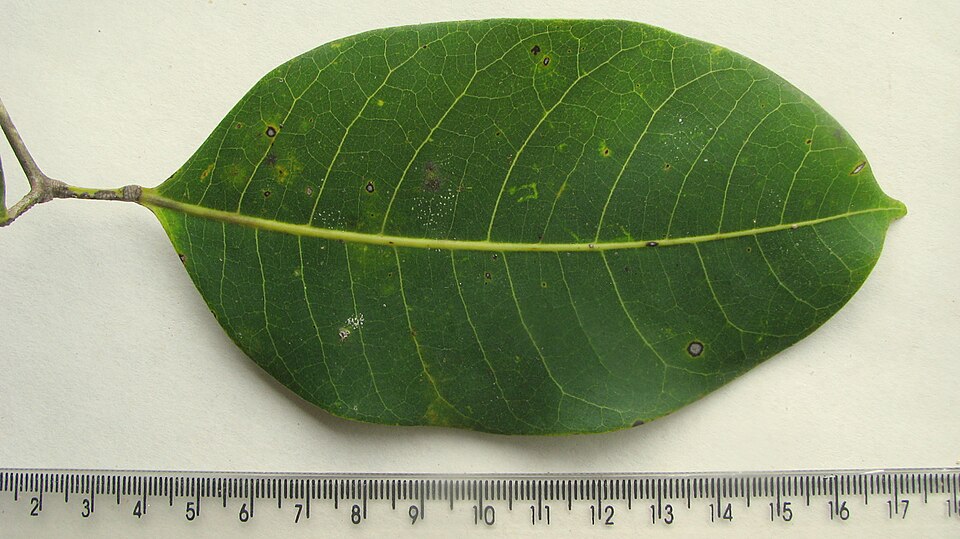
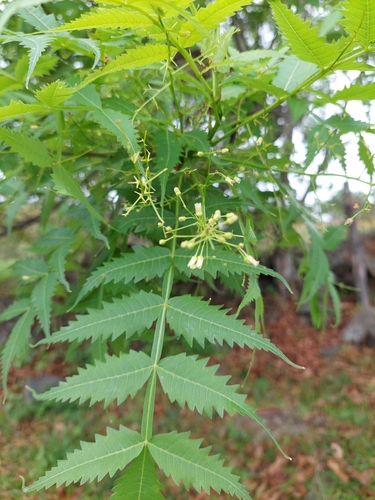
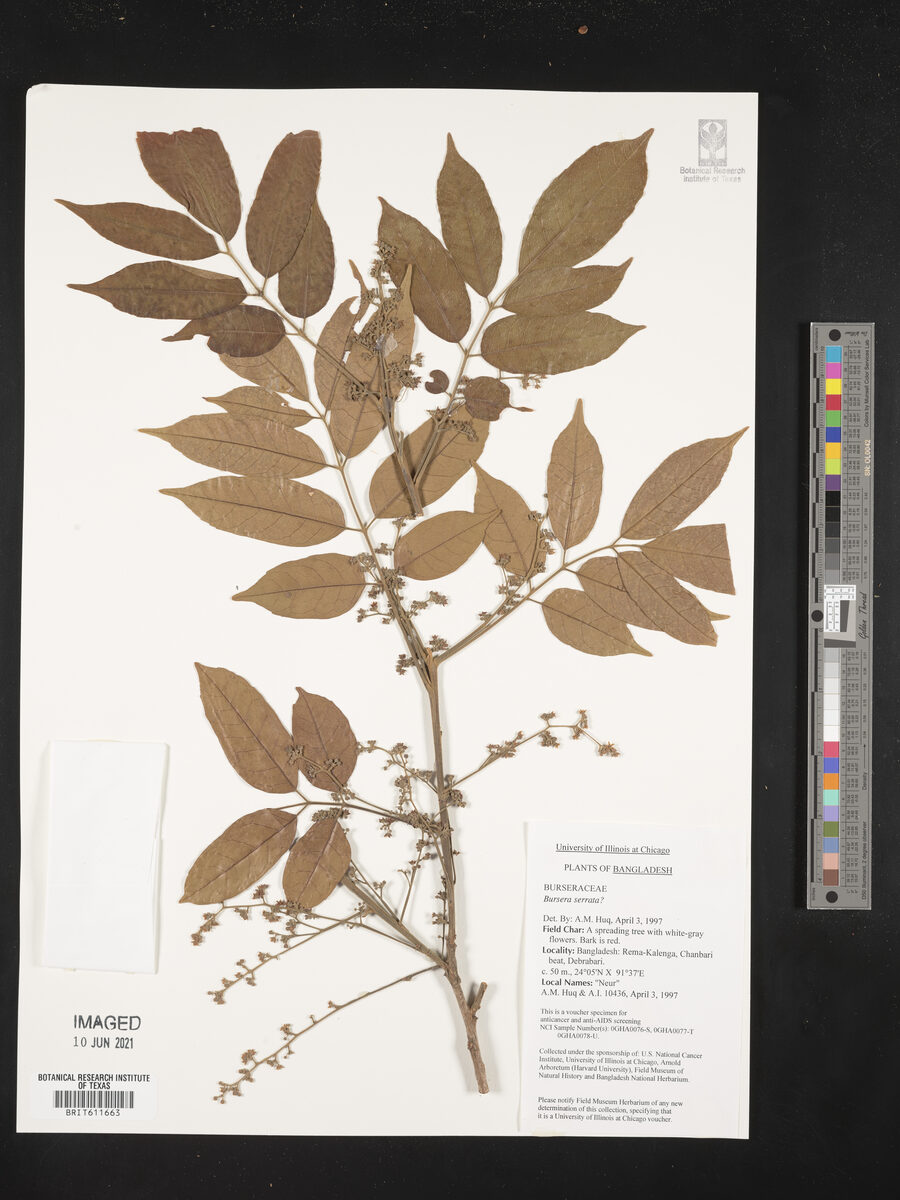
A shrub or small tree. It has several stems. They are usually twined. It grows 2-10 m high. The bark is light grey. It loses its leaves during the year. The leaves are compound and have leaflets along the stalk with a leaflet at the end. The leaflets are narrowly oval and 3-7 cm long by 2-3 cm wide. Male and female flowers are on separate plants. The flowers are yellow. The fruit are almost round and 2.4 cm long by 2.3 cm wide. There are 3 subspecies.
Edible Uses
The fruit is edible, though not particularly attractive. The roots can be made into a drink, and the seed arils are also eaten.
Traditional Uses
The fruit is edible but not attractive.
This uses section is brief — help expand it
Medicinal Uses
The roots are traditionally prepared as a drink.
Distribution
It is a tropical plant. It grows in hot arid places where there is a marked dry season. It grows in areas with an annual rainfall or 500-800 mm. It grows in well-drained sandy soils. In southern Africa it grows between 450-1,500 m above sea level. It can grow in arid places.
Where It Grows
Africa, Botswana, East Africa, Ethiopia, Kenya, Malawi, Mozambique, Namibia, Somalia, South Africa, Southern Africa, Tanzania, Uganda, Zambia, Zimbabwe,
Cultivation
Plants can be grown from seeds. It can be grown from large cuttings. It can be cut back and it will re-grow.
Other Uses
A gum-resin exudes from the cut stems. It is fairly scented, sparse or sometimes copious and milky. It can be used as glue for attaching feathers on to arrows. Branches of ssp. boiviniana are used for making fire by friction. The wood makes a good fuel. The tree protects the surrounding soil from erosion. The leaf litter helps to enhance soil fertility.
Other Information
The fruit are widely used.
Synonyms
Also Known As
Coubo, Incobo, Kyoa kika, Moroka, Mokonoto, Mubobobo, Mucharoro, Mumwatikatiki, Skurweblaar, Shipon-doti
References (10)
- Fox, F. W. & Young, M. E. N., 1982, Food from the Veld. Delta Books. p 139
- Goode, P., 1989, Edible Plants of Uganda. FAO p 30 (As Commiphora boiviniana)
- Mutie, F. G., 2020, Conservation of Wild Food Plants and Their Potential for Combatting Food Insecurity in Kenya as Exemplified by the Drylands of Kitui County. Plants 2020, 9, 1017
- Royal Botanic Gardens, Kew (1999). Survey of Economic Plants for Arid and Semi-Arid Lands (SEPASAL) database. Published on the Internet; http://www.rbgkew.org.uk/ceb/sepasal/internet [Accessed 4th April 2011]
- Ruiters-Welcome, A. K., 2019, Food plants of southern Africa. Ph.D. thesis. Univ. of Johannesburg p 40
Show all 10 references Hide references
- Schmidt, E., Lotter, M., & McCleland, W., 2007, Trees and shrubs of Mpumalanga and Kruger National Park. Jacana Media p 244
- Welcome, A. K. & Van Wyk, B.-E., 2019, An inventory and analysis of the food plants of southern Africa. South African Journal of Botany 122 (2019) 136–179
- World Checklist of Useful Plant Species 2020. Royal Botanic Gardens, Kew
- www.worldagroforestrycentre.org/treedb/
- www.zimbabweflora.co.zw 2011