Syzygium acuminatissimum
(Blume) DC.
Samak myrtle tree
iNaturalist· cc-by-nc
(c) von_c, some rights reserved (CC BY-NC)
iNaturalist· cc-by
(c) 呂一起(Lu i-chi), some rights reserved (CC BY), uploaded by 呂一起(Lu i-chi)
iNaturalist· cc-by-nc
(c) cheryeh, some rights reserved (CC BY-NC)
Description
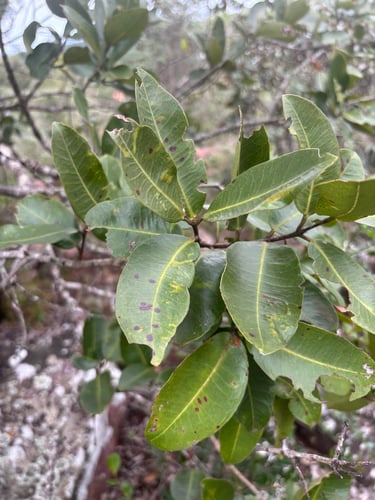
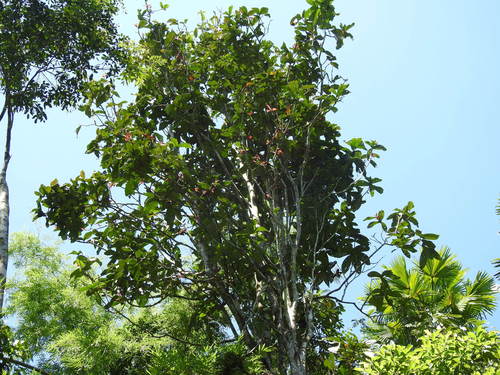
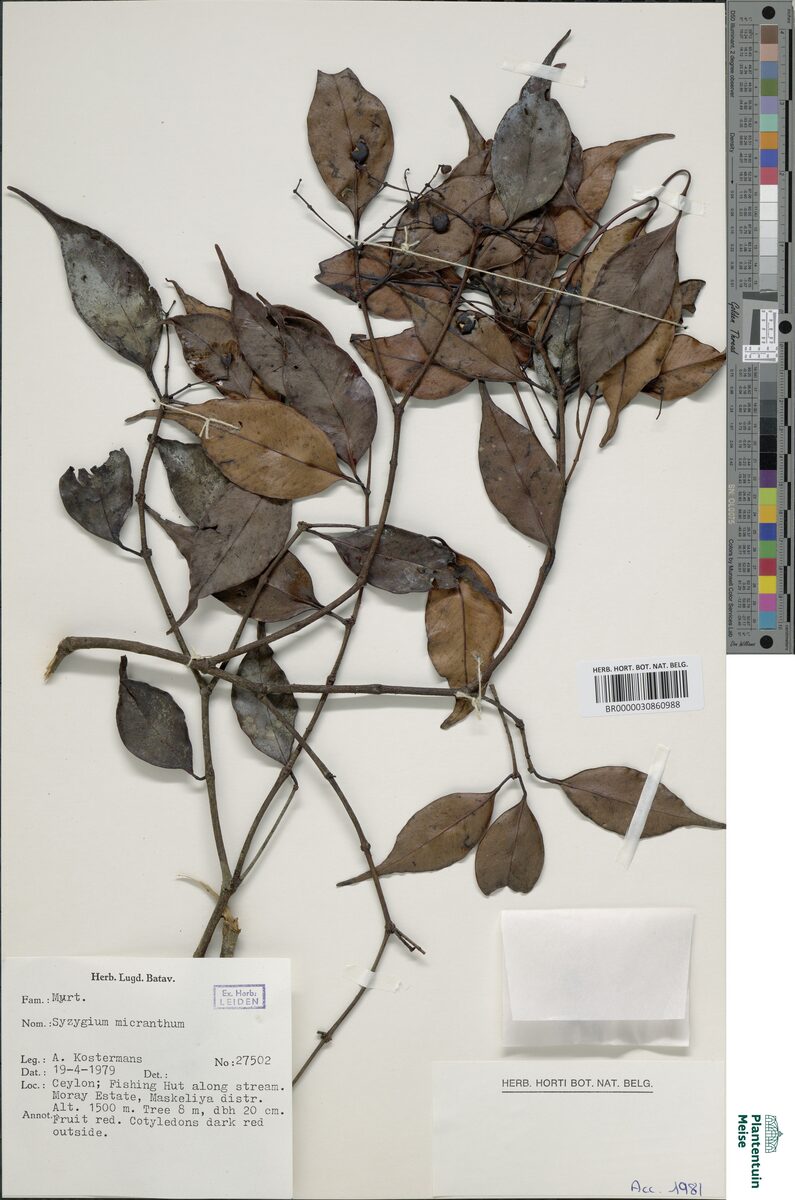
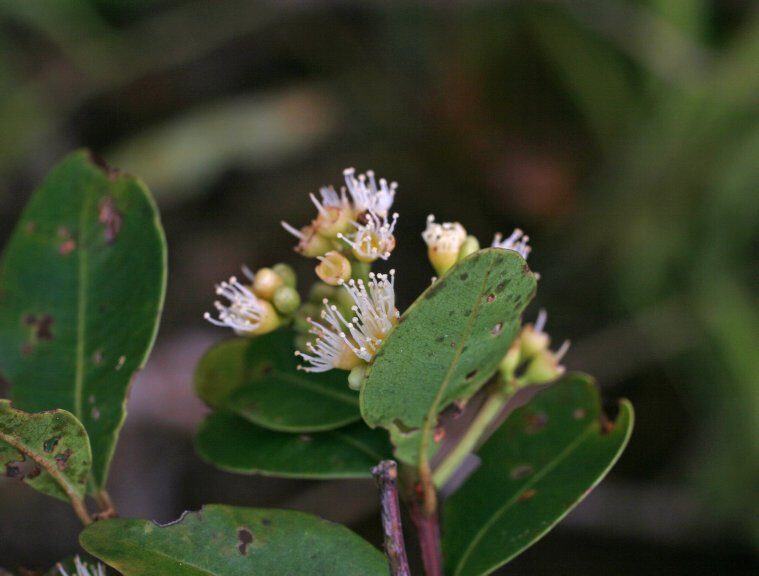
A medium sized tree with many slender, round, smooth smaller branches. It is evergreen and grows 12-30 m high. The trunk is 60 cm across. It has small buttresses or stilt roots. The bark is grey or red brown. It is smooth but can be cracked. The leaves are papery. The leaves are scattered and opposite. They are oblong and sharply pointed at the tip but blunt at the base. They are 4.5-15 cm long by 1.5-5.5 cm wide. The midrib forms a channel on the upper surface. The flowering cluster is 3.5 cm long. The flowers are 4 mm across. The flowers are white or pale yellow. They do not have stalks. The stamens protrude. The fruit are red to black and fleshy. The fruit is hard and egg shaped sideways. The fruit are 1 cm across.
Edible Uses
The fleshy layer of the fruit is eaten raw, though it is acidic and sour.
Traditional Uses
The fleshy layer of the fruit is eaten raw. It is acidic. The fruit is sour and eaten.
This uses section is brief — help expand it
Distribution
A tropical plant. They are widely scattered in dry forests and along wooded river banks throughout the Philippines. In Vietnam it is mostly below 1,000 m altitude. It can grow in mixed forests up to 3,000 m above sea level.
Where It Grows
Asia, Australia, Cambodia, China, Cuba, India, Indochina, Indonesia, Malaysia, Myanmar, New Guinea, Pacific, Papua New Guinea, PNG, Philippines, SE Asia, Singapore, Solomon Islands, Taiwan, Thailand, Vietnam, West Indies,
Cultivation
Plants can be grown from seed. They can also be grown from cuttings.
Propagation
Seed - best sown as soon as it is ripe.
Other Uses
A structural timber. We do not have any more specific information for the wood of this species, but the various species of Syzygium tend to have somewhat similar timber. The general description of syzygium timber is as follows:- The heartwood is a golden brown, greyish brown or brown, with pink or purplish glints; it is not clearly demarcated from the 1 - 4cm wide band of sapwood. The texture is fine; the grain slightly interlocked, sometimes wavy or irregular; there are resin deposits. The wood is heavy; moderately hard; somewhat durable, being moderately resistant to fungi and termites, but susceptible to dry wood borers. It seasons slowly, with a high risk of checking and distortion; once dry it is moderately stable in service. It works well with ordinary tools, nailing and screwing are good so long as the wood is pre-bored; gluing is correct. The wood is used for musical instruments, tool handles, furniture components, ship building, heavy carpentry, flooring, joinery etc.
Notes
There are 15-25 Acmena species - now in Syzygiums. They occur in tropical Asia and Australia. There are about 500-1,000 Syzygium species. They are mostly in tropical and subtropical South America. There has been some confusion between Eugenia and Syzygium. Syzygium had short fruit stalks.
Synonyms
Also Known As
Arang, Binoloan, Dial besar, Heyas, Kayu arang, Kelat api, Kelat asam, Kelat belian, Kelat bukit, Kelat jambu, Kelat lapis, Kelat merah, Ki sireum beureum, Klampok, Pohon jambu kelat, Pohon jambu samak, Obah, Thao, Ubah samak, Wuluhan
References (12)
- Argent, G et al, nd, Manual of the Larger and More important non Dipterocarp Trees of Central Kalimantan Indonesia. Volume 2 Forest Research Institute, Samarinda, Indonesia. p 464
- Burkill, I.H., 1966, A Dictionary of the Economic Products of the Malay Peninsula. Ministry of Agriculture and Cooperatives, Kuala Lumpur, Malaysia. Vol 1 (A-H) p 975 (As Eugenia acuminatissima)
- Forest Inventory and Planning Institute, 1996, Vietnam Forest Trees. Agriculture Publishing House p 564
- Hariyadi, B., 2008, The Entwined Tree: Traditional Natural Resource Management of Serampas, Jambi, Indonesia. Ph. D thesis. Univ. or Hawaii. p 427 (As Acmena)
- Heyne, K., 1927 p 1182
Show all 12 references Hide references
- MacKinnon, K., 1981, The Ecology of Kalimantan. p 712 (As Eugenia)
- Monsalud, M.R., Tongacan, A.L., Lopez, F.R., & Lagrimas, M.Q., 1966, Edible Wild Plants in Philippine Forests. Philippine Journal of Science. p 503
- Prodr. 3:261. 1828
- Singh, H.B., Arora R.K.,1978, Wild edible Plants of India. Indian Council of Agricultural Research, New Delhi. p 59
- Slik, F., www.asianplant.net
- Sukarya, D. G., (Ed.) 2013, 3,500 Plant Species of the Botanic Gardens of Indonesia. LIPI p 103, 530 (Also as Acmena acuminatissima)
- World Checklist of Useful Plant Species 2020. Royal Botanic Gardens, Kew