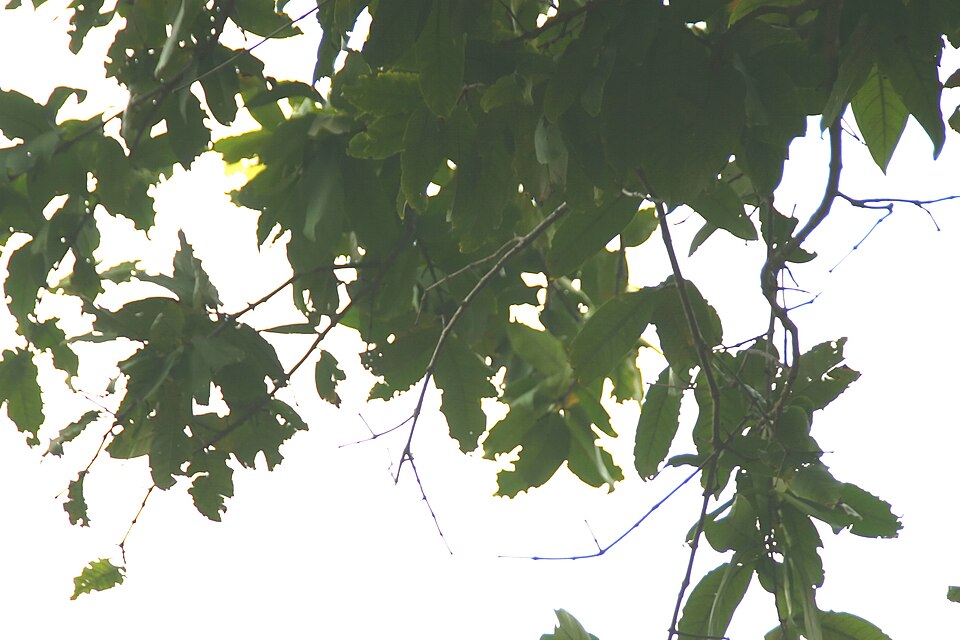
Gossia fragrantissima
(F. Muell. ex Benth.) Burret
Small-leaved Myrtle, Sweet Myrtle
iNaturalist· cc-by-nc
(c) Nicholas John Fisher, some rights reserved (CC BY-NC)
iNaturalist· cc-by-nc
(c) Nicholas John Fisher, some rights reserved (CC BY-NC)
iNaturalist· cc-by-nc
(c) Nicholas John Fisher, some rights reserved (CC BY-NC)
Summary
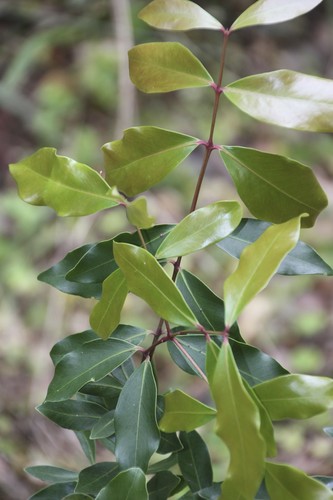
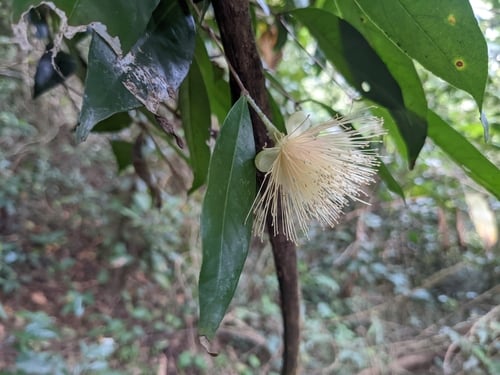
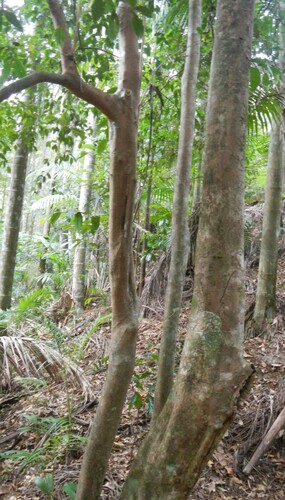
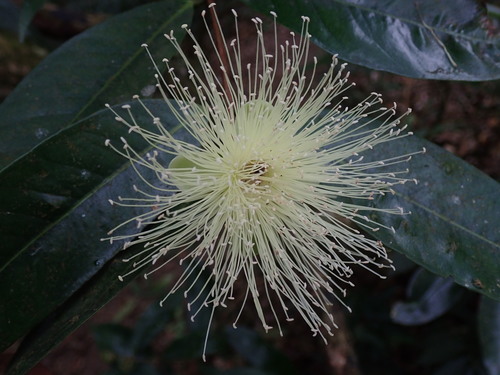
Source: WikipediaGossia fragrantissima, the sweet myrtle or small-leaved myrtle, is a shrub or small tree of eastern Australia. A plant with a ROTAP rating of 3EC-, endangered by extinction. It is found in sub-tropical rainforests near streams, from near Woodburn, New South Wales to Nambour in southeastern Queensland. It features fragrant flowers, hence the specific epithet fragrantissima. White flowers grow from October to February. The sweet myrtle may grow to seven metres tall. Bark is rough, fawn brown in colour, often flaking off in small particles. The berry matures in January and February, globular in shape, 4 to 6 mm in diameter. It may appear green, yellow, orange or red. The fruit has four persistent calyx lobes. Leaves are opposite on the stem, broad ovate, 1.5 to 5 cm long, 8 to 25 mm wide. An intra-marginal leaf vein is usually absent. Leaves are without toothed edges and have only 5 to 8 lateral veins, only visible on the underside. Gossia acmenoides and Gossia bidwillii have 15 to 20 lateral veins. Regeneration is difficult from seed, and cuttings seldom strike. The former habitat is now mostly destroyed for housing and agriculture.
Description
A tall shrub. It grows 3-6 m high and spreads 2-3 m wide. The bark is rough and brown. The leaves are 1.5-6 cm long by 1-3 cm wide. They are oval or sword shaped. They are dark green and glossy but paler underneath. The flowers are 4-5 mm across. They are white and have a scent. They can occur singly or in small groups of 2 or 3. The fruit is a berry. It is 4-6 mm long and oval. It is bright red.
Edible Uses
The leaves are used to make tea.
Distribution
It grows in warm temperate places. It is often along stream banks and dry rainforest. It needs a cool moist position and a well drained soil.
Where It Grows
Australia*,
Cultivation
Plants can be grown from seed or cuttings.
Notes
There are 14 Austromyrtus species. They occur in Australia.
Synonyms
References (3)
- Cribb, A.B. & J.W., 1976, Wild Food in Australia, Fontana. p 173
- Nicholson, N & H., 1996, Australian Rainforest Plants 3, Terania Rainforest Publishing. NSW. p 14 (As Austromyrtus fragrantissima)
- Williams, J.B., Harden, G.J., and McDonald, W.J.F., 1984, Trees and shrubs in rainforests of New South Wales and Southern Queensland. Univ. of New England, Armidale. p 110