Searsia marlothii
Engl.
Bitter currant, Bitter karee
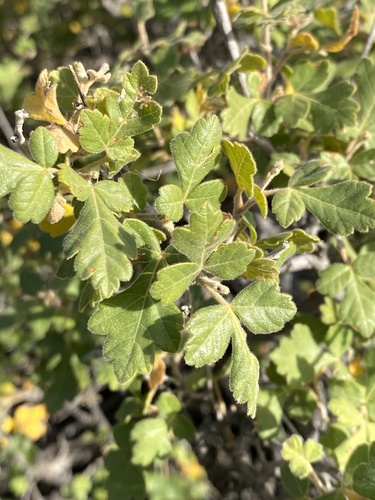
iNaturalist· cc-by-nc
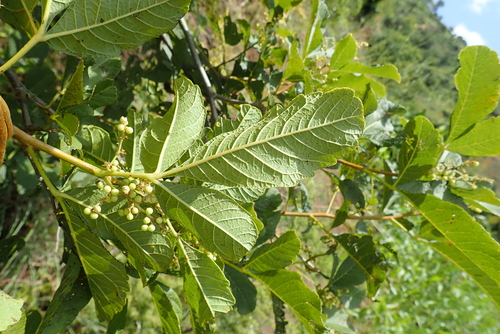
(c) Alex Dreyer, some rights reserved (CC BY-NC), uploaded by Alex Dreyer
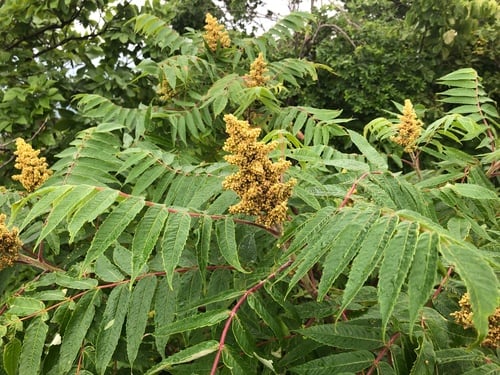
iNaturalist· cc-by-nc
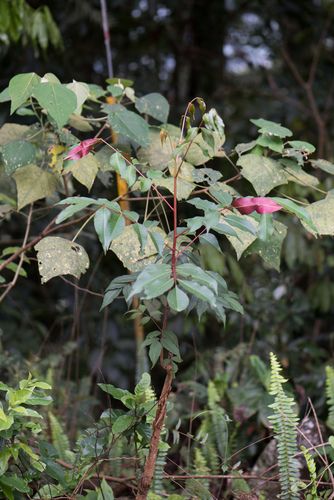
(c) Alex Dreyer, some rights reserved (CC BY-NC), uploaded by Alex Dreyer
Description
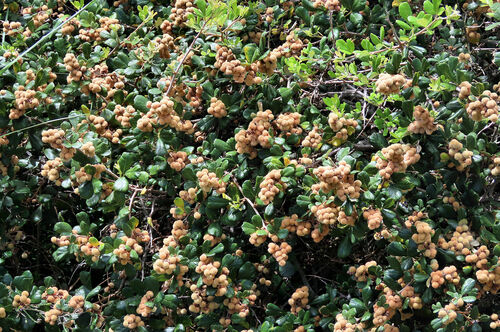
An erect shrub. It has several stems. It grows 1-5 m high. The stems can be spiny. The bark is pale grey and fairly smooth. The leaves have 3 leaflets. The end one is the largest. Male and female flowers are on separate plants. The flowers are small and star like. They are greenish to pale yellow. The flowers are in groups 3 cm long in the axils of leaves. The fruit are 5 mm across and light brown.
Edible Uses
The fruit are eaten raw, typically rubbed in the hands to remove the skin which is blown away before eating.
Traditional Uses
The fruit are eaten raw. The fruit are rubbed in the hands to remove the skin which is blown away and the fruit eaten.
This uses section is brief — help expand it
Distribution
It is a tropical plant. It grows in regions with a marked dry season. It grows in regions with a rainfall less than 500 mm per year. It can tolerate drought. It can tolerate frost. In southern Africa it grows between 300-1,700 m altitude. It can grow in arid places.
Where It Grows
Africa, Botswana, Namibia, Southern Africa,
Cultivation
It can be cut back and will re-grow.
Synonyms
Also Known As
Mukoko, Okasauroro
References (7)
- Leger, S., 1997, A Description of Today's Use of Plants in West Bushmanland (Namibia). German Development Service. PO Box 220035, 14061 Berlin, Germany. http://www.sigridleger.de/book/
- Mannheimer, C. A. & Curtis. B.A. (eds), 2009, Le Roux and Muller's Field Guide to the Trees and Shrubs of Namibia. Windhoek: Macmillan Education Namibia. p 284
- Moffett, R. O., 2007, Name changes in the Old World Rhus and recognition of Searsia (Anacardiaceae). Bothalia 37,2: 165-175 (2007)
- Royal Botanic Gardens, Kew (1999). Survey of Economic Plants for Arid and Semi-Arid Lands (SEPASAL) database. Published on the Internet; http://www.rbgkew.org.uk/ceb/sepasal/internet [Accessed 28th March 2011] (As Rhus marlothii)
- Ruiters-Welcome, A. K., 2019, Food plants of southern Africa. Ph.D. thesis. Univ. of Johannesburg p 16
Show all 7 references Hide references
- Welcome, A. K. & Van Wyk, B.-E., 2019, An inventory and analysis of the food plants of southern Africa. South African Journal of Botany 122 (2019) 136–179
- World Checklist of Useful Plant Species 2020. Royal Botanic Gardens, Kew