Cardiocrinum cordatum
(Thunb.) Makino
iNaturalist· cc-by-nc
(c) ivanya, some rights reserved (CC BY-NC)
iNaturalist· cc-by-nc
(c) Hiromi kobori, some rights reserved (CC BY-NC), uploaded by Hiromi kobori
iNaturalist· cc-by-nc
(c) ヒーロー, some rights reserved (CC BY-NC), uploaded by ヒーロー
Summary
Source: WikipediaCardiocrinum cordatum, known as turep in the Ainu languages, is a Northeast Asian species of plant in the lily family. It is native to Japan and to certain Russian islands in the Sea of Okhotsk (Sakhalin, Kuril Islands). Because of its large, showy flowers, Cardiocrinum cordatum is sometimes cultivated as an ornamental in regions outside its native range, though not as frequently as the related C. giganteum. The Ainu, a group indigenous to Hokkaido, harvested the bulbs. Starch was extracted and used to create a form of dumpling, a staple of Ainu cuisine. The plant has reportedly become naturalized in the State of Maryland, in the eastern United States.
Description
A bulb plant. The bulb dies after flowering and plants re-grow from side shoots. The leaves are heart shaped. The flower stems are tall. The flowers are trumpet shaped.
Edible Uses
An edible starch can be obtained from the bulb. Young leaves can be eaten cooked, though harvesting them will considerably weaken the plant and is not recommended under normal circumstances.
Traditional Uses
The starchy bulbs are cooked and eaten. They are added to soup.
This uses section is brief — help expand it
Medicinal Uses
None known.
Known Hazards
None known.
Distribution
It is a temperate plant. It needs fertile, moist, humus rich and well-drained soil. It can grow in bright shade.
Where It Grows
Asia, Himalayas, Japan, North America,
Cultivation
Plants can be grown from fresh seed of offsets.
Propagation
Seed is best sown as soon as it is ripe in a cold frame in autumn. The plant has delayed epigeal germination and may sprout in spring but can take up to two years, especially from stored seed. Alternatively, mix seed with moist leafmould, seal in a plastic bag, and keep at 20°C for three weeks; pot up any seed that germinates, then place the remainder in a fridge at 3–5°C for 4–5 weeks before sowing in a warm spot. Grow seedlings on in pots in a shaded position in a cold frame or greenhouse for 3–4 years before planting out permanently. Bulblets can be taken from the base of the old plant after flowering; pot these up and plant out once well established.
Other Uses
None known.
Production
Small corms can flower in 3-4 years while seeds take 5-7 years.
Other Information
It is a cultivated food plant.
Notes
There are 3 Cardiocrinum species.
Nutrition
| Part | Moisture | kJ | kcal | Protein | Vit A | Vit C | Iron | Zinc |
|---|---|---|---|---|---|---|---|---|
| Roots - fermented | 11.2 | 1 | 351 | 3 | — | — | — | — |
| Roots - powder | 17.8 | 1 | 330 | 0.1 | — | — | 0.2 | — |
| Roots | 75.6 | 399 | 95.4 | 1.4 | — | — | 0.5 | — |
| Leaves | — | — | — | — | — | — | — | — |
Synonyms
Also Known As
Turep
References (8)
- Arora, R. K., 2014, Diversity in Underutilized Plant Species - An Asia-Pacific Perspective. Bioversity International. p 26, 105 (As Lilium cordifolium)
- Bot. Mag. (Tokyo) 27:124. 1913
- Chen, B. & Qiu, Z., Consumer's Attitudes towards Edible Wild Plants, Ishikawa Prefecture, Japan. p 22 www.hindawi.com/journals/ijfr/aip/872413.pdf
- Kays, S. J., and Dias, J. C. S., 1995, Common Names of Commercially Cultivated Vegetables of the World in 15 languages. Economic Botany, Vol. 49, No. 2, pp. 115-152 (As Lilium cordifolium)
- Kuhnlein, H. V., et al, 2009, Indigenous Peoples' food systems. FAO Rome p 148 (As Lilium cordifolium)
Show all 8 references Hide references
- Plants for a Future database, The Field, Penpol, Lostwithiel, Cornwall, PL22 0NG, UK. http://www.scs.leeds.ac.uk/pfaf/
- Turner, N. J. et al, 2011, Edible and Tended Wild Plants, Traditional Ecological Knowledge and Agroecology. Critical Reviews in Plant Sciences, 30:198-225 (As Lilium cordatum)
- World Checklist of Useful Plant Species 2020. Royal Botanic Gardens, Kew
More from Liliaceae
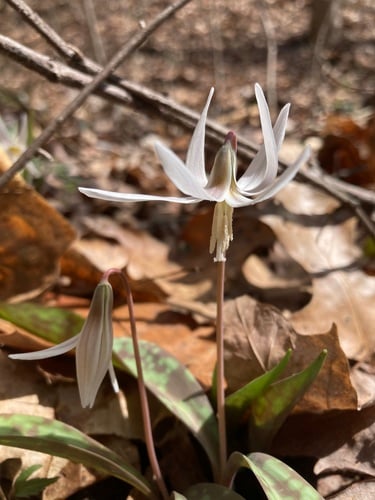
Erythronium albidum
White trout-lily, Blonde Lilian, White dogtooth violet
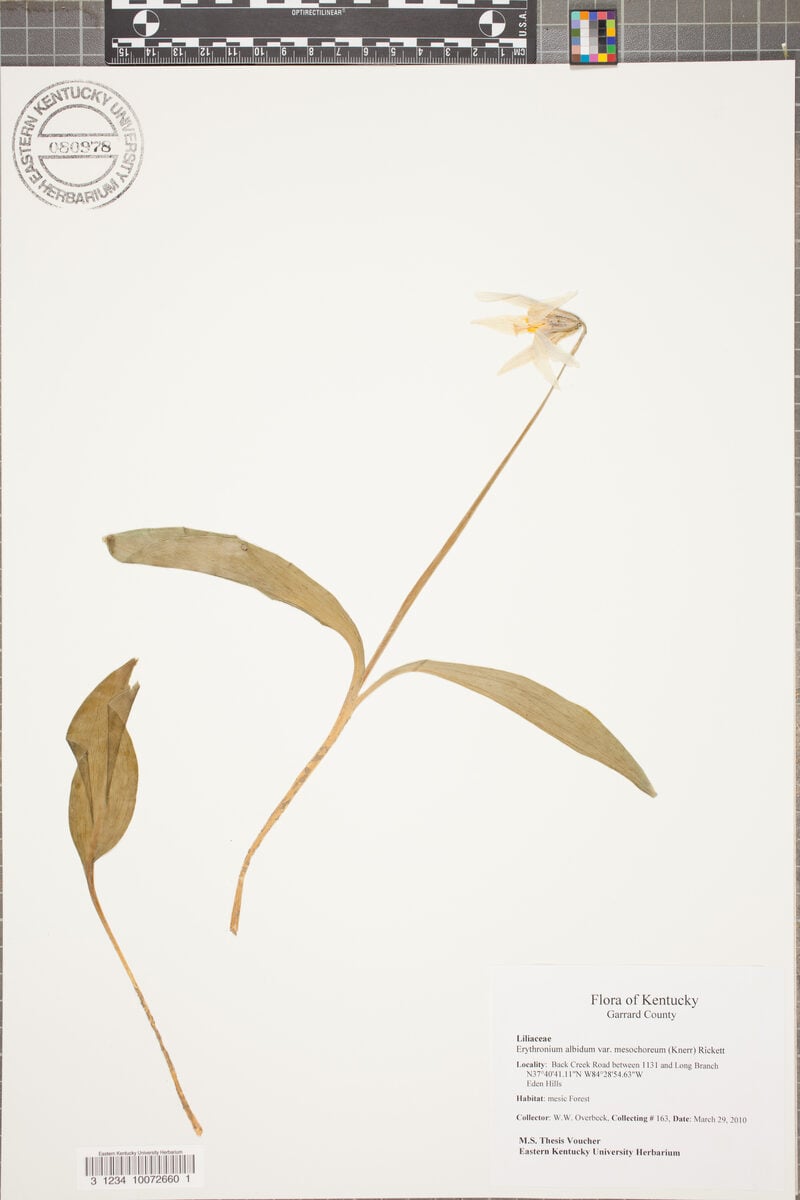
Erythronium albidum mesochoreum - (Kuerr.)Ricket.
Prairie Trout Lily
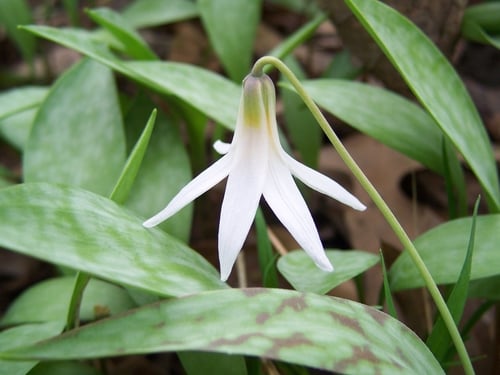
Erythronium albidum var. mesochoreum
Fawnlily
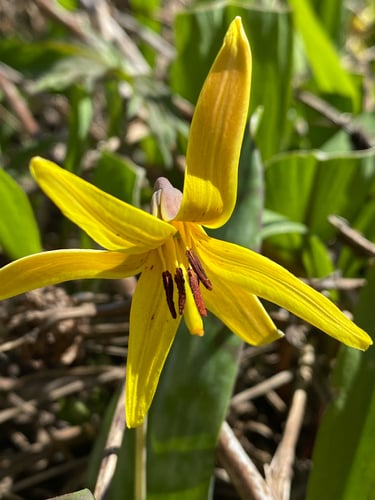
Erythronium americanum
Trout lily, Dog tooth violet, Prairie fawnlily, Snake lily, Yellow adder's tongue, Amberbell
Erythronium californicum
Fawn lily
Erythronium citrinum