Erythronium helenae
Appleg.
Pacific Fawn-lily
iNaturalist· cc-by-nc-nd
(c) David Hofmann, some rights reserved (CC BY-NC-ND)
iNaturalist· cc-by-nc-nd
(c) David Hofmann, some rights reserved (CC BY-NC-ND)
Summary
Source: WikipediaErythronium helenae is a species of flowering plant in the lily family which is known by the common names Pacific fawn lily and St. Helena fawn lily. It is endemic to the coastal mountains north of the San Francisco Bay Area in California. It is named for the local peak Mount Saint Helena, forming the point where Napa, Sonoma and Lake Counties meet. It grows on the slopes of the mountain at elevations of 500–1200 m, often on serpentine soils. Erythronium helenae grows from a bulb 3 to 5 centimeters wide and produces two wide leaves up to 20 centimeters long which are green mottled with brown or white. It produces erect stalks up to 30 centimeters tall, each bearing one to three flowers. The flower has white tepals with yellowish bases 3 or 4 centimeters long. The tepals develop pink or purple streaks or mottling as they age. The flower has yellow stamens with large yellow anthers.
Description
A bulb plant. It grows 15-38 cm high and spreads 10 cm wide. The leaves spread out. They are green with chocolate brown mottles. The flowers have white to cream petals. These are darker near the centre. The anthers are cream.
Edible Uses
Based on use recorded for the closely related E. origonum, the bulb is likely edible raw, cooked, or dried for later use. The corms of this species are 6–8cm long and up to 15mm thick.
Medicinal Uses
None known
Known Hazards
Although no records of toxicity have been seen for this species, the following notes have been seen for another member of this genus and so some caution is advised. Skin contact with the bulbs has been known to cause dermatitis in sensitive people.
Distribution
It occurs in wooded, scrub covered moist volcanic slopes. It needs good drainage. It suits hardiness zones 4-9.
Where It Grows
Australia, North America, USA,
Cultivation
Prefers slightly acid soil conditions but succeeds in chalky soils if these contain plenty of humus. Requires semi-shade, preferably provided by trees or shrubs, and a well-drained soil. Succeeds in almost any light soil, preferring one that is rich in humus. Plants prefer perfect drainage and require drier conditions when dormant. Plants are hardy to at least -15°c. Plants are growing well in the light shade of a woodland garden at Kew. Bulbs should be planted about 7cm deep. This species is closely related to E. californicum, E. origonum, E. citrinum and E. howellii.
Propagation
Seed is best sown as soon as it is ripe in a shady position in a cold frame. Water lightly in summer; it should germinate in autumn or winter. Stored seed requires a period of cold stratification and should be sown as early in spring as possible in a cold frame. Sow thinly so that seedlings will not need pricking out in their first year. Give an occasional liquid feed to prevent nutrient deficiency. When plants are dormant, pot up the small bulbs 2–3 per pot and grow on in a shady position in the greenhouse for a further 2–3 years before planting out into permanent positions when dormant in late summer. When dividing bulbs in summer as the leaves die down, larger bulbs can be replanted immediately into permanent positions, while smaller bulbs are best potted up and grown on in a shady position in a greenhouse for a year before planting out when dormant in late summer.
Other Uses
None known
Notes
There are about 22 Erythronium species.
References (2)
- Cundall, P., (ed.), 2004, Gardening Australia: flora: the gardener's bible. ABC Books. p 564
- Plants for a Future database, The Field, Penpol, Lostwithiel, Cornwall, PL22 0NG, UK. http://www.scs.leeds.ac.uk/pfaf/
More from Liliaceae
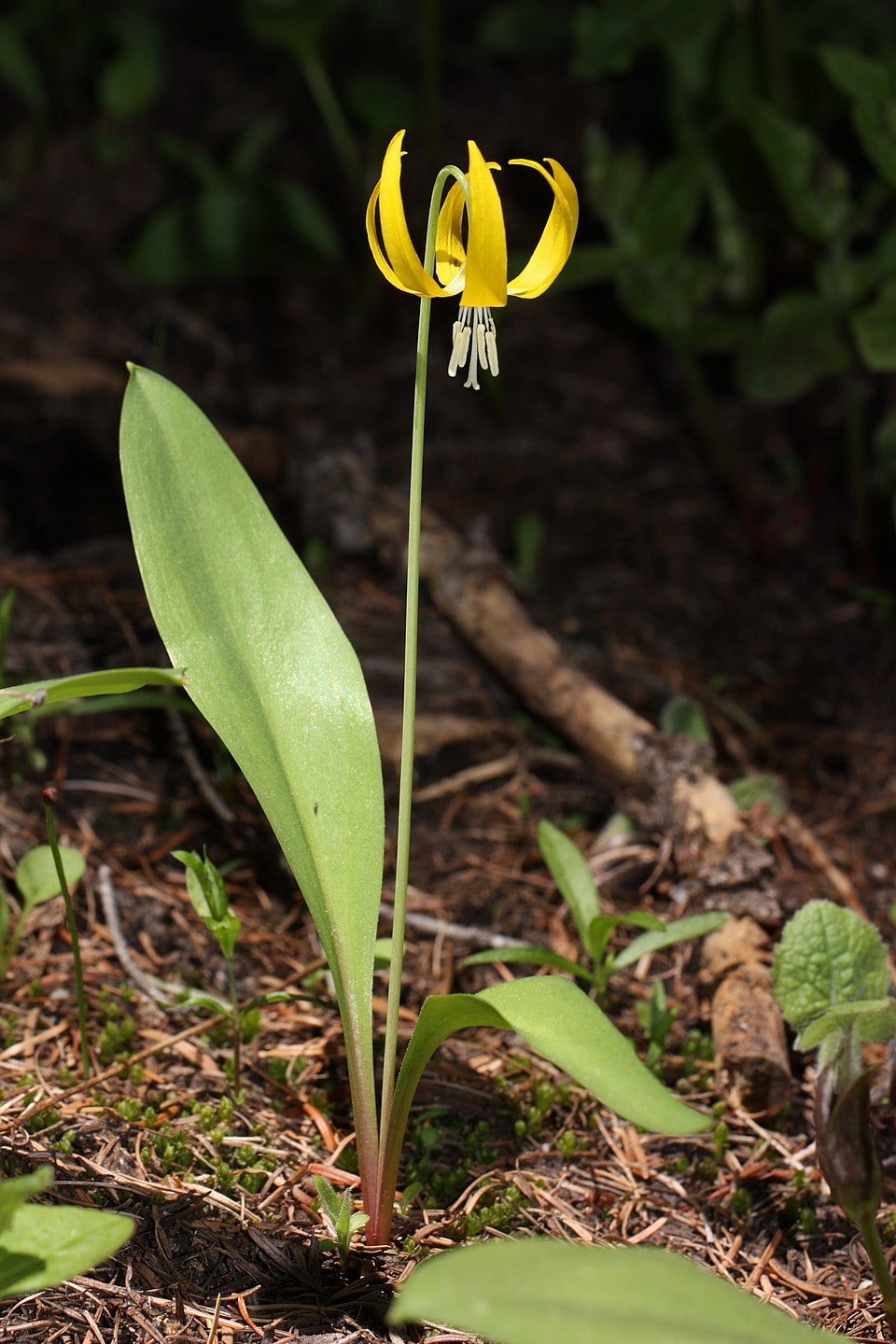
Erythronium parviflorum
Yellow Avalanchelily
Erythronium propullans
Minnesota dwarf trout lily
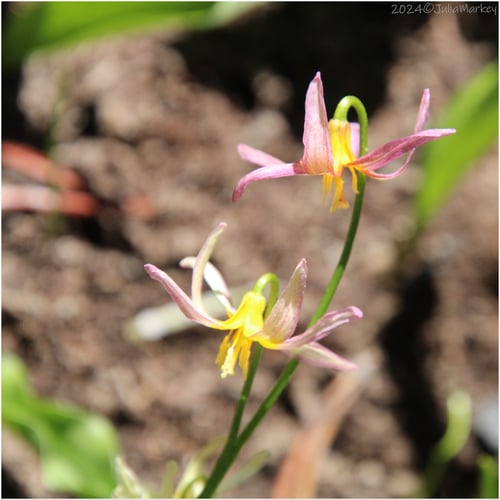
Erythronium purpurascens
Avelanche lily, Purple Fawn-lily
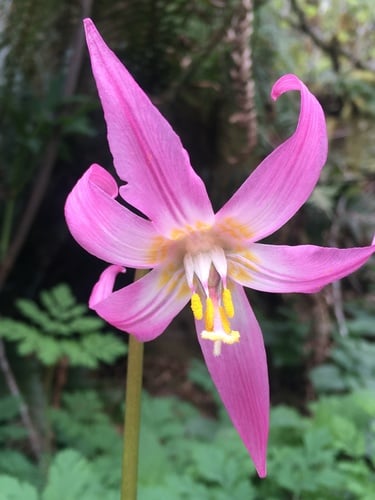
Erythronium revolutum
Pink fawn lily, American trout lily
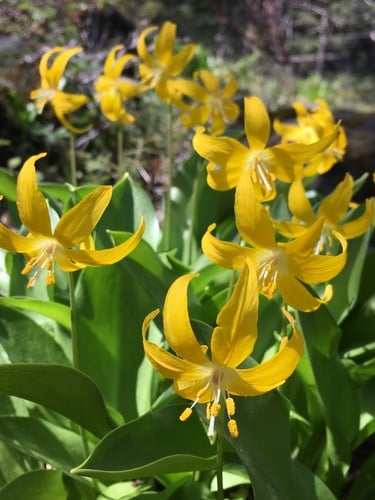
Erythronium tuolumnense
Avelanche lily, Adder's Tongue
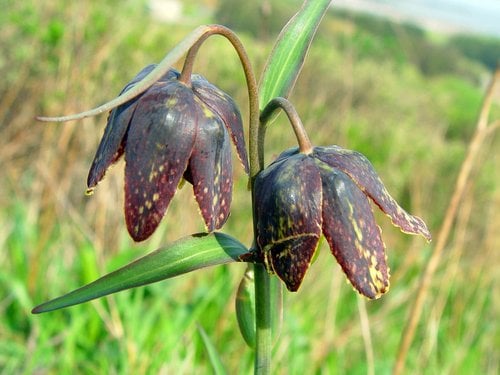
Fritillaria affinis
Rice-grain Fritillary, Chocolate lily, Checker lily