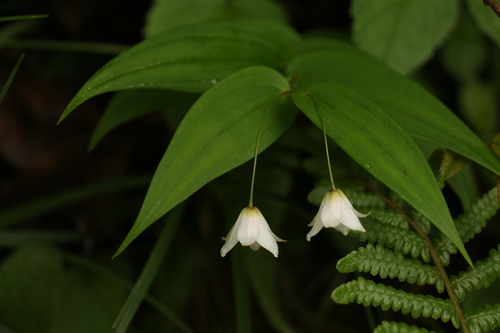
Erythronium grandiflorum
Pursh.
Avalanche lily, Dog's-tooth violet, Glacier lily
iNaturalist· cc-by-nc
(c) Kevin Jessop, some rights reserved (CC BY-NC)
iNaturalist· cc-by-nc
(c) Micah Lauer, some rights reserved (CC BY-NC), uploaded by Micah Lauer
iNaturalist· cc-by-nc
(c) Pam Borso, some rights reserved (CC BY-NC), uploaded by Pam Borso
Summary
Source: WikipediaErythronium grandiflorum is a North American species of plants in the lily family. It is known by several common names, including yellow avalanche lily, glacier lily, and dogtooth fawn lily. The Ktunaxa name for glacier lily is maxa.
Description
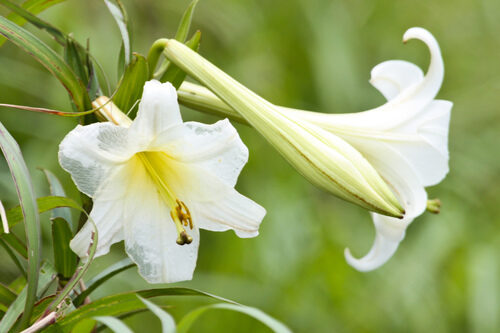
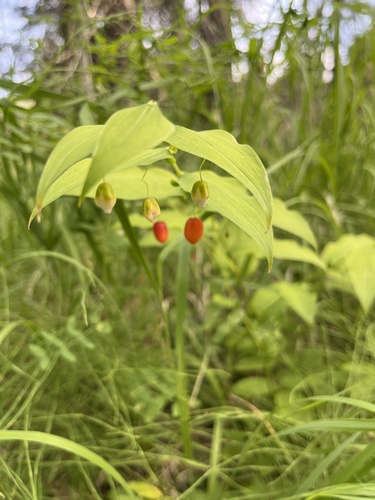
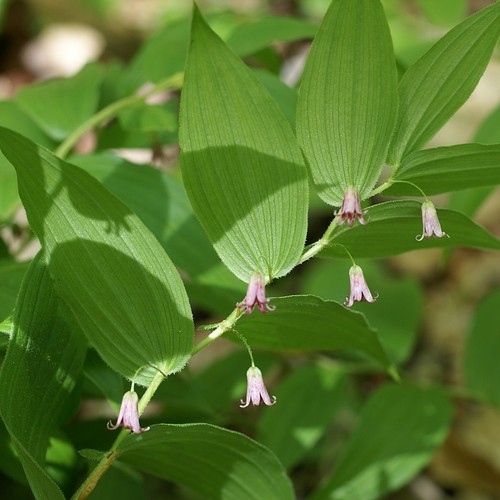
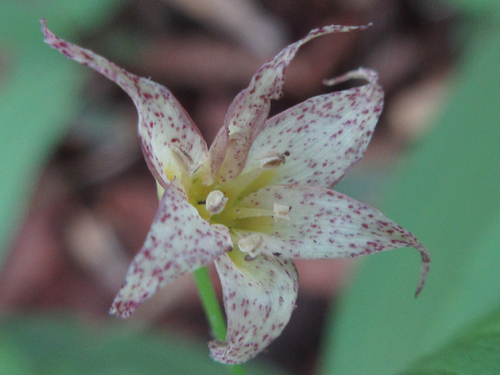
A bulb plant. It is a small herb which keeps growing from year to year. It grows 10-40 cm high. There are usually 2 leaves from the base of the stem. The leaves are not mottled. They are narrow oval and have a sharp point. They are 10-20 cm long. The flowers are golden yellow. They occur as 1-2 flowers that hang down on a slender stalk. Each flower is about 2-5 cm long. The fruit is a dry triangle shaped capsule with many seeds.
Edible Uses
The slender bulbs, up to 5cm long, are usually harvested in spring as the first leaves appear and can be stored for several months in a cool place. Raw, they have a slightly bitter, milky taste with a cool, moist texture — qualities that led North American Indians to favour them on hot days. Cooked, the bulbs become more starchy and sweet, and stored bulbs develop a sweeter flavour when cooked than fresh ones do. The Indians always drank water after eating the bulbs, believing otherwise they would get sick. Large quantities can have an emetic effect. The bulbs can also be dried for later use. Leaves can be eaten raw or cooked, though harvesting them will greatly reduce the vigour of the bulb and is only recommended in times of emergency. Young seedpods can be eaten raw or cooked; the cooked pods taste like French beans.
Traditional Uses
The bulbs are steamed, roasted or boiled. They can be dried and stored. The flower petals are eaten raw in salads.
This uses section is brief — help expand it
Medicinal Uses
The pulverized root was applied to boils and used as a wet dressing on skin sores.
Known Hazards
Skin contact with the bulbs has been known to cause dermatitis in sensitive people.
Distribution
It is a cool temperate plant. The plant needs cool damp conditions and should not be allowed to dry out. It grows near the snowline up to 2,700 m altitude.
Where It Grows
Britain, Canada, Europe, North America, USA,
Cultivation
Prefers slightly acid soil conditions but succeeds in chalky soils if these contain plenty of humus. Requires semi-shade, preferably provided by trees or shrubs, and a well-drained soil. Succeeds in almost any light soil, preferring one that is rich in humus. Not an easy species to grow in Britain, it prefers a well-drained soil that is wet in spring but rather dry in the summer. Plants are best given perfect drainage. Offsets are freely produced if the plant is growing well. Flowers are produced in 3 - 4 years from seed. Bulbs should be planted about 7cm deep.
Propagation
Seed is best sown as soon as it is ripe in a shady position in a cold frame. Water lightly in summer; it should germinate in autumn or winter. Stored seed requires a period of cold stratification and should be sown as early in spring as possible in a cold frame. Sow thinly so that seedlings will not need pricking out in their first year. Give an occasional liquid feed to prevent nutrient deficiency. When plants are dormant, pot up the small bulbs 2–3 per pot and grow on in a shady position in the greenhouse for a further 2–3 years before planting out into permanent positions when dormant in late summer. When dividing bulbs in summer as the leaves die down, larger bulbs can be replanted immediately into permanent positions, while smaller bulbs are best potted up and grown on in a shady position in a greenhouse for a year before planting out when dormant in late summer.
Other Uses
None known
Other Information
It is an important food for some people.
Notes
There are about 22 Erythronium species.
References (16)
- Beckstrom-Sternberg, Stephen M., and James A. Duke. "The Foodplant Database." http://probe.nalusda.gov:8300/cgi-bin/browse/foodplantdb.(ACEDB version 4.0 - data version July 1994)
- Brickell, C. (Ed.), 1999, The Royal Horticultural Society A-Z Encyclopedia of Garden Plants. Convent Garden Books. p 418
- Cormack, R. G. H., 1967, Wild Flowers of Alberta. Commercial Printers Edmonton, Canada. p 35
- Esperanca, M. J., 1988. Surviving in the wild. A glance at the wild plants and their uses. Vol. 2. p 292
- Etkin, N.L. (Ed.), 1994, Eating on the Wild Side, Univ. of Arizona. p 74
Show all 16 references Hide references
- Fl. Amer. sept. 1:231. 1813-1814
- Hedrick, U.P., 1919, (Ed.), Sturtevant's edible plants of the world. p 294
- Kermath, B. M., et al, 2014, Food Plants in the Americas: A survey of the domesticated, cultivated and wild plants used for Human food in North, Central and South America and the Caribbean. On line draft. p 346
- Loughmiller, C & L., 1985, Texas Wildflowers. A Field Guide. University of Texas, Austin. p 146
- MacKinnon, A., et al, 2009, Edible & Medicinal Plants of Canada. Lone Pine. p 197
- Marinelli, J. (Ed), 2004, Plant. DK. p 234
- Moerman, D. F., 2010, Native American Ethnobotany. Timber Press. p 227
- Morley, B. & Everard, B., 1970, Wild Flowers of the World. Ebury press. Plate 167
- Plants for a Future database, The Field, Penpol, Lostwithiel, Cornwall, PL22 0NG, UK. http://www.scs.leeds.ac.uk/pfaf/
- Turner, N., 1997, Food Plants of Interior First Peoples. Royal BC Museum Handbook p 68
- Turner, N., et al, 2011, "Up on the Mountain": Ethnobotanical Important of Montane Sites in Pacific Coastal North America. Journal of Ethnobiology 31(1): 4-43