Erythronium dens-canis
L.
Dog's-tooth violet
iNaturalist· cc-by-nc
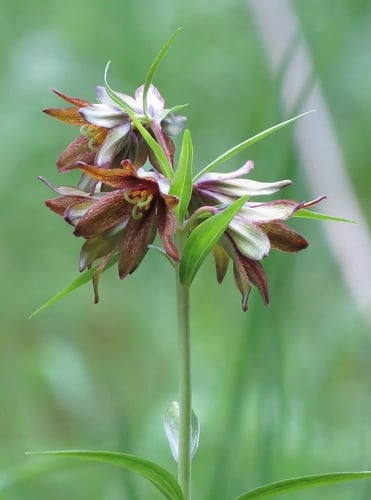
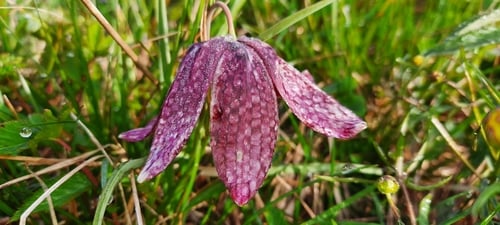
(c) Gilberto Sánchez Jardón, some rights reserved (CC BY-NC), uploaded by Gilberto Sánchez Jardón
iNaturalist· cc-by-nc
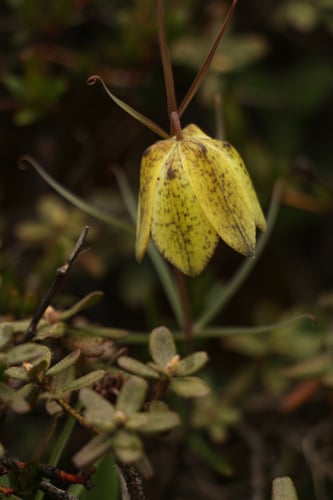
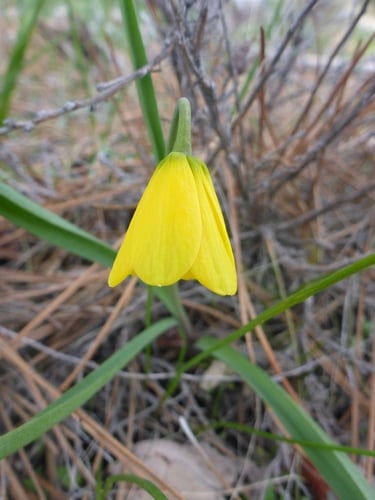
(c) Guillaume Labeyrie, some rights reserved (CC BY-NC), uploaded by Guillaume Labeyrie
iNaturalist· cc-by-nc
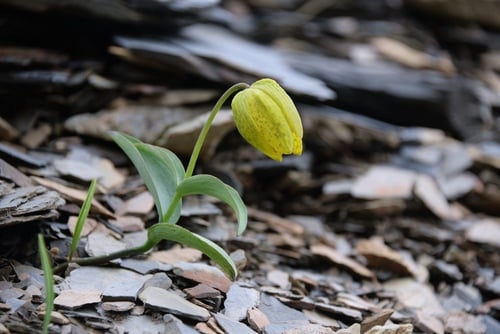
(c) Li Jianong, some rights reserved (CC BY-NC), uploaded by Li Jianong
Summary
Source: WikipediaErythronium dens-canis, the dog's-tooth-violet or dogtooth violet, is a bulbous herbaceous perennial flowering plant in the family Liliaceae, growing to 25 cm (10 in). It is native to central and southern Europe from Portugal to Ukraine. It is the only naturally occurring species of Erythronium in Europe. Despite its common name, it is not closely related to the true violets of genus Viola.
Description
A bulb plant. It grows 10-15 cm high and spreads 8-10 cm wide. The corm is similar in shape to a dog's tooth. The leaves are blue-green and strongly mottled with brown. The flowers are nodding. They vary in colour from purplish pink to white. The centre is usually yellow with a ring of orange-brown marks. The flowers are 5 cm across.
Edible Uses
The bulb can be eaten raw or cooked as a vegetable. It can also be dried and ground into flour, and is a source of starch used in making vermicelli and cakes. Leaves can be cooked, though harvesting them will greatly reduce the vigour of the bulb and is only recommended in times of emergency.
Traditional Uses
The bulbs are dried and then boiled with milk or broth. They are also used for starch used in vermicelli and cakes. The leaves are eaten boiled.
This uses section is brief — help expand it
Medicinal Uses
None known
Known Hazards
Skin contact with the bulbs has been known to cause dermatitis in sensitive people.
Distribution
It can tolerate dryness in the summer. It can grow in bright sun or light shade. It needs well drained soil. It suits hardiness zones 3-9.
Where It Grows
Asia, Australia, Balkans, Bosnia, Europe, Korea, Mongolia, Siberia, Slovenia,
Cultivation
Prefers slightly acid soil conditions but succeeds in chalky soils if these contain plenty of humus. Requires semi-shade, preferably provided by trees or shrubs, and a well-drained soil. Succeeds in almost any light soil, preferring one that is rich in humus. Thrives in light grass. This species does not flower very freely, increasing mainly by its stoloniferous habit. Flowers are produced in 3 - 4 years from seed. Bulbs should be planted about 7cm deep. There are many named forms, selected for their ornamental value. Many of these cultivars have a habit to divide freely to form clumps containing many small non-flowering bulbs. To remedy this, the bulbs should be lifted and divided, replanting them singly about 10cm below soil level.
Propagation
Seed is best sown as soon as it is ripe in a shady position in a cold frame. Water lightly in summer; it should germinate in autumn or winter. Stored seed requires a period of cold stratification and should be sown as early in spring as possible in a cold frame. Sow thinly so that seedlings will not need pricking out in their first year. Give an occasional liquid feed to prevent nutrient deficiency. When plants are dormant, pot up the small bulbs 2–3 per pot and grow on in a shady position in the greenhouse for a further 2–3 years before planting out into permanent positions when dormant in late summer. When dividing bulbs in summer as the leaves die down, larger bulbs can be replanted immediately into permanent positions, while smaller bulbs are best potted up and grown on in a shady position in a greenhouse for a year before planting out when dormant in late summer.
Other Uses
None known
Notes
There are about 22 Erythronium species.
Also Known As
Navadni pasji zob, Pasiji zuib
References (13)
- Burnie, G.(Ed.), 2003, Annuals and Bulbs. The Gardener's Handbooks. Fog City Press. p 265
- Cundall, P., (ed.), 2004, Gardening Australia: flora: the gardener's bible. ABC Books. p 564
- Facciola, S., 1998, Cornucopia 2: a Source Book of Edible Plants. Kampong Publications, p 143
- Hedrick, U.P., 1919, (Ed.), Sturtevant's edible plants of the world. p 294
- Hibbert, M., 2002, The Aussie Plant Finder 2002, Florilegium. p 95
Show all 13 references Hide references
- Joyce, D., 1998, The Garden Plant Selector. Ryland, Peters and Small. p 290
- Lim, T. K., 2015, Edible Medicinal and Non Medicinal Plants. Volume 9, Modified Stems, Roots, Bulbs. Springer p 41
- Plants for a Future database, The Field, Penpol, Lostwithiel, Cornwall, PL22 0NG, UK. http://www.scs.leeds.ac.uk/pfaf/
- Redzic, S. J., 2006, Wild Edible Plants and their Traditional Use in the Human Nutrition in Bosnia-Herzegovina. Ecology of Food and Nutrition, 45:189-232
- Slocum, P.D. & Robinson, P., 1999, Water Gardening. Water Lilies and Lotuses. Timber Press. p 118
- Sp. pl. 1:305. 1753
- Uphof,
- World Checklist of Useful Plant Species 2020. Royal Botanic Gardens, Kew