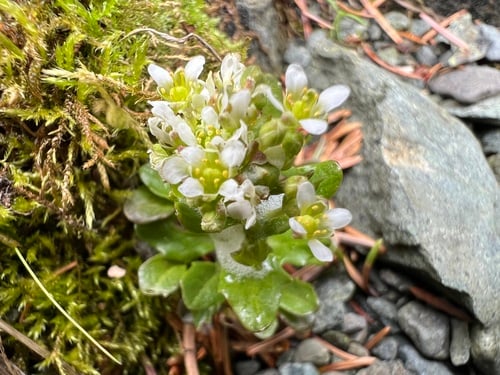
Cardamine scutata
Thunb.
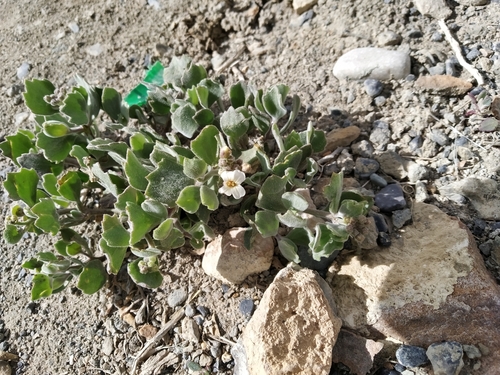
iNaturalist· cc-by-nc
(c) Ольга Курякова, some rights reserved (CC BY-NC)
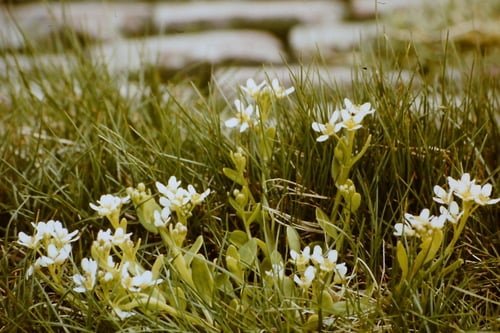
iNaturalist· cc-by-nc
(c) Boris Bolshakov, some rights reserved (CC BY-NC)
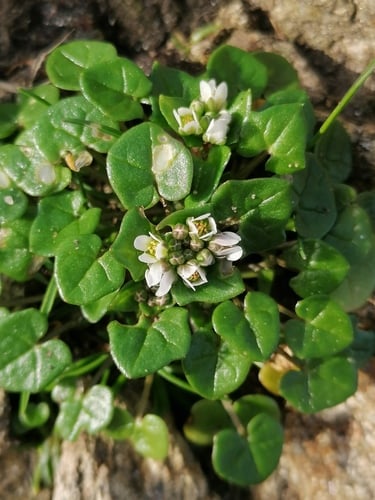
iNaturalist· cc-by-nc
(c) Boris Bolshakov, some rights reserved (CC BY-NC)
Summary
An annual or biennial reaching 0.3 m in height with hermaphrodite flowers from April to August and seeds ripening May to September. Hardy to UK zone 5. Tolerates light sandy, medium loamy, and heavy clay soils across mildly acid to mildly alkaline pH ranges. Grows in semi-shade or full sun and prefers moist to wet soil. Pollinated by bees, flies, moths, and butterflies; self-fertile.
Description
An annual or biennial reaching 0.3 m in height with hermaphrodite flowers from April to August and seeds ripening May to September. Hardy to UK zone 5. Tolerates light sandy, medium loamy, and heavy clay soils across mildly acid to mildly alkaline pH ranges. Grows in semi-shade or full sun and prefers moist to wet soil. Pollinated by bees, flies, moths, and butterflies; self-fertile.
Edible Uses
The leaves can be eaten raw or cooked and have a hot, peppery flavour.
Traditional Uses
The leaves and shoots are eaten as a vegetable.
This uses section is brief — help expand it
Medicinal Uses
None known.
Known Hazards
None known.
Distribution
It is a temperate plant. It grows in valleys, shady slopes, damp sites, along ditches, rock crevices, mountain slopes, roadsides, stream sides; near sea level to 2100 m. altitude in China. In Sichuan.
Where It Grows
Asia, China, Japan, Korea, Nepal, Russia,
Cultivation
We have very little information on this species and do not know if it will be hardy in Britain, though judging by its native range it should succeed outdoors in most parts of this country. The following notes are based on the general needs of the genus. Prefers a moist humus rich soil in shade or semi-shade but succeeds in most soils that are not dry.
Propagation
Sow seed in spring or autumn directly in situ.
Other Uses
None known.
Notes
There are about 160 Cardamine species. They are mostly in damp places in temperate regions.
Synonyms
Also Known As
Chamsure ghans
References (5)
- Dangol, D. R. et al, 2017, Wild Edible Plants in Nepal. Proceedings of 2nd National Workshop on CUAOGR, 2017.
- Flora of China @ efloras.org Volume 8
- Gautam, R. S., et al, 2022, Ethnobotanical Review of Wild Edible Plants of Nepal. Journal of Natural History Museum Volume 32, 2021-22 p 108
- Plants for a Future database, The Field, Penpol, Lostwithiel, Cornwall, PL22 0NG, UK. http://www.scs.leeds.ac.uk/pfaf/
- Zhou Taiyan, Lu Lianli, Yang Guang; Ihsan A. Al-Shehbaz, BRASSICACEAE (CRUCIFERAE), Flora of China.