Cardamine macrophylla
Willdenow
Large-leaved bitter cress, Central China bitter cress
iNaturalist· cc-by-nc
(c) V.S. Volkotrub, some rights reserved (CC BY-NC), uploaded by V.S. Volkotrub
iNaturalist· cc-by-nc
(c) Sergey_Cher, some rights reserved (CC BY-NC)
iNaturalist· cc-by-nc
(c) Sergey_Cher, some rights reserved (CC BY-NC)
Summary
Source: WikipediaA perennial reaching 0.3 m (1 ft) tall. Hardy to UK zone 6. Flowers in June with seeds ripening July to September. Hermaphroditic and self-fertile, pollinated by bees, flies, moths, and butterflies. Adapts to light sandy, medium loamy, and heavy clay soils with mildly acidic to mildly alkaline pH. Grows in semi-shade (light woodland) or full sun, preferring moist or wet soil.
Description
A cabbage family herb. It grows 30-95 cm tall. It has creeping rhizomes or underground stems. The flower stems are erect and unbranched. The leaves are compound with leaflets along the stalk. The leaves are 7-10 cm long. There are 9-11 leaflets that are narrowly sword shaped and 3-8 cm long and up to 2 cm wide. There are teeth along the edge. The flowers are purple. The pod is narrow and 2-3.5 cm long and flattened. The seeds are oblong and 2 mm long. They are brown.
Edible Uses
Leaves and young shoots are best eaten cooked.
Traditional Uses
Young parts are cooked and eaten as a vegetable.
This uses section is brief — help expand it
Medicinal Uses
None known
Distribution
It is a temperate plant. It grows in damp forests, river banks, tundra, rock crevices, meadows, damp woodlands, thickets, stream sides, valleys, ravines, mountain slopes, among boulders between 500–4200 m altitude in China. In Northeastern India it grows between 3,500-4,000 m above sea level. It grows in wetlands. In Yunnan.
Where It Grows
Asia, Bhutan, Central Asia, China, India, Himalayas, Japan, Kashmir, Kazakhstan, Mongolia, Nepal, Northeastern India, Pakistan, Russia, Sikkim, Siberia, Tibet,
Cultivation
Succeeds in most soils. Prefers a moist humus rich soil in shade or semi-shade. Best grown in cool places by water. A very ornamental plant, it is hardy to about -15°c.
Propagation
Sow seed outdoors in a shady seedbed in April, then plant out in autumn or spring. Divide clumps in spring — larger clumps can go straight into their permanent positions, but smaller ones do better potted up in a cold frame until well rooted, then planted out in summer or the following spring.
Other Uses
None known
Notes
There are about 160 Cardamine species. They are mostly in damp places in temperate regions.
Nutrition
| Part | Moisture | kJ | kcal | Protein | Vit A | Vit C | Iron | Zinc |
|---|---|---|---|---|---|---|---|---|
| Leaves | 91.2 | — | 333.3 | 27.8 | — | — | 2.3 | 0.6 |
Synonyms
Also Known As
Chhurukpa, Da ye sui mi qi, Shi gen cai, Shijiacai, Shu, Wang-hru, You
References (14)
- Flora of China. www.eFloras.org Volume 8
- Geng, Y., et al, 2016, Traditional knowledge and its transmission of wild edibles used by the Naxi in Baidi Village, northwest Yunnan province. Journal of Ethnobiology and Ethnomedicine. 12:10
- Ghimire, S. K., et al, 2008, Non-Timber Forest Products of Nepal Himalaya. WWF Nepal p 55
- Hu, Shiu-ying, 2005, Food Plants of China. The Chinese University Press. p 415 (Also as Cardamine urbaniana)
- Kang, Y., et al, 2012, Wild food plants and wild edible fungi in two valleys on the Qinling Mountains (Shaanxi, central China) Journal of Ethnobiology and Ethnomedicine; 9:26
Show all 14 references Hide references
- Kang, Y., et al, 2014, Wild food plants used by the Tibetans of Gongba Valley (Zouqu country, Gansu, China) Journal of Ethnobiology and Ethnomedicine 10:20
- Li, S., et al, 2020, Monpa, memory, and change: an ethnobotanical study of plant use in Mêdog County, South-east Tibet, China. Journal of Ethnobiology and Ethnomedicine. (2020) 16:5 p 16
- Plants for a Future database, The Field, Penpol, Lostwithiel, Cornwall, PL22 0NG, UK. http://www.scs.leeds.ac.uk/pfaf/
- Seal, T., et al, 2017, Nutritional potential of five unexplored wild edible plants consumed by the tribal people of Arunachal Pradesh state in India. International Journal of Food Science and Nutrition. Volume 2; Issue 2; Page No. 101-105
- Tsering, J., et al, 2017, Ethnobotanical appraisal on wild edible plants used by the Monpa community of Arunchal Pradesh. Indian Journal of Traditional Knowledge. Vol 16(4), October 2017, pp 626-637
- Uprety, Y., et al, 2016, Traditional use and management of NTFPs in Kangchenjunga Landscape: implications for conservation and livelihoods. Journal of Ethnobiology and Ethnomedicine (2016) 12:19
- Urgamal, M., Oyuntsetseg, B., Nyambayar, D. & Dulamsuren, Ch. 2014. Conspectus of the vascular plants of Mongolia. (Editors: Sanchir, Ch. & Jamsran, Ts.). Ulaanbaatar, Mongolia. “Admon“ Press. 334pp. (p. 79-90).
- Zhang, Y., et al, 2014, Diversity of wetland plants used traditionally in China: a literature review. Journal of Ethnobiology and Ethnomedicine. 10:72
- Zhou Taiyan, Lu Lianli, Yang Guang; Ihsan A. Al-Shehbaz, BRASSICACEAE (CRUCIFERAE), Flora of China.
More from Brassicaceae
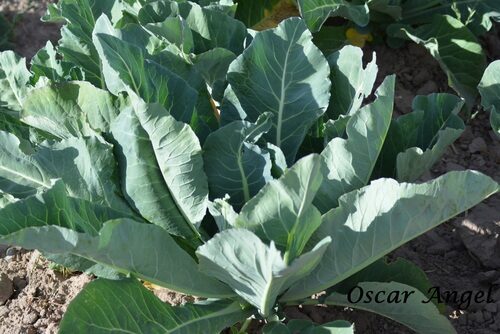
Brassica oleracea botrytis
Cauliflower
Brassica oleracea botrytis aparagoides
Nine Star Perennial Broccoli
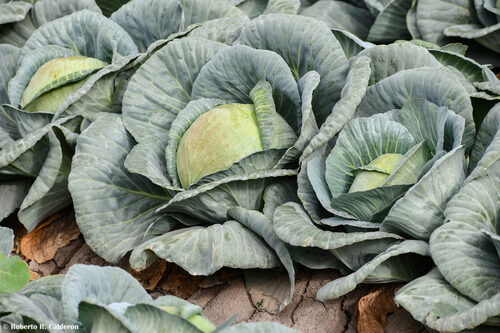
Brassica oleracea capitata
Cabbage,Ornamental Cabbage, Red Cabbage, Savoy Cabbage
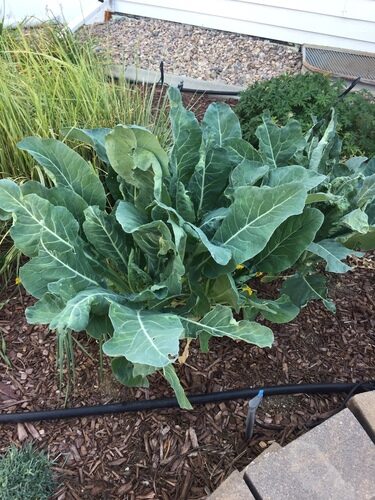
Brassica oleracea costata
Couve Tronchuda
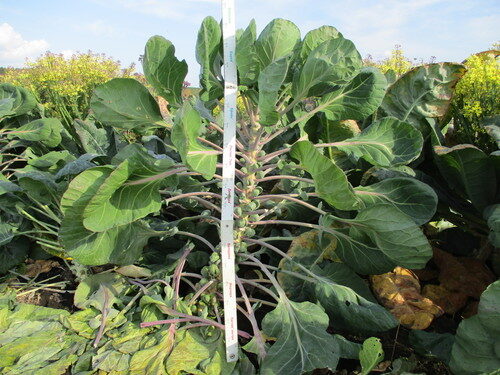
Brassica oleracea gemmifera
Brussels Sprouts
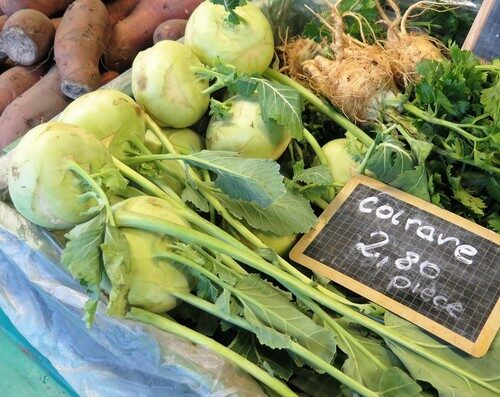
Brassica oleracea gongylodes
Kohl Rabi