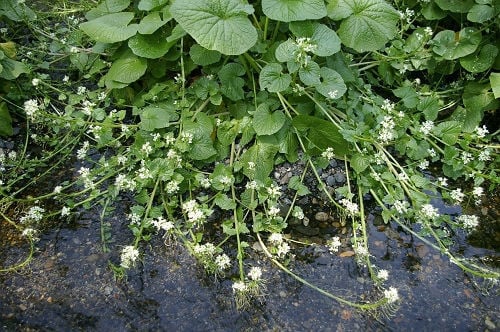
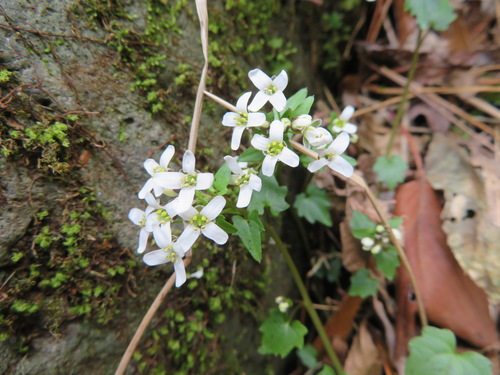
Cardamine komarovii
Nakai
iNaturalist· cc-by-nc
(c) lee-cj, some rights reserved (CC BY-NC)
iNaturalist· cc-by-nc
(c) lee-cj, some rights reserved (CC BY-NC)
iNaturalist· cc-by-nc
(c) lee-cj, some rights reserved (CC BY-NC)
Summary
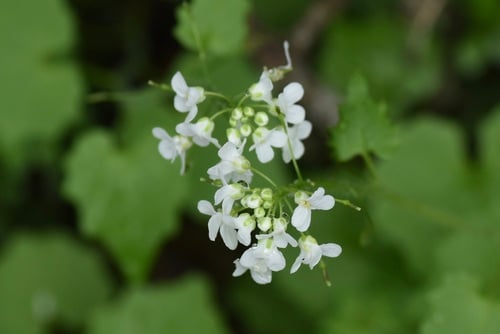
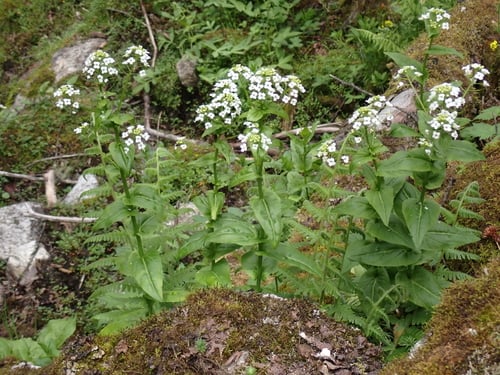
A perennial plant growing to 0.3 m (1 ft) tall. Flowers from April to August with seeds ripening May to September. Hermaphroditic and self-fertile, pollinated by bees, flies, moths, and butterflies. Adapts to light sandy, medium loamy, and heavy clay soils with mildly acidic to mildly alkaline pH. Grows in semi-shade (light woodland) or full sun, preferring moist or wet soil.
Description
A perennial plant growing to 0.3 m (1 ft) tall. Flowers from April to August with seeds ripening May to September. Hermaphroditic and self-fertile, pollinated by bees, flies, moths, and butterflies. Adapts to light sandy, medium loamy, and heavy clay soils with mildly acidic to mildly alkaline pH. Grows in semi-shade (light woodland) or full sun, preferring moist or wet soil.
Edible Uses
The leaves can be eaten raw or cooked.
Medicinal Uses
None known.
Distribution
It is a temperate plant. It grows near stream sides, moist areas between 700–1000 m altitude in northern China.
Where It Grows
Asia, China, Korea,
Cultivation
We have very little information on this species and do not know if it will be hardy in Britain, though judging by its native range it could succeed outdoors in many parts of this country. The following notes are based on the general needs of the genus. Prefers a moist humus rich soil in shade or semi-shade but succeeds in most soils that are not dry.
Propagation
Sow seed in spring in a cold frame; germination typically occurs within 1–3 weeks at 15°C. Once large enough to handle, prick seedlings into individual pots and grow on in light shade in a greenhouse or cold frame for the first two years, planting out when dormant in late summer. Divide in early spring or after the plant dies back in summer. Large clumps can go straight into permanent positions, while smaller clumps are better potted and grown on in a cold frame before planting out in spring.
Other Uses
None known.
Notes
There are about 160 Cardamine species. They are mostly in damp places in temperate regions.
Synonyms
References (3)
- Flora of China @ efloras.org Volume 8
- Plants for a Future database, The Field, Penpol, Lostwithiel, Cornwall, PL22 0NG, UK. http://www.scs.leeds.ac.uk/pfaf/
- Zhou Taiyan, Lu Lianli, Yang Guang; Ihsan A. Al-Shehbaz, BRASSICACEAE (CRUCIFERAE), Flora of China.