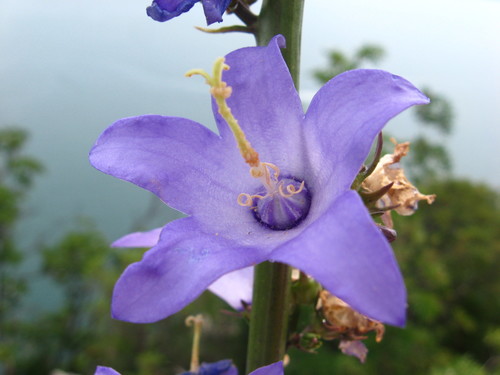
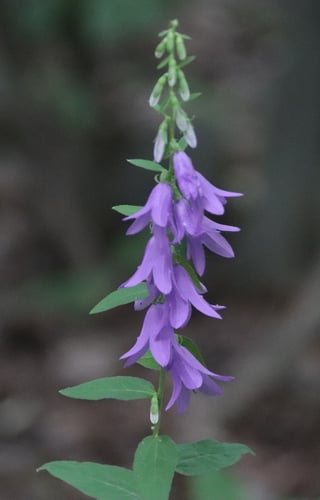
Campanula cochleariifolia
Lam.
Fairies' thimbles
iNaturalist· cc-by-nc
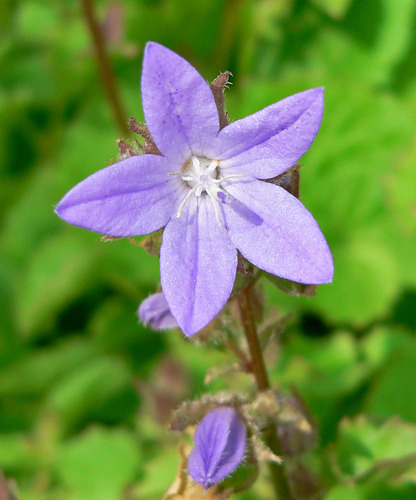
(c) Luca Boscain, some rights reserved (CC BY-NC), uploaded by Luca Boscain
iNaturalist· cc-by-nc
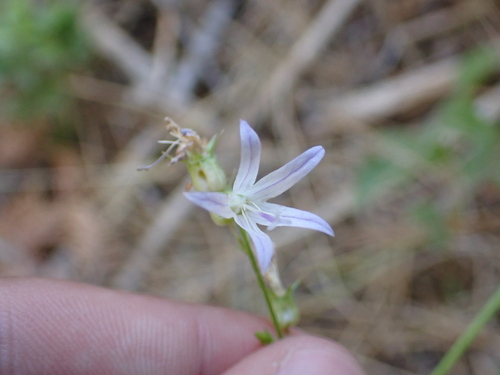
(c) saxifragach, some rights reserved (CC BY-NC)
Summary
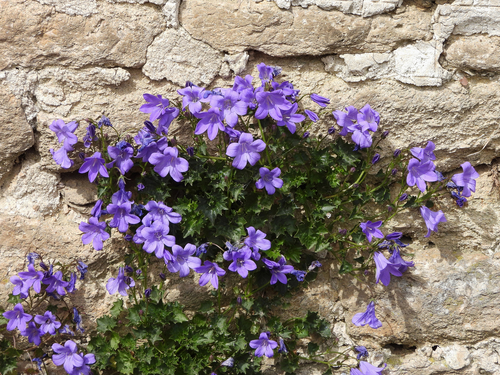
Source: WikipediaCampanula cochleariifolia (also Campanula cochlearifolia), common name earleaf bellflower or fairy's-thimble, is a species of flowering plant in the family Campanulaceae, native to the Pyrenees, Alps, French Massif Central, and Carpathian Mountains of Central Europe. It is a rhizomatous herbaceous perennial growing to 10 cm (4 in). Clumps of bright green leaves produce nodding pale blue bell flowers on wiry stalks. It is often found growing on limestone. This plant has gained the Royal Horticultural Society's Award of Garden Merit.
Description
A creeping herb with fleshy stems. It keeps growing from year to year. It grows 10 cm high and spreads 50 cm wide. The stems are creeping and underground. It forms a tight clump of small rounded leaves. The leaves are 2 cm across. The flowers are bell shaped. They are blue and hang from wiry stems.
Edible Uses
The leaves can be eaten raw or cooked and have a pleasant, mild flavour. The flowers are also edible raw or cooked, with a slightly sweet taste.
Traditional Uses
The leaves are eaten raw or cooked. The flowers are eaten raw or cooked.
This uses section is brief — help expand it
Medicinal Uses
None known.
Distribution
It is a temperate plant. It grows in the European alps. It often grows in cracks in rocks. It needs light to medium humus-rich soils and a protected sunny position. It is resistant to frost but damaged by drought. It suits hardiness zones 6-9.
Where It Grows
Australia, Europe, Slovenia,
Cultivation
A very easily grown plant that succeeds in most situations so long as they are not both hot and dry. In nature, the plant is found in poor soils and rock crevices and, in cultivation, when introduced to the richer conditions of the garden, is apt to spread by means of seeds and a creeping rhizome - indeed some gardeners consider it a pest even though it is beautiful and long-flowering. It is probably best grown in a poor soil, indeed it grows happily in pure gravel and sand. It succeeds on drystone walls where it can become invasive. It does especially well on the top of walls where there are cracks for it to root into. Prefers a moist but well-drained sandy loam and a neutral or alkaline soil in sun or partial shade. Plants are hardy to at least -15°c. The species in this genus do not often hybridize and so seed can generally be relied upon to come true. The plants are self-fertile and often self-sow in the garden. There are several named varieties selected for their ornamental value. 'Elizabeth Oliver' has pleasantly flavoured leaves. Members of this genus are rarely if ever troubled by browsing deer.
Propagation
Seed: Surface sow in spring in a cold frame. Germination typically occurs in 2–4 weeks at 18°C. Once seedlings are large enough to handle, prick them out into individual pots and grow on in a cold frame for at least their first winter. Plant out into permanent positions in late spring or early summer, after the last expected frosts. Basal cuttings: Take in spring, harvesting shoots when they are about 10–15cm long with plenty of underground stem. Pot into individual pots and keep in light shade in a cold frame or greenhouse until rooting well, then plant out in summer. Division: Divide in spring or autumn. Larger clumps can be replanted directly into permanent positions, though smaller clumps are best potted up and grown on in a cold frame until rooting well, then planted out in summer or the following spring.
Other Uses
None known.
Notes
There are about 300 Campanula species.
Synonyms
Also Known As
Trebušasta zvončnica