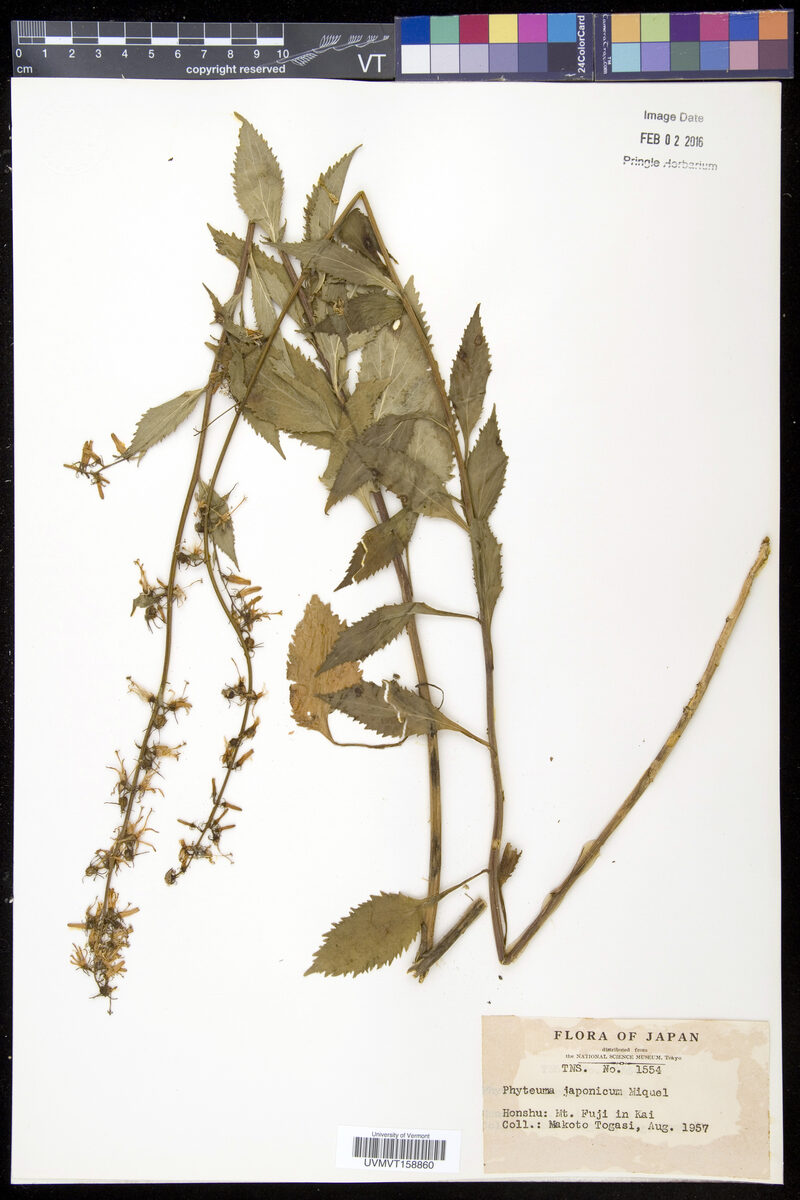
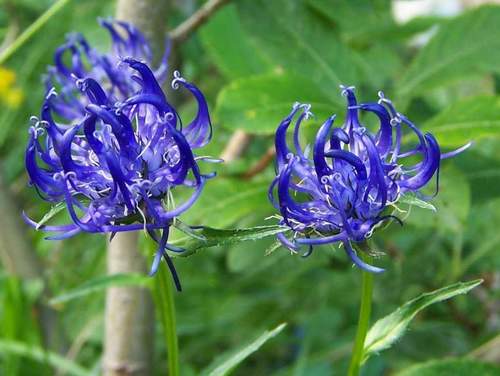
Campanula rapunculoides
Linn.
Creeping Bellflower, Rover bellflower
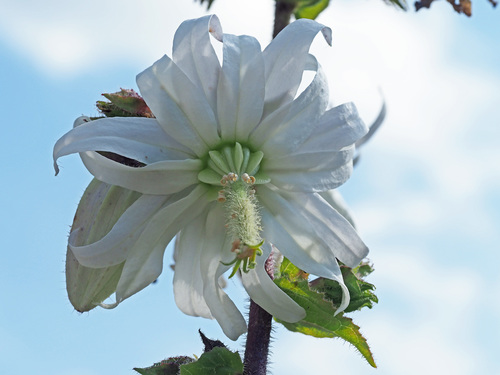
iNaturalist· cc-by-nc
(c) Amy Guala, some rights reserved (CC BY-NC), uploaded by Amy Guala
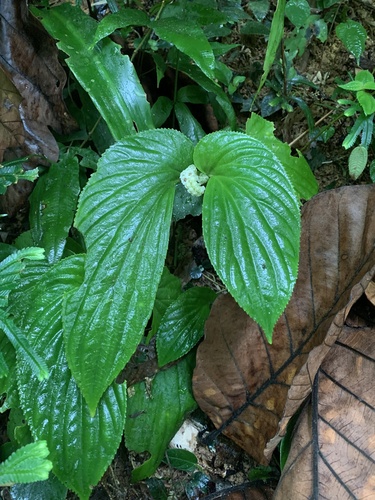
iNaturalist· cc-by
(c) ahabo, some rights reserved (CC BY), uploaded by ahabo
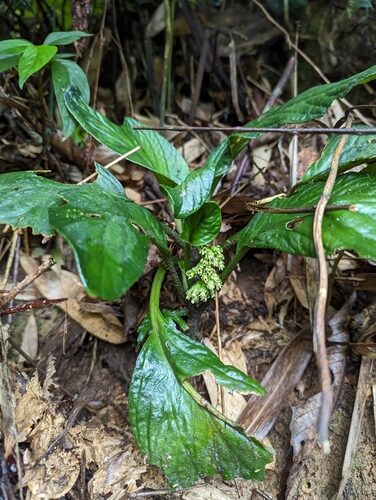
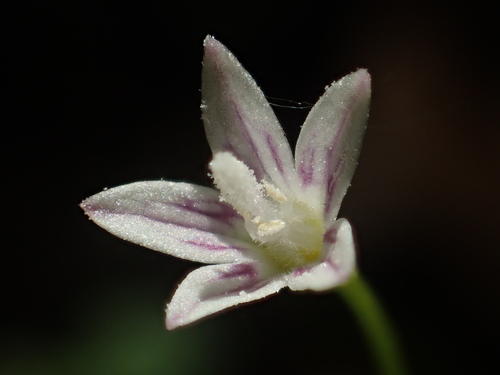
iNaturalist· cc-by-nc
(c) Herbert Bacher, some rights reserved (CC BY-NC), uploaded by Herbert Bacher
Summary
Source: WikipediaCampanula rapunculoides, known by the common names creeping bellflower, rampion bellflower, rover bellflower, garden bluebell, creeping bluebell, purple bell, garden harebell, and creeping campanula, is a perennial herbaceous plant of the genus Campanula, belonging to the family Campanulaceae. Native to central and southern Europe and west Asia, in some parts of North America it is an extremely invasive species.
Description
A plant which keeps growing from year to year. It grows 30-60 cm tall. It forms large patches. The leaves have teeth along the edge. The flower stems are tall. The flowers are nodding and bell shaped. They are blue or violet. They are 20-30 mm long.
Edible Uses
Leaves and young shoots can be eaten raw or cooked and are rich in vitamin C. They have a pleasant mild flavour — described as a mild combination of lettuce and nettles with a deep vegetal quality. Surface hairs give a slightly raspy texture but do not irritate. Leaves work well in soups, salads, and sautés; cooking enhances sweetness without reducing hairiness significantly. Older leaves toughen slightly, so younger growth is preferred; clip leaves from spring until frost. The roots have a nut-like, somewhat sweet flavour and are very palatable raw or cooked — crisp, juicy, and mild, comparable to white radish or a mild turnip, and make a pleasant addition to the salad bowl. Roots were historically cultivated as a vegetable in Europe. They can be roasted, boiled, or eaten fresh, and are best harvested in fall or early spring when young. The flowers are mild and sweet and make visually appealing garnishes.
Traditional Uses
The fleshy underground branches can be chopped and added to soups or boiled. The young shoots are cooked as a vegetable and used as a potherb.
This uses section is brief — help expand it
Medicinal Uses
The plant contains vitamin C. In Russia it has traditionally been used as a treatment for hydrophobia.
Known Hazards
Safe to eat. No toxicity concerns beyond normal caution with raw leaves if digestive sensitivity is present.
Distribution
It grows in temperate places. It is often in woodland and rocky places. Melbourne Botanical gardens. It suits hardiness zones 4-9. Tasmania Herbarium.
Where It Grows
Asia, Australia, Balkans, Bosnia, Britain, Canada, Caucasus, Central Asia, Czech Republic, Europe, Georgia, Luxembourg, Mediterranean, North America, Norway, Scandinavia, Slovenia, Tajikistan, Tasmania, Turkey, Türkiye, USA,
Cultivation
An easily grown plant succeeding in almost any soil, though it prefers a moist but well-drained rich sandy loam and a neutral or alkaline soil in sun or partial shade. It is slower growing and less spreading when grown in heavier soils. Plants are hardy to at least -15°c. The species in this genus do not often hybridize and so seed can generally be relied upon to come true. The plants are self-fertile. A beautiful plant, it was at one time cultivated as a culinary plant but has fallen into disuse. The plant produces a mass of thick white roots which can spread at an alarming rate, especially in light soils. It can often fill an entire bed with its tenaceous roots, killing off less vigorous plants. It is best grown in the wild garden where it can be allowed to romp without harm. Plants can also succeed when growing in thin grass. Plants produce seed freely and often self-sow. Slugs are very attracted to this plant, we have had great problems growing it on our Cornish trial grounds because the slugs eat out all the new shoots in spring and can kill even well-established specimens. Members of this genus are rarely if ever troubled by browsing deer. Rampion prefers temperate climates with mild to cool summers. It thrives in loams, clays, or disturbed soils, tolerates drought moderately, and prefers USDA Zones 3–8. It can be invasive in gardens. Habitat & Range: Now widespread across northern United States and southern Canada, extending into Colorado and Utah. Occurs in disturbed habitats, roadside margins, gardens, and fields. Size & Landscape Performance: Plants grow 30–110 cm tall and spread rapidly. As an ornamental, it is problematic due to invasiveness. Cultivation (Horticulture): Easy to grow but difficult to eradicate. Once valued as a vegetable (roots), though rarely grown intentionally in modern times.
Propagation
Sow seed on the surface in a cold frame in spring; germination typically occurs in 2–4 weeks at 18°C and is easy. Once large enough to handle, prick seedlings out into individual pots and grow on in a cold frame for at least the first winter, then plant out in late spring or early summer after the last expected frosts. Take basal cuttings in spring by harvesting shoots around 10–15cm long with plenty of underground stem; pot individually and keep in light shade in a cold frame or greenhouse until rooting well, then plant out in summer. Division in spring or autumn is very easy — any piece of root is capable of producing a new plant.
Other Uses
The flowers are pollinated primarily by bees, including bumblebees and solitary species that readily enter the bell-shaped blooms, with some additional pollination by long-tongued flies.
Notes
There are about 300 Campanula species.
Also Known As
Bluebell bellflower, çançiçeği, Elmacik, Machit'a, Michingt'arai, Rampion bellflower, Repuščevolistna zvončica, Repusica, Ugrassklokke, Zvonek repkovity
References (21)
- Bircher, A. G. & Bircher, W. H., 2000, Encyclopedia of Fruit Trees and Edible Flowering Plants in Egypt and the Subtropics. AUC Press. p 76
- Blamey, M and Grey-Wilson, C., 2005, Wild flowers of the Mediterranean. A & C Black London. p 429
- Bussman, R. W., et al, 2016, A comparative ethnobotany of Khevsureti, Samtskhe-Javakheti, Tusheti, Svaneti, and Racha-Lechkhumi, Republic of Georgia (Sakartvelo), Caucasus. Journal of Ethnobiology and Ethnomedicine (2016) 12:4
- Bussman, R. W. et al, 2017, Ethnobotany of Samtskhe-Javakheti, Sakartvelo (Republic of Georgia), Caucasus. Indian Journal of Traditional Knowledge Vol. 16(1) pp 7-24
- Bussman, R. W., et al, 2021, Unity in diversity—food plants and fungi of Sakartvelo (Republic of Georgia), Caucasus. Journal of Ethnobiology and Ethnomedicine (2021) 17:72 p 8
Show all 21 references Hide references
- Crawford, M., 2012, How to grow Perennial Vegetables. Green Books. p 79
- Cundall, P., (ed.), 2004, Gardening Australia: flora: the gardener's bible. ABC Books. p 322
- Ertug, F, Yenen Bitkiler. Resimli Türkiye Florası -I- Flora of Turkey - Ethnobotany supplement
- Facciola, S., 1998, Cornucopia 2: a Source Book of Edible Plants. Kampong Publications, p 69
- Girard, N. J., 2020, Sustainable Foraging of Wild Edible Plants in Norway. A Biocultural Approach. M. Sc. thesis Norwegian University. p 129
- Hedrick, U.P., 1919, (Ed.), Sturtevant's edible plants of the world. p 147
- Heywood, V.H., Brummitt, R.K., Culham, A., and Seberg, O. 2007, Flowering Plant Families of the World. Royal Botanical Gardens, Kew. p 84
- Irving, M., 2009, The Forager Handbook, A Guide to the Edible Plants of Britain. Ebury Press p 60
- Kiple, K.F. & Ornelas, K.C., (eds), 2000, The Cambridge World History of Food. CUP p 1743
- Lim, T. K., 2015, Edible Medicinal and Non Medicinal Plants. Volume 9, Modified Stems, Roots, Bulbs. Springer p 22
- Plants for a Future database, The Field, Penpol, Lostwithiel, Cornwall, PL22 0NG, UK. http://www.scs.leeds.ac.uk/pfaf/
- Redzic, S. J., 2006, Wild Edible Plants and their Traditional Use in the Human Nutrition in Bosnia-Herzegovina. Ecology of Food and Nutrition, 45:189-232
- Simkova, K. et al, 2014, Ethnobotanical review of wild edible plants used in the Czech Republic. Journal of Applied Botany and Food Quality 88, 49-67
- Sp. pl. 1:165. 1753
- Tasmanian Herbarium Vascular Plants list p 18
- www.ediblewildfood.com