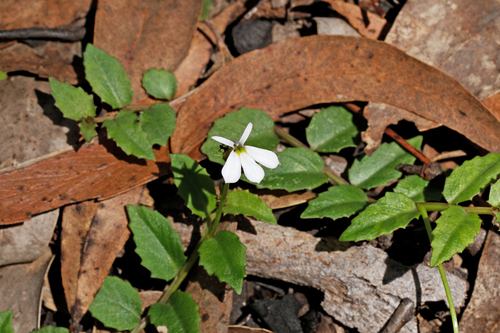
Campanula rapunculus
L.
Rampion, Rampion bellflower
iNaturalist· cc-by-nc
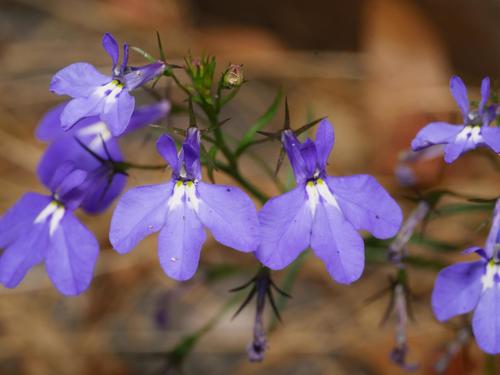
(c) Joost ., some rights reserved (CC BY-NC), uploaded by Joost .
iNaturalist· cc-by-nc
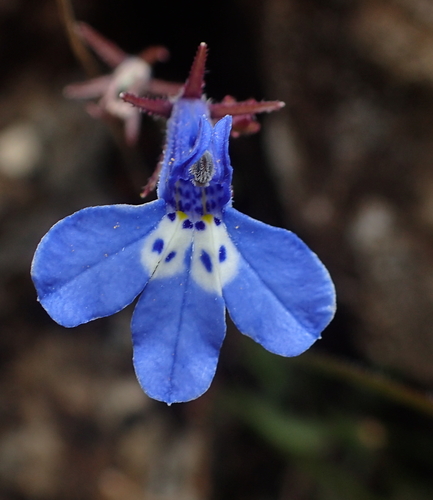
(c) aggranada, some rights reserved (CC BY-NC), uploaded by aggranada
iNaturalist· cc-by-nc
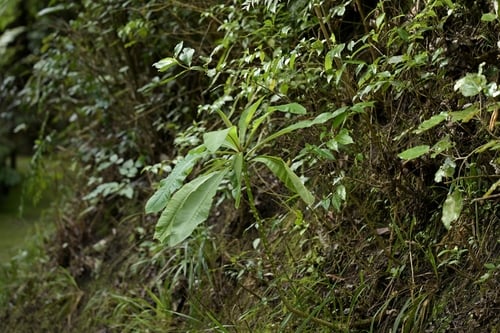
(c) Sebastian J. Dunkl, some rights reserved (CC BY-NC), uploaded by Sebastian J. Dunkl
Summary
Source: WikipediaCampanula rapunculus, common name rampion bellflower, rampion, rover bellflower, or rapunzel, is a species of bellflower (Campanula) in the family Campanulaceae. This species was once widely grown in Europe for its leaves, which were used like spinach, and its parsnip-like root, which was used like a radish. The Brothers Grimm fairy tale Rapunzel took its name from this plant.
Description
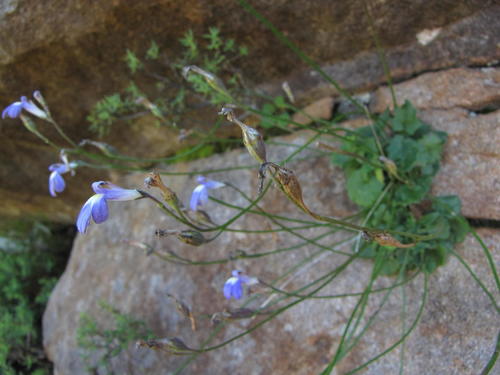
A plant less than 1 m high and spreads to 0.5 m wide. It grows either as a plant with a two year life cycle or as a perennial growing year after year. The stem is erect, stiff and hairy. The leaves vary but are about 7 cm long. The leaves near the base are oblong and on long leaf stalks while the leaves along the stem are narrow and entire and with very short leaf stalks. The flowers are reddish purple and form long branching clusters.
Edible Uses
The roots can be eaten raw or cooked, offering a notably sweet, walnut-like flavour that works best mixed with other root vegetables in winter salads. Leaves are mild with a hint of sweetness and are quite acceptable eaten raw in salads or cooked as a potherb; they are rich in vitamin C and make a solid winter salad green. Young spring shoots can be blanched and cooked in the same way as asparagus.
Traditional Uses
The tender young leaves are eaten raw or cooked. They are also used in soups. The young roots can be eaten raw in salads while older roots are cooked either boiled, roasted or fried.
Medicinal Uses
The leaves are rich in vitamin C.
Known Hazards
None known.
Distribution
It is a temperate plant. It prefers a well drained but moist soil. It does best when the soil is neutral or alkaline. It can tolerate a pH range of 4.8 to 7.5. Plants can tolerate heavy frosts (-15°C). It occurs naturally in grassy sites and heaths in temperate northern hemisphere places. It suits hardiness zones 4-9.
Where It Grows
Africa, Albania, Algeria, Australia, Austria, Azerbaijan, Balkans, Belgium, Britain*, Bulgaria, Caucasus, Czech Republic, Europe, France, Georgia, Germany, Greece, Hungary, Iran, Israel, Italy, Jordan, Lebanon, Luxembourg, Mediterranean, Middle East, Moldova, Morocco, Netherlands, North Africa, North America, Poland, Portugal, Romania, Russia, Slovakia, Slovenia, Spain, Switzerland, Syria, Tasmania, Tunisia, Turkey, Türkiye, Ukraine, USA, Yugoslavia,
Cultivation
The plant is self fertile and seed breed true. When grown for its edible root the plant should not be allowed to flower. Seed can be sown where the plants are to grow and they will germinate in 2-4 weeks. Plants can also be grown by division or by cuttings.
Propagation
Surface sow seed in situ in May or June. Germination typically occurs within 2–4 weeks at 18°C.
Other Uses
No known other uses. Suitable for food forest plantings.
Other Information
It is a commercially cultivated vegetable.
Notes
There are about 300 Campanula species.
Also Known As
Anardoun, Kanpanin, Rampoun, Raponzolo, Repunxo, Repuščeva zvončica, Vara de San Jose, Zvonek repka
References (32)
- Abbet, C., et al, 2014, Ethnobotanical survey on wild alpine food plants in Lower and Central Valais (Switzerland). Journal of Ethnopharmacology 151 (2014) 624–634
- Benvenuti, S. & Mazzoncini, M., 2021, The Biodiversity of Edible Flowers: Discovering New Tastes and New Health Benefits. Frontiers in Plant Science Article 569499.
- Bircher, A. G. & Bircher, W. H., 2000, Encyclopedia of Fruit Trees and Edible Flowering Plants in Egypt and the Subtropics. AUC Press. p 76
- Biscotti, N. et al, 2018, The traditional food use of wild vegetables in Apulia (Italy) in the light of Italian ethnobotanical literature. Italian Botanist 5:1-24
- Blanco-Salas, J., et al, 2019, Wild Plants Potentially Used in Human Food in the Protected Area “Sierra Grande de Hornachos” of Extremadura (Spain). Sustainability 2019, 11, 456
Show all 32 references Hide references
- Bodkin, F., 1991, Encyclopedia Botanica. Cornstalk publishing, p 209
- Bonet, M. A. & Valles, J., 2002, Use of non-crop food vascular plants in Montseny biosphere reserve (Catalonia, Iberian Peninsula). International Journal of Food Sciences and Nutrition (2002) 53, 225–248
- Bremness, L., 1994, Herbs. Collins Eyewitness Handbooks. Harper Collins. p 157
- Cerne, M., 1992, Wild Plants from Slovenia used as Vegetables. Acta Horticulturae 318
- Cundall, P., (ed.), 2004, Gardening Australia: flora: the gardener's bible. ABC Books. p 322
- Davis, S.D., Heywood, V.H., & Hamilton, A.C. (eds), 1994, Centres of plant Diversity. WWF. Vol 2. p 340
- Facciola, S., 1998, Cornucopia 2: a Source Book of Edible Plants. Kampong Publications, p 69
- Hadjichambis, A. C., et al, 2007, Wild and semi-domesticated food plant consumption in seven circum-Mediterranean areas. International Journal of Food Sciences and Nutrition. 2007, 1-32.
- Hammer, K. & Spahillari, M., 1999, Crops of European origin. in Report of a networking group on minor crops. IPGRI p 44
- Hedrick, U.P., 1919, (Ed.), Sturtevant's edible plants of the world. p 147
- Heywood, V.H., Brummitt, R.K., Culham, A., and Seberg, O. 2007, Flowering Plant Families of the World. Royal Botanical Gardens, Kew. p 84
- Hibbert, M., 2002, The Aussie Plant Finder 2002, Florilegium. p 59
- Kays, S. J., and Dias, J. C. S., 1995, Common Names of Commercially Cultivated Vegetables of the World in 15 languages. Economic Botany, Vol. 49, No. 2, pp. 115-152
- Kiple, K.F. & Ornelas, K.C., (eds), 2000, The Cambridge World History of Food. CUP p 1743
- Lim, T. K., 2015, Edible Medicinal and Non Medicinal Plants. Volume 9, Modified Stems, Roots, Bulbs. Springer p 22
- Mabey, R., 1973, Food for Free. A Guide to the edible wild plants of Britain, Collins. p 70
- Mattalia, G., et al, 2012, Traditional uses of wild food and medicinal plants among Brigasc, Kye ́, and Provenc ̧al communities on the Western Italian Alps. Genet Resour Crop Evol. Springer
- Pieroni, A., 1999, Gathered wild food plants in the Upper Valley of the Serchio River (Garfagnana), Central Italy. Economic Botany 53(3) pp 327-341
- Pieroni, A., 2001, Evaluation of the Cultural Significance of Wild Food Botanicals traditionally Consumed in Northwestern Tuscany, Italy, Journal of Ethnobiology 21(1):89-104
- Plants for a Future database, The Field, Penpol, Lostwithiel, Cornwall, PL22 0NG, UK. http://www.scs.leeds.ac.uk/pfaf/
- Simkova, K. et al, 2014, Ethnobotanical review of wild edible plants used in the Czech Republic. Journal of Applied Botany and Food Quality 88, 49-67
- Sp. pl. 1:164. 1753
- Tardio, J., et al, Ethnobotanical review of wild edible plants in Spain. Botanical J. Linnean Soc. 152 (2006), 27-71
- Tronickova, E. & Krejcova, Z., 1987, Ortaggi, Instituto Geografico de Agostini, Cecoslovacchia. p 58
- Turner, N. J. et al, 2011, Edible and Tended Wild Plants, Traditional Ecological Knowledge and Agroecology. Critical Reviews in Plant Sciences, 30:198-225
- USDA, ARS, National Genetic Resources Program. Germplasm Resources Information Network - GRIN). [Online Database] National Germplasm Resources Laboratory, Beltsville, Maryland. Available: www.ars-grin.gov/cgi-bin/npgs/html/econ.pl (10 April 2000)
- Wiersema, J. H. & Leon, B., 2013, World Economic Plants. A Standard Reference CRC Press. 2nd Ed. p 136