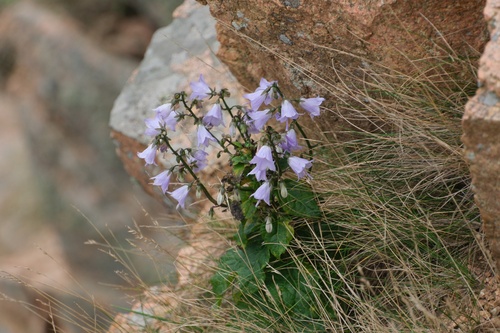
Campanula pyramidalis
(L.) Gilb.
Chimney Bellflower
iNaturalist· cc-by-nc
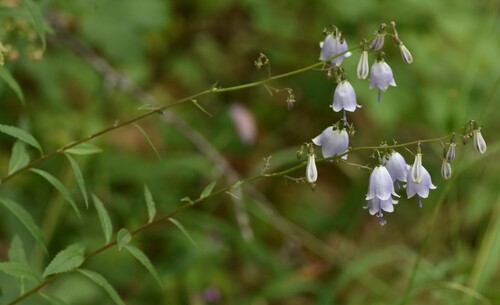
(c) Gian Luca Borghi, some rights reserved (CC BY-NC), uploaded by Gian Luca Borghi
iNaturalist· cc0
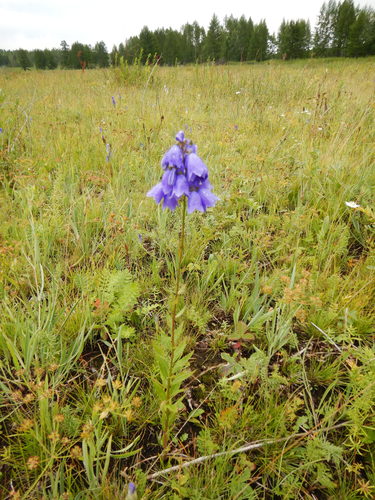
no rights reserved, uploaded by Mirko Ubović
iNaturalist· cc-by-nc
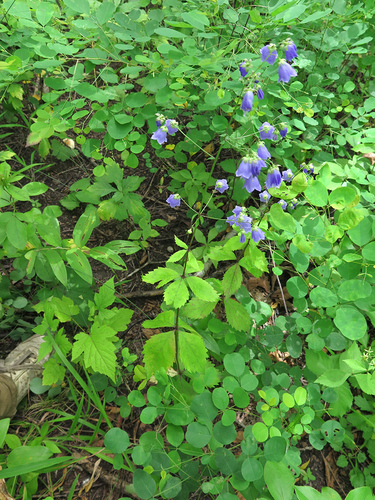
(c) Vladimir Tkalčić, some rights reserved (CC BY-NC), uploaded by Vladimir Tkalčić
Summary
Source: WikipediaCampanula pyramidalis, the chimney bellflower, is a species of Campanula, native to southeastern Europe in Italy and the western Balkans. Campanula means "bell-like" referring to the bell-shape of its flowers, while pyramidalis means pyramidal or conical, which refers to its conical shape. It is a short-lived perennial herbaceous plant growing up to 1.5 m tall. The leaves are broad ovate on the lower part of the stem, slender lanceolate on the upper part of the stem. The flowers are bell-shaped, blue, 3–4 cm diameter. The flowers are hermaphroditic, and the plant is self-fertile. It grows in many different soil types, and can handle a wide pH range. It prefers a sunny or partially shaded area. It is grown as an ornamental plant for its scented flowers; several cultivars have been selected with flower colour ranging from white to dark blue.
Description
A short lived plant which can last a few years. It forms clumps. It grows 1.2-2 m high and spreads 60 cm wide. The leaves are broad and pointed. They have teeth along the edge. The stems are tall and branching. The flowers are in a pyramid shaped arrangement. The flowers are open and bell shaped. They are blue or white.
Edible Uses
The leaves can be eaten raw or cooked and have a mild, slightly sweet flavour. The flowers are also eaten raw, offering a pleasant sweet flavour and making a decorative addition to salads.
Traditional Uses
The cooked root is a famine food. The young shoots are cooked as a vegetable.
This uses section is brief — help expand it
Medicinal Uses
None known.
Distribution
It suits hardiness zones 8-10.
Where It Grows
Albania, Australia, Balkans, Bosnia, Britain, Europe, France, Italy, Mediterranean, Slovenia, Yugoslavia,
Cultivation
Succeeds in most fertile well-drained soils, though it prefers a moist but very well-drained rich sandy loam and a neutral or alkaline soil. Plants are impatient of drought and of too much sunshine, growing best in a shady position. This species is not hardy in the colder areas of the country, it tolerates temperatures down to between -5 and -10°c. Plants are best grown in a greenhouse in Britain, they are seldom fully happy outdoors and do not usually open their flowers properly. Plants usually set seed freely and will often self-sow in the garden. The species in this genus do not often hybridize and so seed can generally be relied upon to come true. The plants are self-fertile. A short-lived perennial, in the garden it is best grown from seed as a biennial or propagated each year from the non-flowering side rosettes. The woody roots will usually persist for some years so long as the plant is in a well-drained soil and a sunny position. Except in the most sheltered of positions, the tall flowering stems require staking in order to stop them snapping at the base in high winds. This species is closely related to C. versicolor. There are several named forms selected for their ornamental value. The cultivar 'Alba' is used as an altar flower in its native regions, this cultivar demands an especially well-drained soil and is less hardy than the type. Members of this genus are rarely if ever troubled by browsing deer.
Propagation
Sow seed on the surface in a cold frame in spring; germination typically occurs in 2–4 weeks at 18°C. For best results, sow as soon as seed is ripe in autumn in a greenhouse to allow the plant a long growing season; otherwise sow in late winter. Once large enough to handle, prick seedlings out into individual pots and plant out into permanent positions in summer. Take basal cuttings in spring by harvesting shoots around 10–15cm long with plenty of underground stem; pot individually and keep in light shade in a cold frame or greenhouse until rooting well, then plant out in summer. The plant has a thick, fleshy root with several crowns that can technically be divided with great care to avoid root damage, but this is not generally recommended as divisions are slow to establish.
Other Uses
None known.
Other Information
It is a famine food.
Notes
There are about 300 Campanula species.
Also Known As
Piramidasta zvončica, Postijenak
References (7)
- Brickell, C. (Ed.), 1999, The Royal Horticultural Society A-Z Encyclopedia of Garden Plants. Convent Garden Books. p 223
- Cundall, P., (ed.), 2004, Gardening Australia: flora: the gardener's bible. ABC Books. p 321
- Lim, T. K., 2015, Edible Medicinal and Non Medicinal Plants. Volume 9, Modified Stems, Roots, Bulbs. Springer p 22
- PARMENTIER,
- Plants for a Future database, The Field, Penpol, Lostwithiel, Cornwall, PL22 0NG, UK. http://www.pfaf.org
Show all 7 references Hide references
- Redzic, S. J., 2006, Wild Edible Plants and their Traditional Use in the Human Nutrition in Bosnia-Herzegovina. Ecology of Food and Nutrition, 45:189-232
- Sp. pl. 1:164. 1753