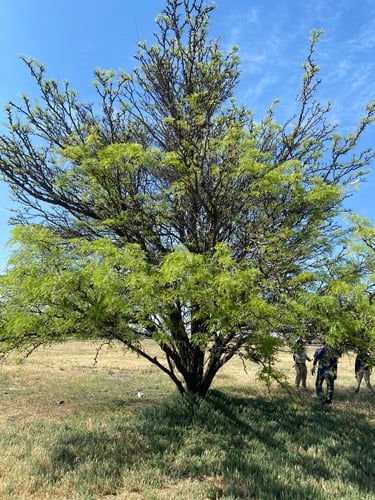
Eriosema chrysadenium
Taub.
iNaturalist· cc-by-nc
(c) fmop_lages, some rights reserved (CC BY-NC), uploaded by fmop_lages
iNaturalist· cc-by-nc
(c) fmop_lages, some rights reserved (CC BY-NC)
Description
An erect herb. The stems are 50 cm high. It grows from a woody rootstock. It has a series of small tubers. They are almost round and 1.5 cm across. The stems have small hairs. The leaves are broadly oval and velvety on both surfaces. The flowers are on long hairy stalks and in the axils of leaves or at the ends of branches. They are dark black-brown outside and creamy pink inside. The fruit are pods 1.2 mm long by 9 mm wide.
Edible Uses
The tubers and roots are edible and have been used as a famine food.
Distribution
It is a tropical plant. It grows in mountain grassland and wooded savannah. It grows between 1,470-2,340 m above sea level.
Where It Grows
Africa, Angola, Burundi, Cameroon, Central Africa, Congo, East Africa, Malawi, Mozambique, Rwanda, Tanzania, Uganda, West Africa, Zambia, Zimbabwe,
Cultivation
This species has a symbiotic relationship with certain soil bacteria; these bacteria form nodules on the roots and fix atmospheric nitrogen. Some of this nitrogen is utilized by the growing plant but some can also be used by other plants growing nearby.
Propagation
Like many species within the family Fabaceae, once they have ripened and dried the seeds of this species may benefit from scarification before sowing in order to speed up and improve germination. This can usually be done by pouring a small amount of nearly boiling water on the seeds (being careful not to cook them!) and then soaking them for 12 - 24 hours in warm water. By this time they should have imbibed moisture and swollen - if they have not, then carefully make a nick in the seedcoat (being careful not to damage the embryo) and soak for a further 12 hours before sowing.
Other Information
A famine food.
References (2)
- Burkill, H. M., 1985, The useful plants of west tropical Africa, Vol. 3. Kew.
- World Checklist of Useful Plant Species 2020. Royal Botanic Gardens, Kew