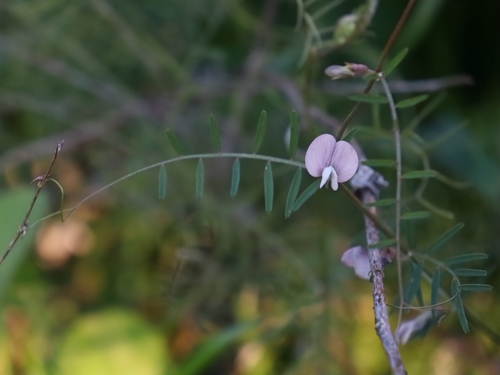
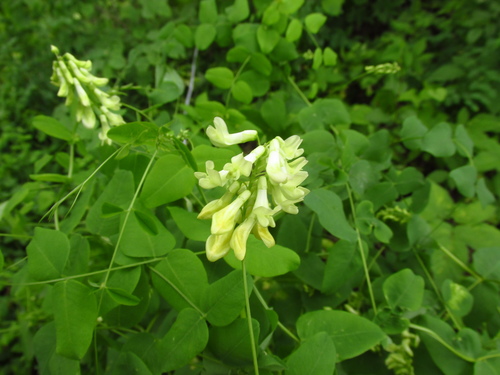
Hymenaea parvifolia
Huber
Small leaf copal
iNaturalist· cc-by-nc
(c) BURGA, Fiorella, some rights reserved (CC BY-NC), uploaded by BURGA, Fiorella
iNaturalist· cc-by-nc
(c) jocinaldo fernandes, some rights reserved (CC BY-NC)
iNaturalist· cc-by-nc
(c) Robin Heymans, some rights reserved (CC BY-NC)
Description
A tree. It grows 20 m tall. The trunk is 60 cm across. The fruit are brown. They are edible.
This description is brief — help expand it
Edible Uses
Fruit - raw. A powdery texture. The fruit is an oblong pod (legume), 5 - 15cm long and 3 -5cm wide, containing 3 - 4 large seeds which are surrounded by a dry, edible pulp.
Traditional Uses
The pulp of the fruit is eaten.
This uses section is brief — help expand it
Distribution
It is a tropical plant.
Where It Grows
Amazon, Bolivia, Brazil, Colombia, Peru, South America, Venezuela,
Cultivation
Although many species within the family Fabaceae have a symbiotic relationship with soil bacteria, this species is said to be devoid of such a relationship and therefore does not fix atmospheric nitrogen.
Propagation
Seed - it has a hard seedcoat and benefits from scarification before sowing to speed up and improve germination. This can usually be done by pouring a small amount of nearly boiling water on the seeds (being careful not to cook them!) and then soaking them for 12 - 24 hours in warm water. By this time they should have imbibed moisture and swollen - if they have not, then carefully make a nick in the seedcoat (being careful not to damage the embryo) and soak for a further 12 hours before sowing. Sow the treated seed in a partially shaded position in individual containers.
Other Uses
The roots and trunk yield a pale yellow or red resin-like gum known commercially as 'South American copal'. The gum obtained from tapping the trunk is soft and considered to be of lower quality - it is used mainly for medicinal purposes. The best quality gum is quite old - it is found in hard lumps that have become buried in the soil at the base of a tree or at the site of a dead tree. A minor source of the gum (it is obtained mainly from Hymenaea courbaril), it can be used in making varnishes but also for incense and local medicines. The copal is also used for patent leather, as an adhesive for crockery and in stains for tin ware. The heartwood can vary from purple-brown or orangey-brown to a red brown with slight veining; it is clearly demarcated from the 3 - 12cm wide band of sapwood. The texture is medium; the grain straight or interlocked; there are slight internal stresses. The wood is very heavy; very hard; elastic; durable, even in contact with the soil, being resistant to fungi, dry wood borers and termites. It seasons normally, with only a slight risk of checking and distortion; once dry it is moderately stable to stable in service. The wood has a fairly high blunting effect, stellite-tipped and tungsten carbide tools are recommended; nailing and screwing are good, but require pre-boring; gluing is correct for interior use only, but needs to be done with care because of the density of the wood. The wood has a wide range of applications, including for high class furniture, cabinet making, construction, heavy duty flooring, ship building, carving, turnery, tool handles etc.
Other Information
The fruit are enjoyed.
Notes
Also as Caesalpinaceae.
Also Known As
Algarrobo, Aro kohi, Jutai-curuba, Jutai-mirim, Paquio
References (7)
- Grandtner, M. M. & Chevrette, J., 2013, Dictionary of Trees, Volume 2: South America: Nomenclature, Taxonomy and Ecology. Academic Press p 312
- Kermath, B. M., et al, 2014, Food Plants in the Americas: A survey of the domesticated, cultivated and wild plants used for Human food in North, Central and South America and the Caribbean. On line draft. p 428
- Lopez-Diago, D. & Garcia, N., 2021, Wild edible fruits of Colombia. Biota ColomBiana 22 (2) p 37
- NYBG Herbarium "edible"
- Philips, O., 1992, The potential for harvesting fruits in tropical rainforests: new data from Amazonian Peru. Biodiversity and Conservation 2, 18-38
Show all 7 references Hide references
- Roa, J. A. G. & Boada, D. S. G., 2018, Fundación para el Fortalecimiento de la Fruticultura y Plantas Alimenticias no Convencionales en Colombia.
- www.proyanomami.org