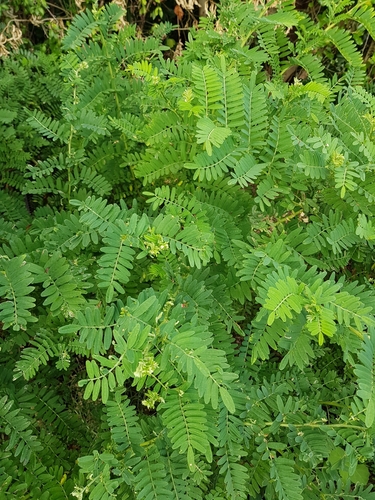
Hymenaea martiana
Hayne
Copal
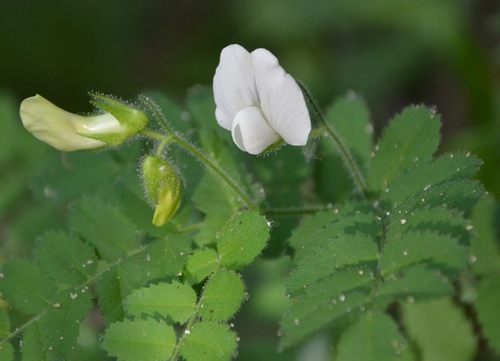
iNaturalist· cc-by-nc
(c) Mattheus Mota, some rights reserved (CC BY-NC), uploaded by Mattheus Mota
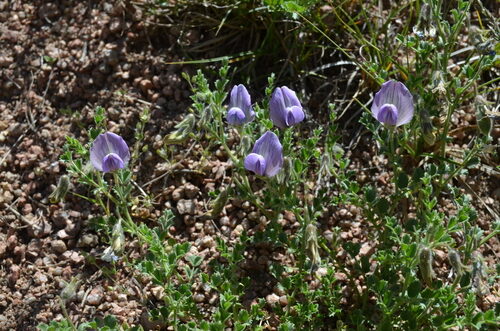
iNaturalist· cc-by-nc
(c) claudio roberto azevedo de souza, some rights reserved (CC BY-NC), uploaded by claudio roberto azevedo de souza
Description
Hymenaea martiana is an evergreen Tree growing to 13 m (42ft) by 10 m (32ft) at a slow rate. See above for USDA hardiness. It is hardy to UK zone 10. It can fix Nitrogen. Suitable for: light (sandy), medium (loamy) and heavy (clay) soils, prefers well-drained soil and can grow in nutritionally poor soil. Suitable pH: mildly acid, neutral and basic (mildly alkaline) soils. It cannot grow in the shade. It prefers moist soil.
Edible Uses
Fruit - raw. The white, mealy pulp surrounding the seeds is eaten. The semi-cylindrical seedpod is up to 15cm long and 6cm wide, containing 5 - 8 seeds.
Medicinal Uses
Both a tea and a syrup made from the bark and bast of the stem are used in the treatment of respiratory problems, inflammations, stomach aches, chest, and spinal problems. A resin obtained from the tree is used as a healing poultice, encouraging the formation of new tissue.
Distribution
S. America - Paraguay, central, eastern and northern Brazil, Bolivia.
Where It Grows
SOUTHERN AMERICA: Brazil (Alagoas, Bahia, Ceará, Goiás, Mato Grosso, Minas Gerais, Pernambuco), Paraguay
Cultivation
Grows best in a sunny position. Grows in the wild on moist, clay soils. The plant has a slow rate of growth, even when small. Although many species within the family Fabaceae have a symbiotic relationship with soil bacteria, this species is said to be devoid of such a relationship and therefore does not fix atmospheric nitrogen.
Propagation
Seed - it has a hard seedcoat and benefits from scarification before sowing to speed up and improve germination. This can usually be done by pouring a small amount of nearly boiling water on the seeds (being careful not to cook them!) and then soaking them for 12 - 24 hours in warm water. By this time they should have imbibed moisture and swollen - if they have not, then carefully make a nick in the seedcoat (being careful not to damage the embryo) and soak for a further 12 hours before sowing. Sow the treated seed in a partially shaded position in individual containers. A germination rate in excess of 50% can be expected from treated seed, with the seed sprouting within 15 - 30 days.
Other Uses
Furniture Wood Other Uses: The heartwood varies from purple-brown or orangey-brown to red-brown, with slight veins; it is clearly demarcated from the 3 - 12cm wide band of sapwood. The texture is medium; the grain straight or interlocked; there are slight internal stresses. The wood is heavy to very heavy; hard to very hard; elastic; durable, even in contact with the soil, being resistant to fungi, dry wood borers and termites. It seasons normally, with only a slight risk of checking and distortion; once dry it is moderately stable to stable in service. The wood has a fairly high blunting effect, stellite-tipped and tungsten carbide tools are recommended; nailing and screwing are good, but require pre-boring; gluing is correct for interior use only, but needs to be done with care because of the density of the wood. The wood has a wide range of applications, including for high class furniture, cabinet making, construction, heavy duty flooring, ship building, carving, turnery, tool handles etc.
Synonyms
Also Known As
Copal, jatobá, Jatoba-miudo