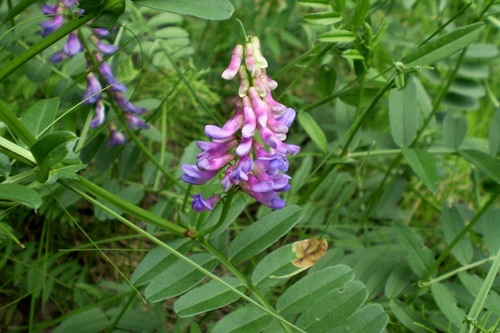
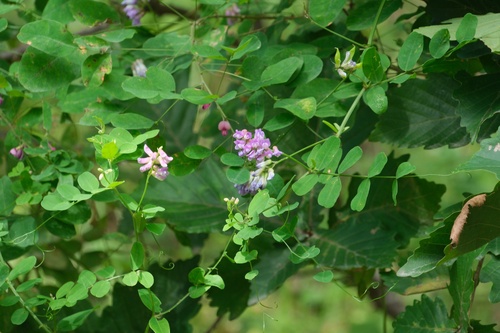
Chamaecrista nigricans
(Vahl) Greene
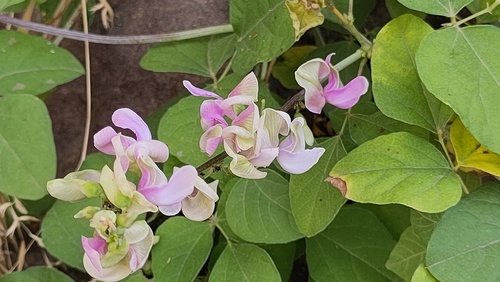
iNaturalist· cc-by-nc-sa
(c) Stefan Dressler, some rights reserved (CC BY-NC-SA)
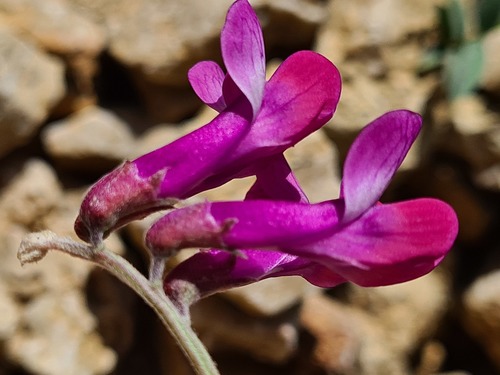
iNaturalist· cc-by-nc
(c) Sylvain Piry, some rights reserved (CC BY-NC)
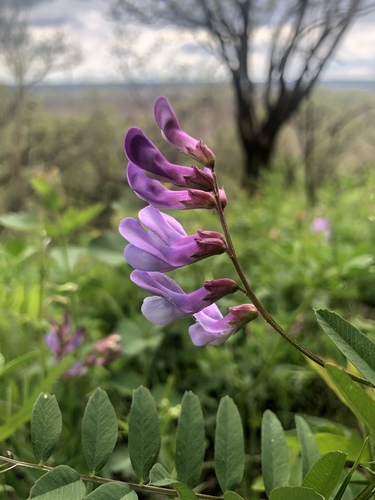
iNaturalist· cc-by-nc
(c) Sylvain Piry, some rights reserved (CC BY-NC)
Summary
A perennial growing to 1.5 m tall and wide at a fast rate, hardy to UK zone 10. Fixes nitrogen in soil. Tolerates light sandy, medium loamy, and heavy clay soils, preferring well-drained conditions but capable of growing in heavy clay. Suitable for mildly acid to basic pH. Requires full sun and prefers moist soil.
Description
A woody herb or small shrub. It keeps growing from year to year. It is about 1.5 m high.
This description is brief — help expand it
Edible Uses
The bitter, mature leaves are used as a condiment — added to food as an appetizer and used to flavour sauces and other dishes.
Traditional Uses
The leaves are used for flavouring in sauces and other dishes.
This uses section is brief — help expand it
Medicinal Uses
The leaves are antiseptic, astringent, pesticidal, and vermifuge, and are used in treating a wide range of conditions including fevers and malaria, venereal diseases, coughs, stomach-ache, peptic ulcers, diarrhoea, and intestinal worms. An infusion of the aerial parts is taken as an anti-menstruation agent and can also be added to a bath to treat haemorrhoids. Externally, an infusion or decoction of the leaves is applied to skin conditions including insect stings, itching, wounds, and abscesses. The leaves are pounded in water and applied to ticks on both humans and horses; mixed with palm oil, they are rubbed on the head to kill lice. The root is anthelmintic, astringent, oxytocic, and purgative. Pounded with water it is used against diarrhoea, while an infusion or decoction is used to expel internal parasites and to stimulate uterine contractions for removing a retained placenta and promoting labour. The leaves contain the anthraquinone emodin. Methanolic extracts have demonstrated analgesic and anti-inflammatory effects, as well as a protective action against ulcers, possibly through histaminergic receptor inhibition, and dose-dependent antidiarrhoeal activity. Extracts have also shown contraceptive activity through oestrogenic and anti-implantation mechanisms. Ethanolic extracts have shown antibacterial activity against Shigella dysenteriae, Staphylococcus aureus, Staphylococcus faecalis, and Vibrio cholerae. Plant extracts have also demonstrated significant activity against Herpes simplex virus type 1 in vitro.
Distribution
It is a tropical plant. It grows in drier parts of West Africa. It grows in savannah woodland.
Where It Grows
Africa, Burkina Faso, Côte d'Ivoire, Guinea, Guinée, Guinea-Bissau, India, Ivory Coast, Nigeria, Senegal, West Africa,
Cultivation
The plant has a wide distribution in the tropics, being found in a wide range of habitats at elevations up to 1,200 metres. It grows well in areas with a mean annual rainfall in the range 950 - 1,400mm spread over 5 - 6 months, as in the Sudano-Guinean zone of West Africa. The plant is especially common on heavy lateritic soils. The plant is a spontaneous weed through much of the tropics and subtropics, and is sometimes found even in Australia. This species has a symbiotic relationship with certain soil bacteria; these bacteria form nodules on the roots and fix atmospheric nitrogen. Some of this nitrogen is utilized by the growing plant but some can also be used by other plants growing nearby.
Propagation
Seed germinates easily.
Other Uses
Dried leaves, leaf powder, ash, and plant extracts have all been used to protect stored pulses and cereals from insect damage. Powdered leaves have been shown to be effective as a storage protectant for pulses by inhibiting the hatching of insect larvae. They pose no health risk if removed before consumption.
Notes
Also as Caesalpinaceae.
Synonyms
Also Known As
Bara-bubel, Bono, Chila-ja-lo, Heb eddbae, Lali-baba, Macarra-bubel, Massacali, Silatalo
References (2)
- Burkill, H. M., 1985, The useful plants of west tropical Africa, Vol. 3. Kew.
- World Checklist of Useful Plant Species 2020. Royal Botanic Gardens, Kew