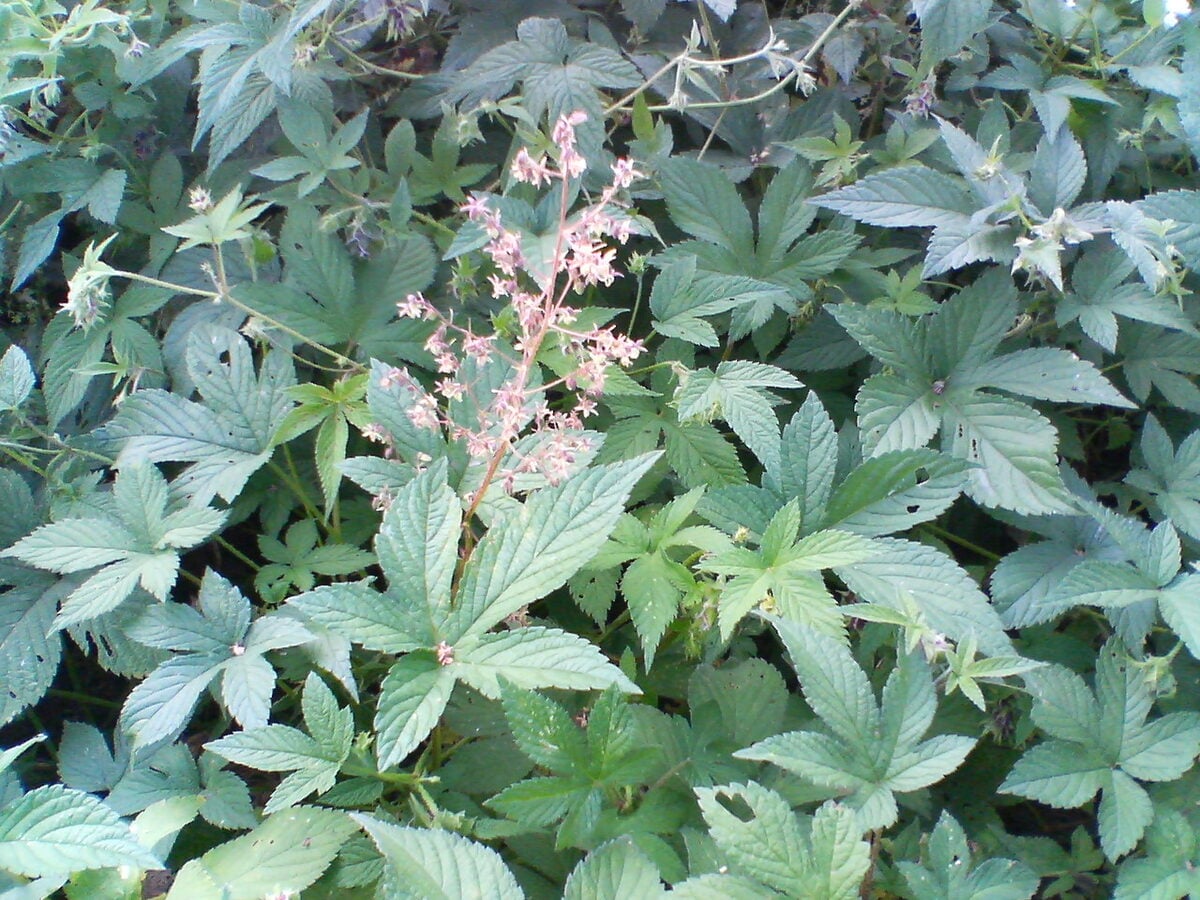
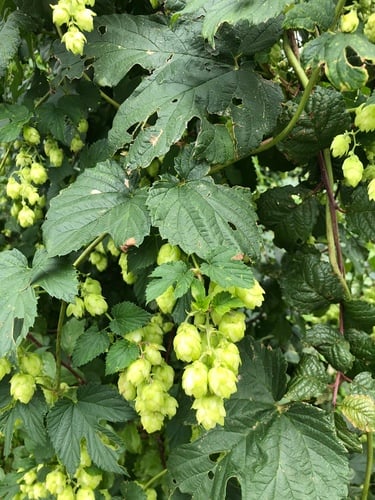
Cannabis sativa
L.
Indian Hemp
iNaturalist· cc-by-nc-sa
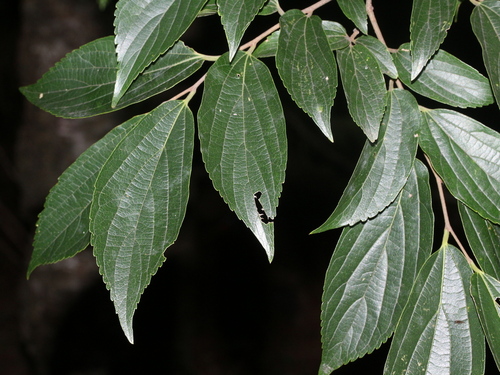
(c) Dinesh Valke, some rights reserved (CC BY-NC-SA)
iNaturalist· cc-by-nc
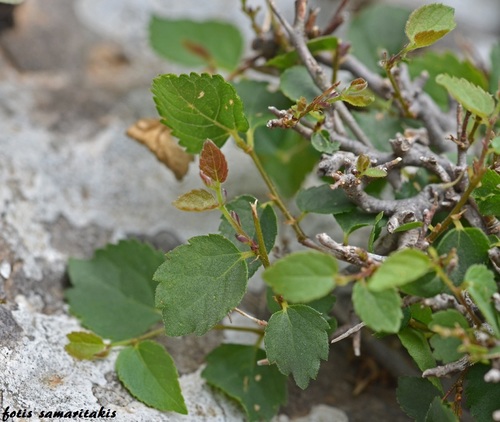
(c) Yuwaraj Gurjar, some rights reserved (CC BY-NC)
iNaturalist· cc-by-nc
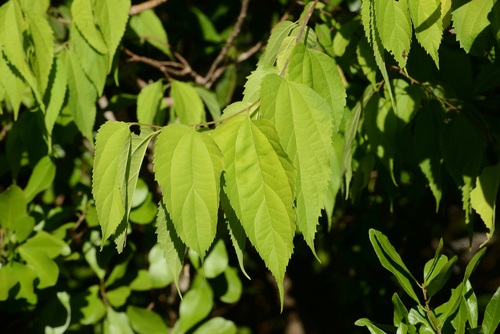
(c) Bob O'Kennon, some rights reserved (CC BY-NC)
Summary
Source: WikipediaCannabis sativa is an annual herbaceous flowering plant. The species was first classified by Carl Linnaeus in 1753. The specific epithet sativa means 'cultivated'. Indigenous to Eastern Asia, the plant is now of cosmopolitan distribution due to widespread cultivation. It has been cultivated throughout recorded history and used as a source of industrial fiber, seed oil, food, and medicine. It is also used as a recreational drug and for religious and spiritual purposes.
Description
An annual herb. It is about 2 m high. The leaves are alternate. They are divided like fingers on a hand and has 3-7 leaflets. The leaflets are sword shaped and have coarse teeth along the edge. They are rough in texture. The flowers are yellowish. Male and female flowers occur on separate plants. The fruit is a dry one seeded fruit.
Edible Uses
The seed can be eaten raw or cooked — parched and eaten as a condiment, or made into cakes and fried. The seed is quite tasty but difficult to separate from the husk; grinding seed and husk together results in a very gritty texture. The seed contains about 27.1% protein, 25.6% fat, 7.4% carbohydrate, and 6.1% ash. On a zero moisture basis, seed provides 487 calories per 100g, with 31.4g protein, 29.6g fat, 31.9g carbohydrate, 23.5g fibre, and 7.1g ash; minerals include 139mg calcium, 1123mg phosphorus, and 13.9mg iron; vitamins include 518mg vitamin A, 0.37mg thiamine, 0.2mg riboflavin, and 2.43mg niacin. A highly nutritious edible oil rich in essential fatty acids is pressed from the seed and used for food. Leaves are used in soups and contain 0.215% carotene.
Traditional Uses
The leaves of one kind are used to flavour food. The dried leaves are used as a drink. The seeds are roasted and pickled. The seeds yield a fatty oil used in cooking. The seeds are parched and used as a condiment. They are also used for coffee or made into cakes and fried. The sprouted seeds are eaten.
Medicinal Uses
Cannabis has a very long history of medicinal use, though it is illegal to grow in many countries. The leaves and the resin they exude are the parts most commonly used, though all parts of the plant contain active compounds including THC. The principal uses are as a pain-killer, sleep-inducer, and reliever of chemotherapy-induced nausea, with additional soothing effects in nervous disorders. The whole plant is anodyne, anthelmintic, antiemetic, anti-inflammatory, antiperiodic, antispasmodic, cholagogue, diuretic, emollient, hypnotic, hypotensive, laxative, narcotic, ophthalmic, and sedative. It is effective in reducing nausea and stimulating appetite in cancer patients undergoing chemotherapy, and helps maintain a positive outlook. It relieves the constant urge to urinate in multiple sclerosis sufferers, and used regularly it significantly reduces intraocular pressure in glaucoma. In AIDS patients it supports weight gain, and it has been found useful in treating anorexia nervosa by strongly stimulating appetite. Externally it is applied as a poultice for corns, sores, varicose veins, gout, and rheumatism. Folk medicine records its use for alcohol withdrawal, anthrax, asthma, blood poisoning, bronchitis, burns, catarrh, childbirth, convulsions, coughs, cystitis, delirium, depression, diarrhoea, dysentery, dysmenorrhoea, epilepsy, fever, gonorrhoea, gout, inflammation, insomnia, jaundice, lockjaw, malaria, mania, menorrhagia, migraine, morphine withdrawal, neuralgia, palsy, rheumatism, scalds, snakebite, swellings, tetanus, toothache, uteral prolapse, and whooping cough. The seed is anodyne, anthelmintic, demulcent, diuretic, emollient, emmenagogue, febrifuge, laxative, narcotic, and tonic, used to treat constipation caused by debility or fluid retention. The seed is also an important source of essential fatty acids and may be helpful in treating nervous diseases. The plant contains highly active antibacterial and analgesic substances with bactericidal effects on gram-positive micro-organisms at dilutions of up to 1:150,000.
Known Hazards
The plant is a narcotic (legally) in some countries. Its action is almost entirely on the higher nerve centres, it can produce an exhilarating intoxication with hallucinations and is a widely used street drug. It has also been widely used in the past by mystics and sages wanting to communicate with the higher forces of nature. The nature of its effect does depend much on the temperament of the individual. The use of cannabis is considered to be less harmful than alcohol or tobacco by many people, nevertheless its use has been banned in many countries of the world including most western countries, New Zealand and Australia.
Distribution
It is a temperate plant. It grows throughout Nepal up to 2700 m altitude. It does best in nitrogen rich soils. It can grow in arid places. In Yunnan.
Where It Grows
Africa, Andorra, Armenia, Asia, Australia, Austria, Balkans, Bhutan, Botswana, Britain, Bulgaria, Cambodia, Canada, Caucasus, Central Africa, China, Czech Republic, Dominican Republic, East Africa, Egypt, Ethiopia, Europe, Fiji, Finland, Gabon, Georgia, Germany, Greece, Haiti, Himalayas, India, Indochina, Indonesia, Iran*, Kenya, Korea, Laos, Libya, Macedonia, Madagascar, Malawi, Malaysia, Marquesas, Mediterranean, Middle East, Mozambique, Myanmar, Nepal, Niger, North Africa, North America, Northeastern India, Pacific, Pakistan, Papua New Guinea, PNG, Poland, Romania, Russia, Sahel, Sao Tome and Principe, Scandinavia, SE Asia, Serbia, Siberia, Slovakia, Slovenia, Spain, Switzerland, Tanzania, Tasmania, Thailand, USA, Vietnam, West Africa, West Indies, Zambia, Zimbabwe,
Cultivation
Cannabis is very adaptable to soil and climatic conditions. It prefers a rich loamy soil with plenty of humus but it succeeds in ordinary garden soil and also in calcareous soils. When grown for fibre, it requires a mild temperate climate with at least 67cm annual rainfall, with abundant rain whilst the seeds are germinating and until young plants become established. Cannabis thrives on rich, fertile, neutral to slightly alkaline, well-drained silt or clay loams with moisture retentive subsoils, it does not grow well on acid, sandy soils. Of the many types of hemp, some are adapted to most vegetated terrains and climates. Cannabis is reported to tolerate an annual precipitation range of 30 to 400cm, an average annual temperature range of 6 to 27°C and a pH in the range of 4.5 to 8.2. Plants require little cultivation, except for weeding during early stages of growth. Hemp grows rapidly and soon crowds out weeds. After the plants are 20 cm tall, weeding is abandoned. Hemp tends to exhaust the soil of nutrients, though some nutrients are returned to the soil after plants are harvested. Hemp is commonly cultivated for its fibre, edible seed and oil in many areas of the world, it is also a socially acceptable drug in areas of Asia and the Middle East. However, it is illegal to grow in Britain and many other western countries (plus Australia and New Zealand) because it contains certain narcotic principles and is a commonly used narcotic drug. As Cannabis sativa has been cultivated for over 4,500 years for different purposes, many varieties and cultivars have been selected for specific purposes, as fibre, oil or narcotics. Drug-producing selections grow better and produce more drug in the tropics; oil and fibre producing plants thrive better in the temperate and subtropical areas. Many of the cultivars and varieties have been named as to the locality where it is grown mainly. However, all so called varieties freely interbreed and produce various combinations of the characters. The form of the plant and the yield of fibre from it vary according to climate and particular variety. Varieties cultivated particularly for their fibres have long stalks, branch very little, and yield only small quantities of seed. Varieties which are grown for the oil from their seed are short in height, mature early and produce large quantities of seed. Varieties grown for the drugs are short, much-branched with smaller dark-green leaves. Between these three main types of plants are numerous varieties which differ from the main one in height, extent of branching and other characteristics. At least one variety has been selected for its virtually insignificant content of the narcotic principles. This form is monoecious whereas most other forms are dioecious. There is also said to be a tall Chinese form that has no narcotic effect. However in 1999 even these varieties are illegal to grow in Britain without a special licence. Certain varieties do not form many side-shoots and these are the forms most commonly grown for their fibre. Plants grown in warmer climates tend to be best for medicinal use, whilst those grown in more northerly latitudes produce the better fibre. The seed is very attractive to birds and is often included in bird seed mixtures.
Propagation
Sow seed in early spring in a greenhouse. Prick seedlings out into individual pots when large enough to handle, and plant out into permanent positions in early summer. Seeds germinate well at low temperatures but not below 1°C. Seed can also be sown outdoors in situ in mid spring.
Other Uses
A drying oil obtained from the seed is used for lighting, soap-making, paints, and varnish. In temperate regions this oil is produced from female plants left standing after the fibre-producing males are harvested. A varnish is also made from pressed seeds. Seed is harvested from female plants when it falls freely on shaking; the best time is early morning when fruits are turgid and conditions are damp, as seeds shatter increasingly as fruits dry by midday. Stems are usually cut and seeds shaken out over canvas sheets or beaten free with sticks. A strong, durable fibre obtained from the stem is used for coarse fabrics and rope. Male plants produce the best fibre, harvested when plants turn brown and flowers begin to open. For paper-making, stems are harvested in autumn and retted or steamed until fibre can be removed; the fibre is then cooked for 2 hours or more with lye and beaten in a ball mill or Hollander beater, producing an off-white paper. Cannabis is a good companion plant for cabbages and brassicas, repelling the cabbage white butterfly and secreting a volatile essence from its roots that inhibits pathogenic soil micro-organisms. Also used as fodder and animal feed.
Other Information
It is sold in local markets.
Notes
There is only one Cannabis species. There are 2 Cannabaceae genera. Cannabis contains more than 60 Cannabinoides. Cannabis is illegal in some Western countries. For Narcotics Ganja is obtained from the resin of the flowers, Charas from rubbing leaves and twigs and bhang from older leaves and mature fruit. The seeds do not contain narcotic substances.
Nutrition
| Part | Moisture | kJ | kcal | Protein | Vit A | Vit C | Iron | Zinc |
|---|---|---|---|---|---|---|---|---|
| Seeds | 13.6 | 1760 | 421 | 27.1 | — | — | 12 | — |
| Sprouts | — | — | — | — | — | — | — | — |
Synonyms
Also Known As
Ahibola, Bhang, Bhanga, Bhangolu, Dagga, Fimble, Gaja, Gallow grass, Ganja, Hasheesh, Hashish, Hemp, Jea, Jia, Kamm, K'anapi, Kaneph, Kanh chha, Konope, Konopeni grasti, Marijuana, Nam-khuye, Navadna konoplja, Obiknoven konop, Olusus, Pang, Samei, Se-gyauk, Vamm, Vangpata
References (71)
- Acharya K. P. and Acharya, R., 2010, Eating from the Wild: Indigenous knowledge on wild edible plants in Parroha VDC of Rupandehi District, Central Nepal. International Journal of Social Forestry. 3(1):28-48
- Agarwal, R. & Chandra, V., 2019, Diversity of wild edible plants in the Mandal-Chopta forest, Uttarakhand. Journal of Medicinal Plants Studies 2019; 7(1): 89-92
- Ambasta S.P. (Ed.), 2000, The Useful Plants of India. CSIR India. p 101
- Anderson, E. F., 1993, Plants and people of the Golden Triangle. Dioscorides Press. p 205
- Aryal, K. P., et al, 2018, Diversity and use of wild and non-cultivated edible plants in the Western Himalaya. Journal of Ethnobiology and Ethnomedicine (2018) 14:10
Show all 71 references Hide references
- Bernholt, H. et al, 2009, Plant species richness and diversity in urban and peri-urban gardens of Niamey, Niger. Agroforestry Systems 77:159-179
- Bircher, A. G. & Bircher, W. H., 2000, Encyclopedia of Fruit Trees and Edible Flowering Plants in Egypt and the Subtropics. AUC Press. p 80
- Blamey, M and Grey-Wilson, C., 2005, Wild flowers of the Mediterranean. A & C Black London. p 36
- Bodkin, F., 1991, Encyclopedia Botanica. Cornstalk publishing, p 210
- Bohra, N., et al, 2017, Ethnobotany of wild edible plants traditionally used by the local people in the Ramnagar regions from Nainital District, Uttarakhand, India. Biolife 5(1): 12-19
- Bremness, L., 1994, Herbs. Collins Eyewitness Handbooks. Harper Collins. p 236
- Brown, D., 2002, The Royal Horticultural Society encyclopedia of Herbs and their uses. DK Books. p 152
- Burkill, I.H., 1966, A Dictionary of the Economic Products of the Malay Peninsula. Ministry of Agriculture and Cooperatives, Kuala Lumpur, Malaysia. Vol 1 (A-H) p 442
- Bussman, R. W., et al, 2016, A comparative ethnobotany of Khevsureti, Samtskhe-Javakheti, Tusheti, Svaneti, and Racha-Lechkhumi, Republic of Georgia (Sakartvelo), Caucasus. Journal of Ethnobiology and Ethnomedicine (2016) 12:4
- Bussman, R. W., et al, 2021, Unity in diversity—food plants and fungi of Sakartvelo (Republic of Georgia), Caucasus. Journal of Ethnobiology and Ethnomedicine (2021) 17:72 p 8
- Dangol, D. R. et al, 2017, Wild Edible Plants in Nepal. Proceedings of 2nd National Workshop on CUAOGR, 2017.
- Duke, J.A., 1992, Handbook of Edible Weeds. CRC Press. p 54
- Facciola, S., 1998, Cornucopia 2: a Source Book of Edible Plants. Kampong Publications, p 70
- Flora of Australia, Volume 3, Hamamelidales to Casuarinales, Australian Government Publishing Service, Canberra (1989) p 15
- Flora of Pakistan. www.eFlora.org
- Fowler, D. G., 2007, Zambian Plants: Their Vernacular Names and Uses. Kew. p 16
- Gautam, R. S., et al, 2020, Wild Edible Fruits of Nepal. Int. J. Appl. Sci. Biotechnol. Vol 8(3): 289-304
- Gautam, R. S., et al, 2022, Ethnobotanical Review of Wild Edible Plants of Nepal. Journal of Natural History Museum Volume 32, 2021-22 p 109
- Geng, Y., et al, 2016, Traditional knowledge and its transmission of wild edibles used by the Naxi in Baidi Village, northwest Yunnan province. Journal of Ethnobiology and Ethnomedicine. 12:10
- Ghimire, S. K., et al, 2008, Non-Timber Forest Products of Nepal Himalaya. WWF Nepal p 38 (As var. indica)
- Hani Medicine of Xishuangbanna, 1999, p 799
- Hedrick, U.P., 1919, (Ed.), Sturtevant's edible plants of the world. p 150
- Henty, E.E., 1980, Harmful Plants in Papua New Guinea. Botany Bulletin No 12. Division Botany, Lae, Papua New Guinea. p 106,
- Heywood, V.H., Brummitt, R.K., Culham, A., and Seberg, O. 2007, Flowering Plant Families of the World. Royal Botanical Gardens, Kew. p 85
- Huxley, A. (Ed.), 1977, The Encyclopedia of the Plant Kingdom. Chartweil Books. p 87
- Jardin, C., 1970, List of Foods Used In Africa, FAO Nutrition Information Document Series No 2.p 40, 62
- Khakurel, D., et al, 2021, Foods from the wild: Local knowledge, use pattern and distribution in Western Nepal. PLOS ONE.
- Khanal, R., et al, 2014, Documenting abundance and use of underutilized plant species in the mid hill region of Nepal. ECOPRINT 21: 63-71, 2014
- Kiple, K.F. & Ornelas, K.C., (eds), 2000, The Cambridge World History of Food. CUP p 1785
- Kumar, S. A., Manus, D. & Mallika, M., 2018, Impact of non-timber forest products on Forest and in Livelihood Economy of the People of Adjoining Areas of Jalpaiguri Forest Division, West Bengal, India. Int. J. of Life Sciences, 2018; 6 (2):365-385
- Lazarides, M. & Hince, B., 1993, Handbook of Economic Plants of Australia, CSIRO. p 46
- Lokho, K. & Narasimhan, D., 2013, Ethnobotany of Mao-Naga Tribe of Manipur, India. Pleione 7(2): 314-324
- Luczaj, L., 2012, Ethnobotanical review of wild edible plants of Slovakia. Acta Societatis Botanicorum Poloniae 81(4):245-255
- MacKinnon, A., et al, 2009, Edible & Medicinal Plants of Canada. Lone Pine. p 314
- Majeed, M., et al, 2021, Gathered Wild Food Plants among Diverse Religious Groups in Jhelum District, Punjab, Pakistan. Foods 2021, 10, 594.
- Manandhar, N.P., 2002, Plants and People of Nepal. Timber Press. Portland, Oregon. p 131
- Menninger, E.A., 1977, Edible Nuts of the World. Horticultural Books. Florida p 146
- Molla, A., Ethiopian Plant Names. http://www.ethiopic.com/aplants.htm
- Morley, B.D., & Toelken, H.R., (Eds), 1983, Flowering Plants in Australia. Rigby. p 64
- Nanagulyan, S., et al, 2020, Wild plants and fungi sold in the markets of Yerevan (Armenia). Journal of Ethnobiology and Ethnomedicine 16:26
- Nedelcheva A., 2013, An ethnobotanical study of wild edible plants in Bulgaria. EurAsian Journal of BioSciences 7, 77-94
- Paczkowska, G. & Chapman, A.R., 2000, The Western Australian Flora. A Descriptive Catalogue. Western Australian Herbarium. p 194
- Patiri, B. & Borah, A., 2007, Wild Edible Plants of Assam. Geethaki Publishers. p 132
- Phon, P., 2000, Plants used in Cambodia. © Pauline Dy Phon, Phnom Penh, Cambodia. p 130
- Plants for a Future database, The Field, Penpol, Lostwithiel, Cornwall, PL22 0NG, UK. http://www.scs.leeds.ac.uk/pfaf/
- Plants of Haiti Smithsonian Institute http://botany.si.edu
- PROSEA (Plant Resources of South East Asia) handbook, Volume 12 (1), 2001, Medicinal and poisonous.
- Purseglove, J.W., 1968, Tropical Crops Dicotyledons, Longmans. p 40
- Rana, J.C. et al, 2011, Genetic resources of wild edible plants and their uses among tribal communities of cold arid regions of India. Genetic Resources and Crop Evolution. 59:135-149
- Rana, D., et al, 2019, Ethnobotanical knowledge among the semi-pastoral Gujjar tribe in the high altitude (Adhwari’s) of Churah subdivision, district Chamba, Western Himalaya. Journal of Ethnobiology and Ethnomedicine (2019) 15:10
- Raponda-Walker, A & Sillans, R., 1961, Les Plantes Utiles du Gabon. Editions Paul Lechevalier, Paris. p 115
- Royal Botanic Gardens, Kew (1999). Survey of Economic Plants for Arid and Semi-Arid Lands (SEPASAL) database. Published on the Internet; http://www.rbgkew.org.uk/ceb/sepasal/internet [Accessed 5th April 2011]
- Sachula, et al, 2020, Wild edible plants collected and consumed by the locals in Daqinggou, Inner Mongolia, China. Journal of Ethnobiology and Ethnomedicine (2020) 16:60 (As f. ruderalis)
- Shrestha, S., 2021, Wild Edible Plants of Dhankuta, Eastern Nepal. Rupantaran : A Multidisciplinary Journal Vol. V : pp 100-109, September, 2021 p 103
- Simmonds, N.W., 1979, Hemp, in Simmonds N.W.,(ed), Crop Plant Evolution. Longmans. London. p 203
- Sp. pl. 2:1027. 1753
- Terra, G.J.A., 1973, Tropical Vegetables. Communication 54e Royal Tropical Institute, Amsterdam, p 35
- Thakur, D., et al, 2017, Why they eat, what they eat: patterns of wild edible plants consumption in a tribal area of Western Himalaya. Journal of Ethnobiology and Ethnomedicine (2017) 13:70
- Thapa, L. B., et al, 2014, Wild Edible Plants used by endangered and Indigenous Raji Tribe in Western Nepal. International Journal of Applied Sciences and Biotechnology. Vol 2(3):243-252
- Tozer, F., 2007, The Uses of Wild Plants. Green Man Publishing. p 52
- Tsering, J., et al, 2017, Ethnobotanical appraisal on wild edible plants used by the Monpa community of Arunchal Pradesh. Indian Journal of Traditional Knowledge. Vol 16(4), October 2017, pp 626-637
- Vickery, M.L. and Vickery, B., 1979, Plant Products of Tropical Africa, Macmillan. p 95
- Williamson, J., 2005, Useful Plants of Malawi. 3rd. Edition. Mdadzi Book Trust. p 54
- World Checklist of Useful Plant Species 2020. Royal Botanic Gardens, Kew
- Zeven, A. C. & de West, J. M. J., 1982, Dictionary of cultivated plants and their regions of diversity. Wageningen. p 71
- Zhang, L., et al, 2016, Ethnobotanical study of traditional edible plants used by the Naxi people during droughts. Journal of Ethnobiology and Ethnomedicine. 12:39