Aphananthe cuspidata
(Blume) Planch.
Netleaf hackberry
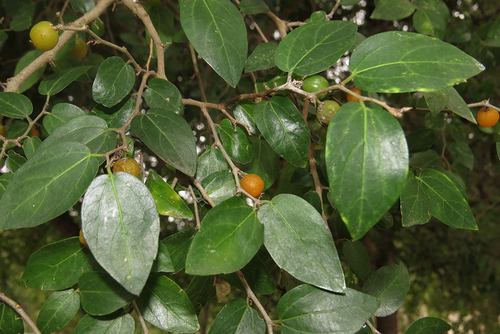
iNaturalist· cc-by-nc
(c) José Ignacio Márquez Corro, some rights reserved (CC BY-NC), uploaded by José Ignacio Márquez Corro
iNaturalist· cc-by-nc
(c) tkp123, some rights reserved (CC BY-NC)
iNaturalist· cc-by-nc
(c) tkp123, some rights reserved (CC BY-NC)
Description
A tree. It grows 15-20 m tall. The trunk is 50-80 cm across. The bark is greyish brown. The leaves are narrowly oval and 10-15 cm long by 3-5 cm wide. The male flowers are in pairs and the female flowers occur singly. The fruit are reddish brown when ripe. They are oval and 2 cm long by 1 cm wide.
Edible Uses
The ripe fruit are eaten.
Traditional Uses
The ripe fruit are eaten.
This uses section is brief — help expand it
Medicinal Uses
The bark is depurative. It is taken internally with lemon juice as a purifier of blood, for relieving itches and other cutaneous eruptions. The plant yields a crystalline substance, lime methyl-indole or skatole.
Distribution
It is a tropical plant. It grows on slopes of hills between 100-900 m above sea level in southern China. In Yunnan.
Where It Grows
Asia, Bhutan, China, Himalayas, India, Indochina, Indonesia, Malaysia, Myanmar, Northeastern India, SE Asia, Sikkim, Sri Lanka, Thailand, Vietnam,
Production
In southern China plants flower in March and April or September to November and fruit in July to September or November to December.
Synonyms
Also Known As
Babbuchekke, Dineg-charkhei, Khomanig, Koditani, Nara-kiya, Naraka-bhutali, Narakiyood, Nyal, Shee-kung, Sukar, Thei-seh-ret
References (6)
- Altschul, S.V.R., 1973, Drugs and Foods from Little-known Plants. Notes in Harvard University Herbaria. Harvard Univ. Press. Massachusetts. no. 669 (As Gironniera cuspidata)
- Ambasta, S.P. (Ed.), 2000, The Useful Plants of India. CSIR India. p 236 (As Gironniera cuspidata)
- Chakraborty, S. & Chaturbedi, H. P., 2014, Some Wild Edible Fruits of Tripura- A Survey. Indian Journal of Applied research. (4) 9
- Dobriyal, M. J. R. & Dobriyal, R., 2014, Non Wood Forest Produce an Option for Ethnic Food and Nutritional Security in India. Int. J. of Usuf. Mngt. 15(1):17-37 (As Gironniera cuspidata)
- Flora of China @ efloras.org Volume 5
Show all 6 references Hide references
- Kar, A., et al, 2013, Wild Edible Plant Resources used by the Mizos of Mizoram, India. Kathmandu University Journal of Science, Engineering and Technology. Vol. 9, No. 1, July, 2013, 106-126
More from Cannabaceae
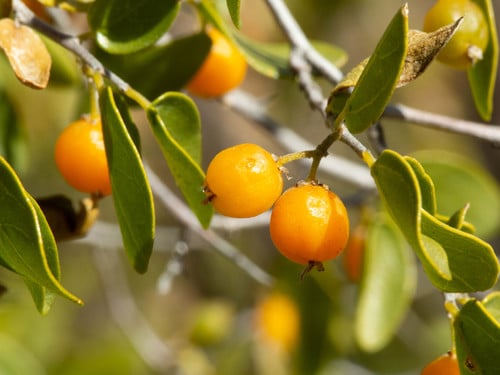
Celtis pallida
Desert Hackberry, Spiny hackberry
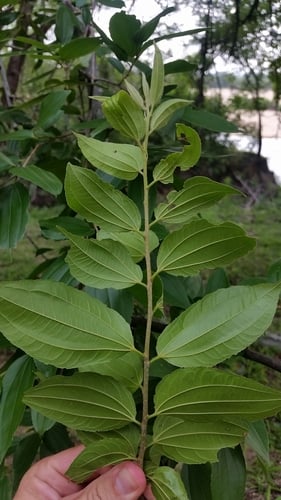
Celtis philippensis
Hard celtis tree
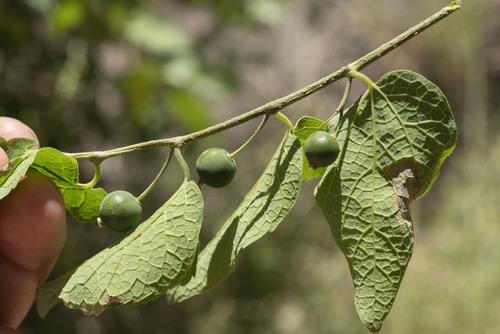
Celtis reticulata
Netleaf hackberry
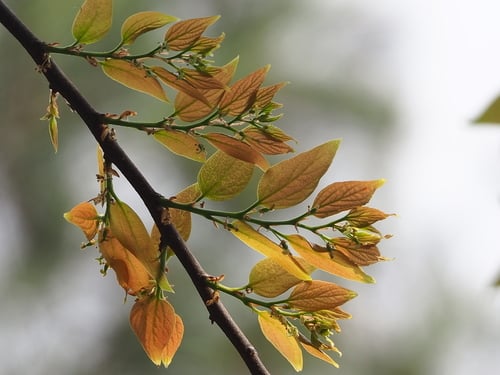
Celtis sinensis
Chinese Hackberry, Portuguese Elm, Chinese nettle-tree
Celtis tala
Cranjero, Tala
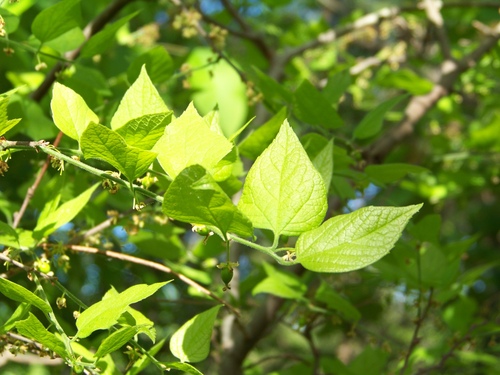
Celtis tenuifolia
Small hackberry, Dwarf hackberry, Georgia hackberry, Ypland hackberry