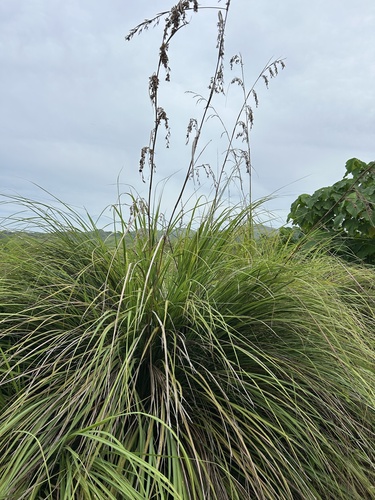
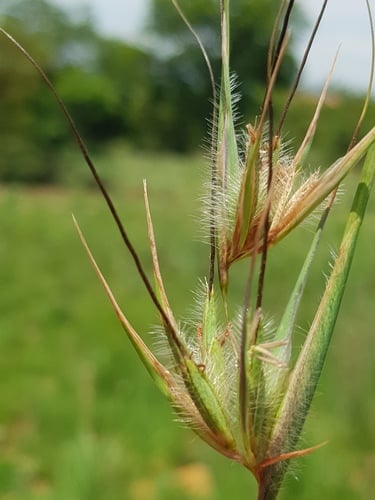
Sorghum versicolor
Andersson
Black seed wild sorghum
iNaturalist· cc-by-nc
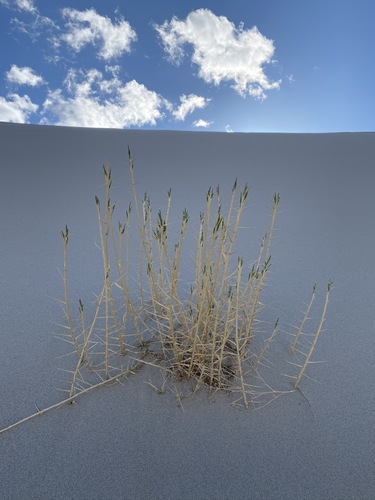
(c) Duncan McKenzie, some rights reserved (CC BY-NC), uploaded by Duncan McKenzie
iNaturalist· cc-by-nc
(c) Riaan Robbeson, some rights reserved (CC BY-NC)
iNaturalist· cc-by-nc
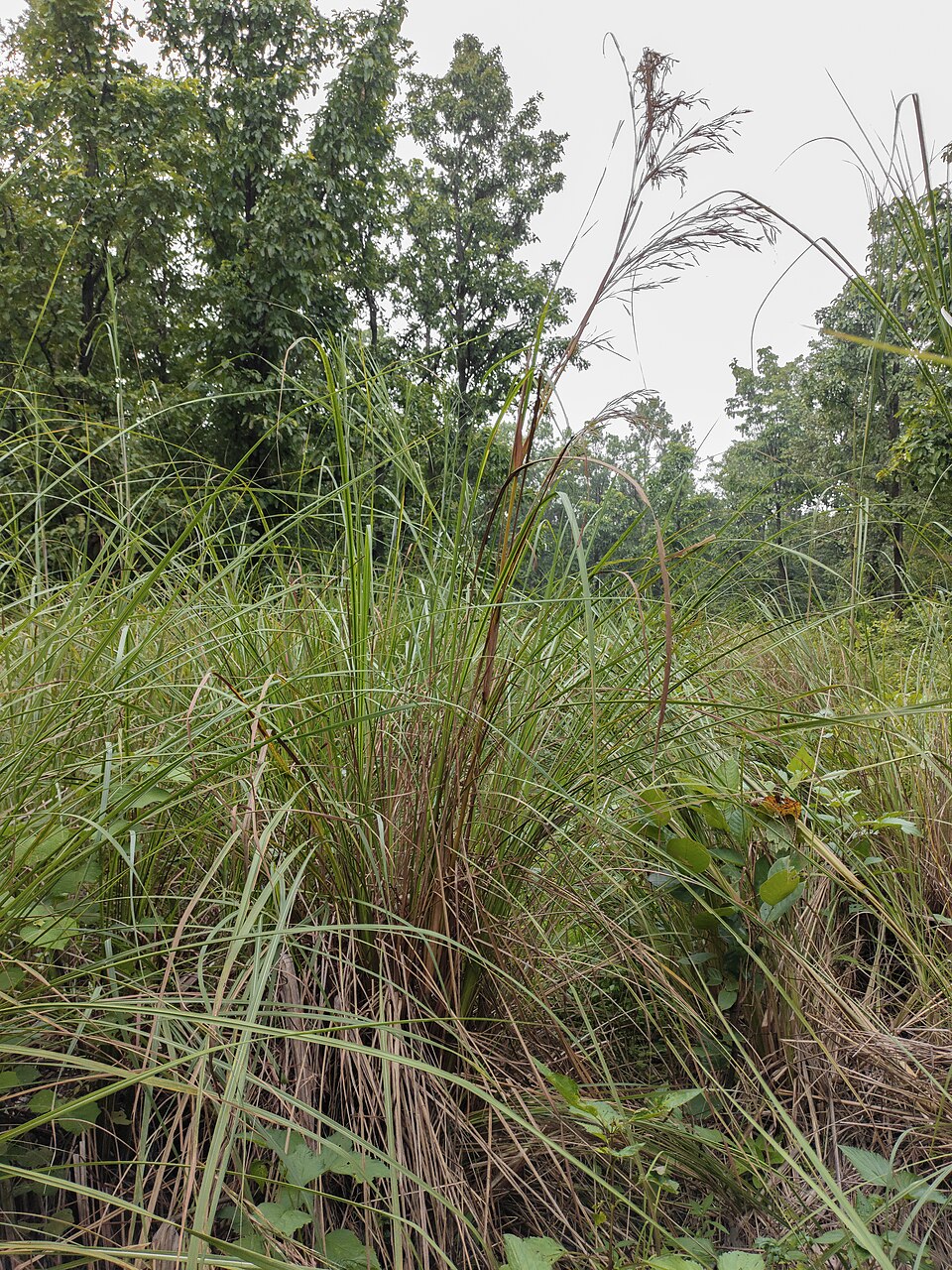
(c) Riaan Robbeson, some rights reserved (CC BY-NC)
Description
An annual millet grass. It grows 2.5 m high. It has a ring of long spreading silky white hairs. The leaf blade is 10-30 cm long by 15 mm wide. It is hairy on both surfaces. The flower panicle is 25 cm long. The spikelets are 6 mm long.
Edible Uses
The seeds are eaten and fermented for beer. The stalks are consumed as a famine food.
Traditional Uses
The seeds are eaten and also used for beer. The stalks are used as a famine food.
This uses section is brief — help expand it
Distribution
It is a tropical plant. It grows in wooded grassland and on waterlogged soils. It grows between 30-1,450 m altitude.
Where It Grows
Africa, Botswana, East Africa, Eswatini, Kenya, Malawi, Mozambique, Somalia, South Africa, Southern Africa, Swaziland, Zambia, Zimbabwe,
Synonyms
Also Known As
Mulu, Nhangaia, Zonya
References (3)
- Flora Zambesiaca. http://apps.kew.org/efloras
- Fowler, D. G., 2007, Zambian Plants: Their Vernacular Names and Uses. Kew. p 73
- Long, C., 2005, Swaziland's Flora - siSwati names and Uses http://www.sntc.org.sz/flora/