Festuca arundinacea
Schreb.
iNaturalist· cc-by
(c) Георгий Виноградов (Georgy Vinogradov), some rights reserved (CC BY)
iNaturalist· cc-by
(c) Георгий Виноградов (Georgy Vinogradov), some rights reserved (CC BY)
iNaturalist· cc-by-nc
(c) Leonid Rasran, some rights reserved (CC BY-NC)
Description
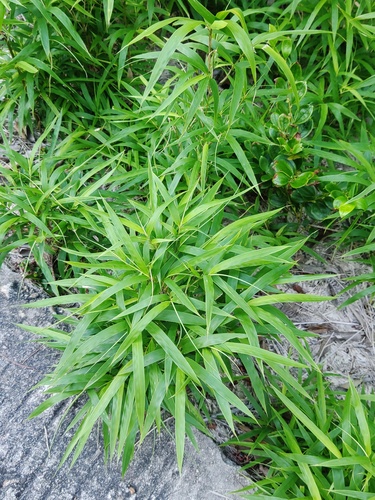
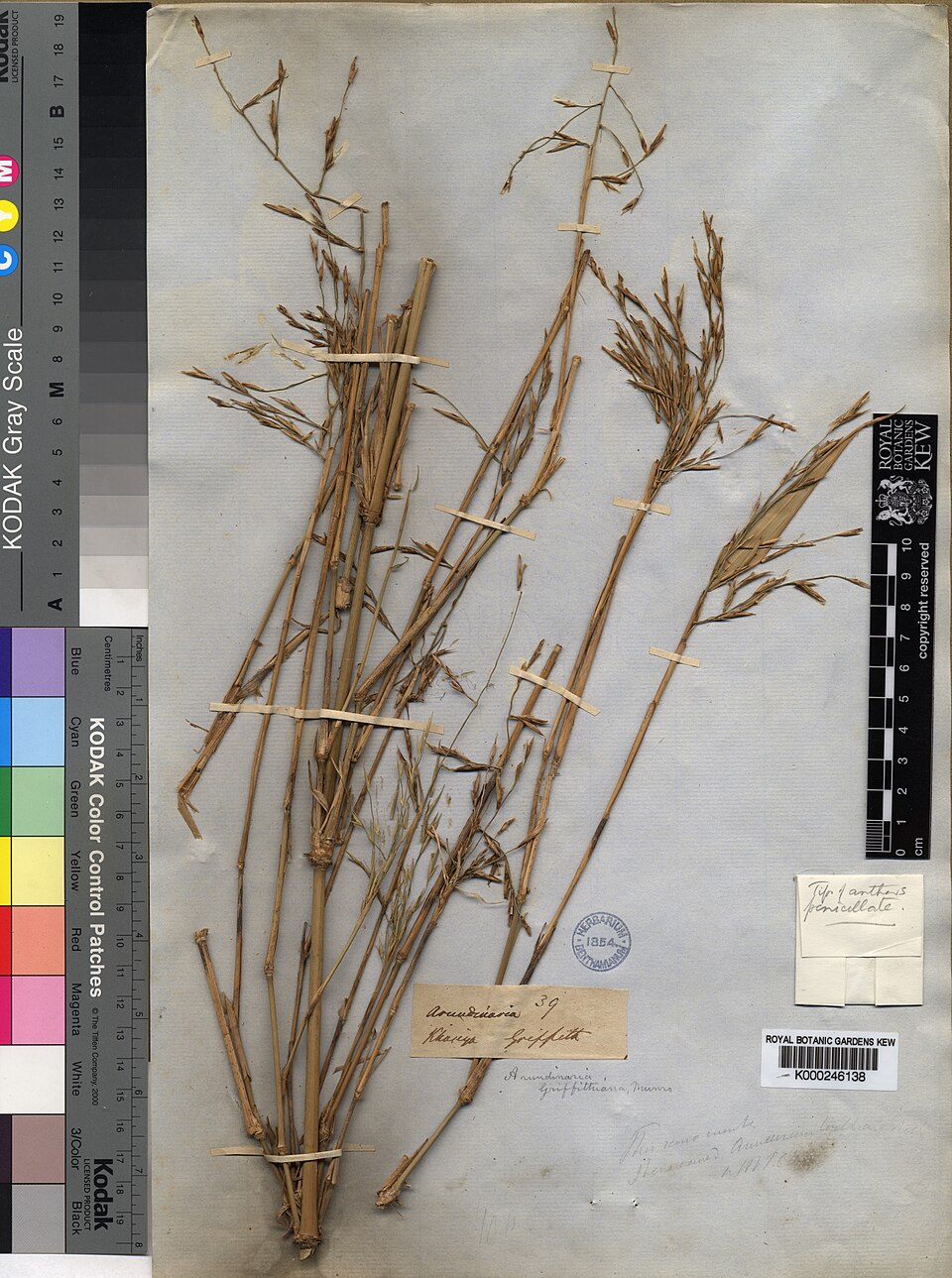
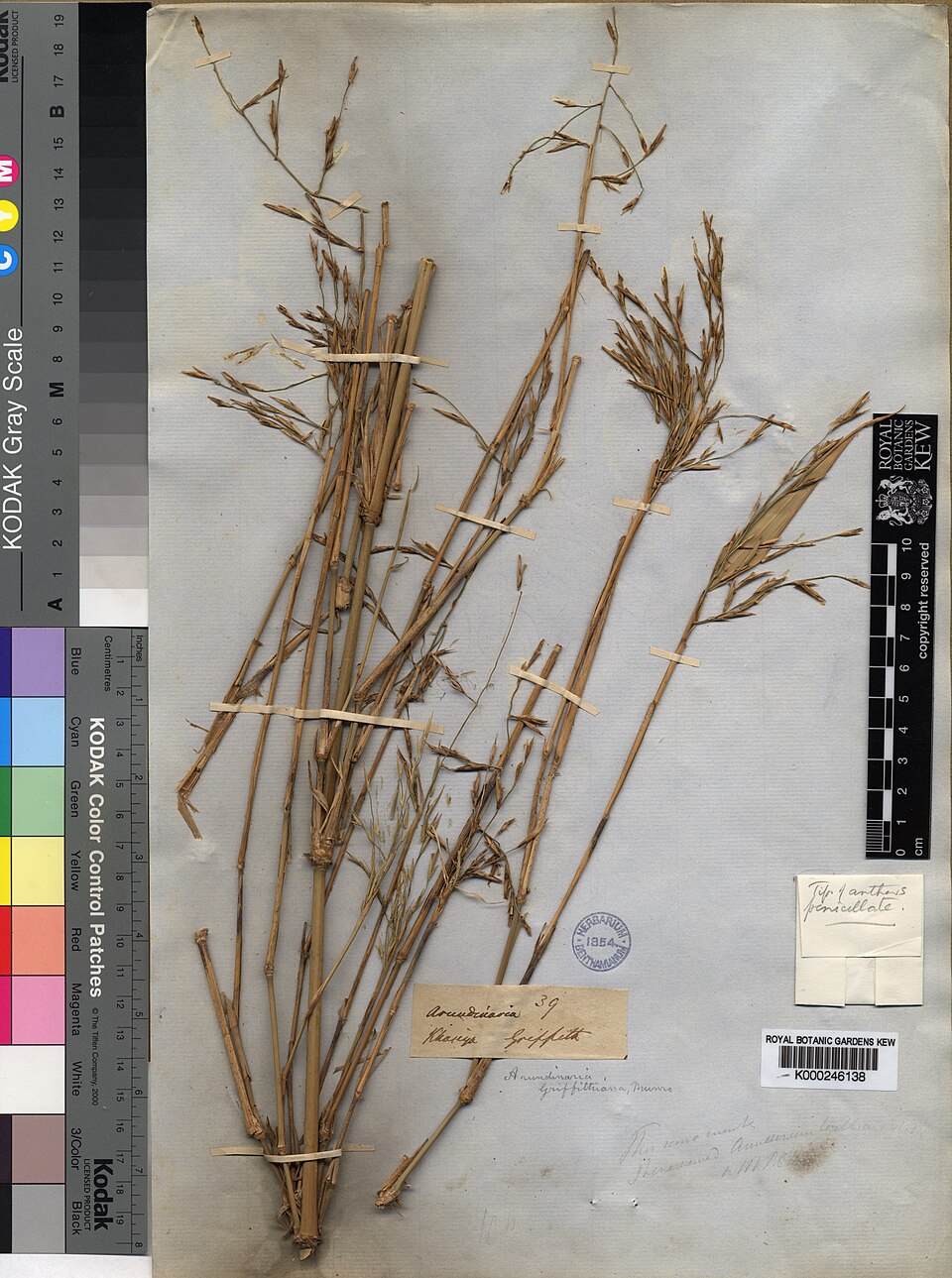
A grass. It keeps growing from year to year. It grows 2 m tall. It forms dense tufts. The leaves have rough edges and are 1 cm wide. The flower heads have narrowly oval spikelets 1-2 cm long.
Edible Uses
Tall fescue was introduced into the United States in the late 19th century, but it did not establish itself as a widely used perennial forage until the 1940s. As in Europe, tall fescue has become an important, well-adapted cool season forage grass for agriculture in the US with many cultivars. In addition to forage, it has become an important grass for turf and soil conservation. Tall fescue is the most heat tolerant of the major cool season grasses. Tall fescue has a deep root system compared to other cool season grasses. This non-native grass is well adapted to the "transition zone" Mid-Atlantic and Southeastern United States and now occupies over 35,000,000 acres (140,000 km2). In addition to serving as forage and turf grass, tall fescue is sometimes planted to stabilize soil, benefiting from its robust root network and adaptability to different environments. The dominant cultivar grown in the United States is Kentucky 31. In 1931 E. N. Fergus, a professor of agronomy at the University of Kentucky, collected seed from a population on a hillside in Menifee County, Kentucky although formal cultivar release did not happen until 1943. Fergus heard about this "wonder grass" while judging a sorghum syrup competition in a nearby town. He wanted to see this grass because it was green, lush, and growing well on a sloped hillside during a drought. While visiting the site he was impressed and took seed samples with him. With this seed he conducted variety trials, initiated seed increase nurseries, and lauded its performance. It was released as Kentucky 31 in 1943 and today it dominates grasslands in the humid southeastern US. In 1943, Fergus and others recognized this tall fescue cultivar as being vigorous, widely adaptable, able to withstand poor soil conditions, resistant to pests and drought. It is used primarily in pastures and low maintenance situations. Breeders have created numerous cultivars that are dark green with desirable narrower blades than the light green coarse bladed K-31. Tall fescue is the grass on the South Lawn of the White House.
Traditional Uses
The seeds can be eaten but it is hard to remove the dusk.
This uses section is brief — help expand it
Distribution
It is a temperate plant. It grows in fields, river banks and on cliffs. In Argentina it grows below 600 m above sea level.
Where It Grows
Argentina, Asia, Australia, Balkans, Brazil, Britain, Chile, Europe, Finland, Ireland, Korea, Luxembourg, Macedonia, Scandinavia, South America, Uruguay, Tasmania,
References (2)
- Irving, M., 2009, The Forager Handbook, A Guide to the Edible Plants of Britain. Ebury Press p 328
- Tasmanian Vascular Plant Census 2017