Pavetta zeyheri
Sond.
Christmas bush
iNaturalist· cc-by-nc
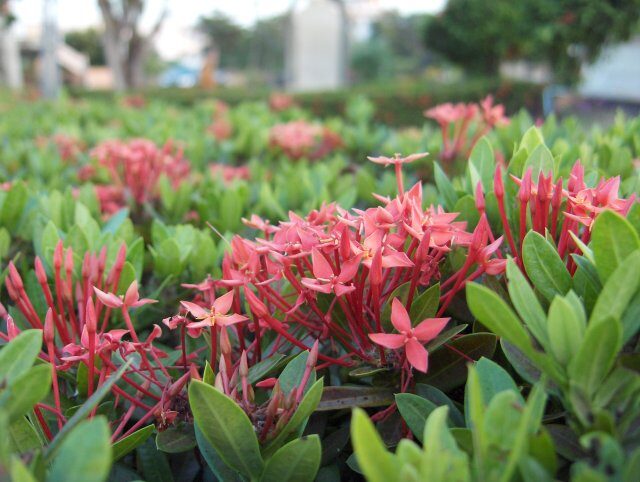
(c) Malcolm Douglas, some rights reserved (CC BY-NC), uploaded by Malcolm Douglas
iNaturalist· cc-by-nc
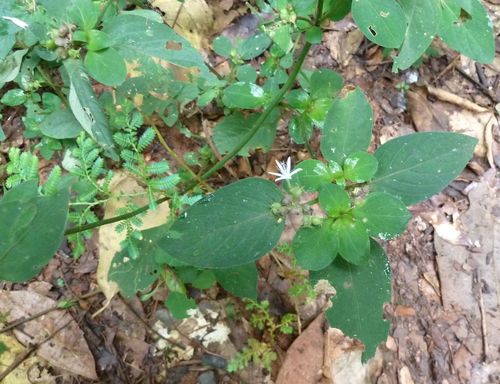
(c) qgrobler, some rights reserved (CC BY-NC)
iNaturalist· cc-by-nc
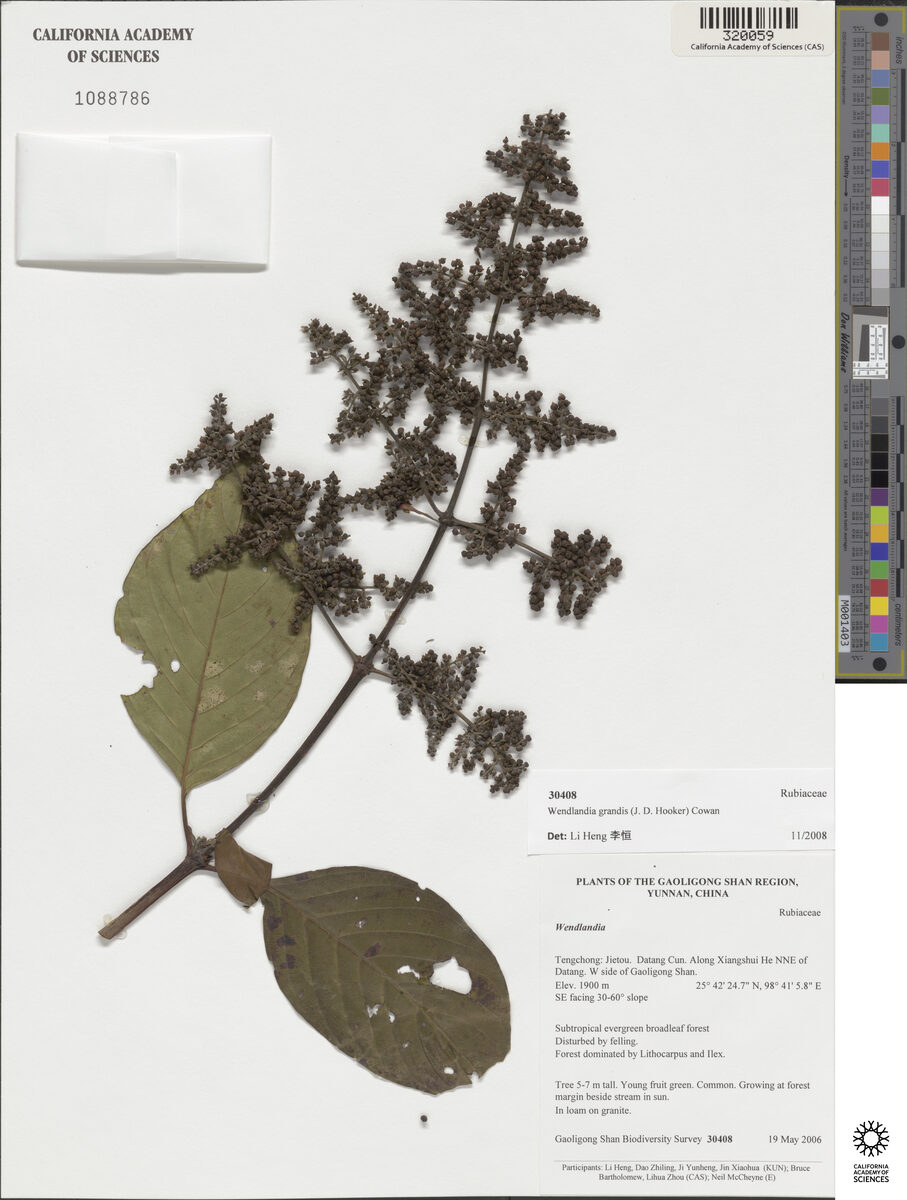
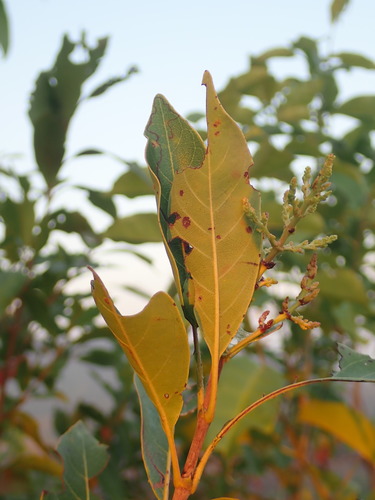
(c) David Spencer Muirhead, some rights reserved (CC BY-NC), uploaded by David Spencer Muirhead
Description
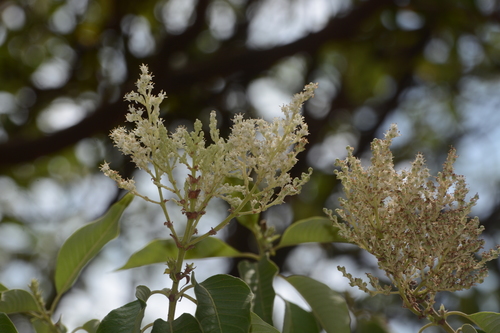
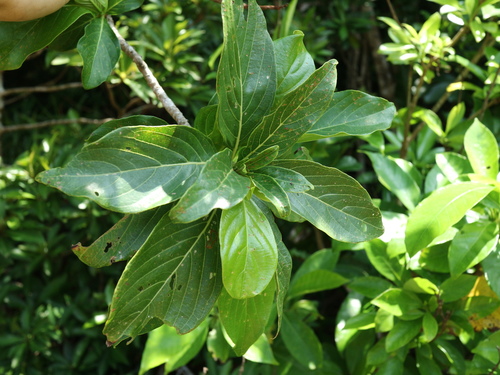
An evergreen shrub or tree. It is broadleaved and loses its leaves during the year. It has a taproot. The leaves are simple and in successive pairs at right angles to each other. They are clustered on small shoots on old branches. The leaves are narrowly oval and 1 cm wide. The flowers have a scent. It can grow to 3 m high. The flowers are white and tube shaped. The fruit is round and 7-9 mm across. It turns black when ripe.
Edible Uses
The leaves are eaten.
Distribution
It is a subtropical plant. It grows in hot arid areas with a marked dry season. It grows in deep well-drained soils. It is often over limestone materials. It can tolerate light shade. It grows between 100-1,700 m above sea level. It can grow in arid places.
Where It Grows
Africa, Angola, Botswana, Central Africa, East Africa, Eswatini, Mozambique, Namibia, South Africa, Southern Africa, Swaziland, Zambia,
Cultivation
Prefers a position in full sun, growing best in a fertile, humus-rich but well-drained soil. Many Pavetta species, including this one, produce leaves with bacterial nodes - these bacteria live in symbiosis with the plant and pass into any seeds that are produced, thus seedlings are already inocculated with the bacteria. It is not certain what function the bacteria play, theories include nitrogen-fixation, growth-regulation and making the leaves poisonous to livestock.
Propagation
Seed - Cuttings Air layering
Synonyms
Also Known As
Maitla-a-diluk, Matiadule, Munjeru, Nantesa, Omutete, Oshihone, Tshithabani, Tshitabanna
References (7)
- Fox, F. W. & Young, M. E. N., 1982, Food from the Veld. Delta Books. p 324
- Long, C., 2005, Swaziland's Flora - siSwati names and Uses http://www.sntc.org.sz/flora/
- Roodt, V., 1998, Trees & Shrubs of the Okavango Delta. Medicinal Uses and Nutritional value. The Shell Field Guide Series: Part 1. Shell Botswana. p 197
- Royal Botanic Gardens, Kew (1999). Survey of Economic Plants for Arid and Semi-Arid Lands (SEPASAL) database. Published on the Internet; http://www.rbgkew.org.uk/ceb/sepasal/internet [Accessed 10th June 2011]
- Ruiters-Welcome, A. K., 2019, Food plants of southern Africa. Ph.D. thesis. Univ. of Johannesburg p 97
Show all 7 references Hide references
- Welcome, A. K. & Van Wyk, B.-E., 2019, An inventory and analysis of the food plants of southern Africa. South African Journal of Botany 122 (2019) 136–179
- World Checklist of Useful Plant Species 2020. Royal Botanic Gardens, Kew