Cyphostemma schlechteri
(Gilg. & Brandt) Descoings ex Wild & R. B. Drumm
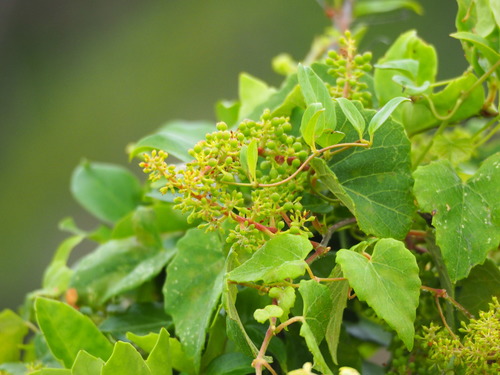
iNaturalist· cc-by-nc
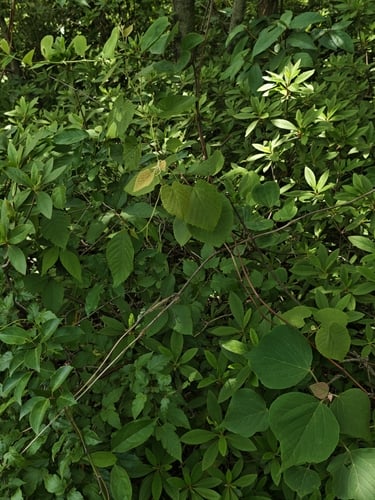
(c) Linda Loffler, some rights reserved (CC BY-NC), uploaded by Linda Loffler
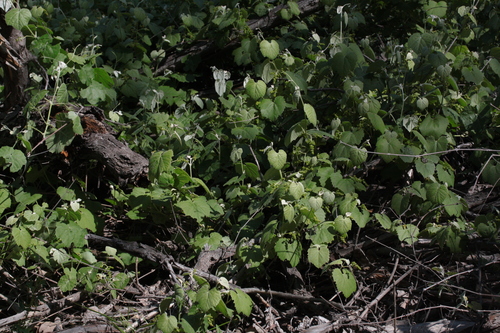
iNaturalist· cc-by-nc
(c) Linda Loffler, some rights reserved (CC BY-NC)
Description
A herb that lies along the ground. It is succulent and keeps growing from year to year. It grows 1 m high. The leaves have 3-5 leaflets spread out like fingers on a hand. The leaflet blades are fleshy and 12 cm long by 3-5 cm wide. The side leaflets are smaller. There are a few coarse teeth along the edge. The flower petals are greenish-yellow with purple tips. The fruit are orange to red and 1.4 cm long by 0.8 cm wide. They are oval. There is one seed 7 mm long by 4 mm wide.
Edible Uses
The fruit can be eaten.
Traditional Uses
Caution: The fruit leave a bitter taste and may contain poisons. It presumably has oxalates.
This uses section is brief — help expand it
Known Hazards
The fruit leaves a bitter taste and may contain poisons, presumably oxalates.
Distribution
It is a subtropical plant. It grows on rocky or sandy soils. It grows between 200-1,300 m above sea level in South Africa.
Where It Grows
Africa, Botswana, East Africa, Eswatini, Mozambique, South Africa, Southern Africa, Swaziland, Zimbabwe,
Synonyms
References (5)
- Fox, F. W. & Young, M. E. N., 1982, Food from the Veld. Delta Books. p 365
- Jardin, C., 1970, List of Foods Used In Africa, FAO Nutrition Information Document Series No 2.p 128 (As Cissus unguiformifolius)
- Long, C., 2005, Swaziland's Flora - siSwati names and Uses http://www.sntc.org.sz/flora/
- Ruiters-Welcome, A. K., 2019, Food plants of southern Africa. Ph.D. thesis. Univ. of Johannesburg p 107
- Welcome, A. K. & Van Wyk, B.-E., 2019, An inventory and analysis of the food plants of southern Africa. South African Journal of Botany 122 (2019) 136–179