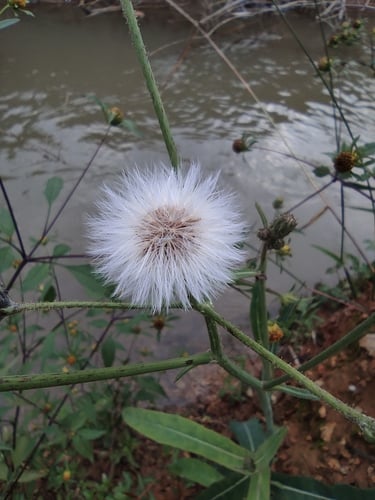
Erigeron bonariensis
L.
Flax-leaf fleabane
iNaturalist· cc-by-nc
(c) Muriel Bendel, some rights reserved (CC BY-NC), uploaded by Muriel Bendel
iNaturalist· cc-by-nc
(c) Věra Kafková, some rights reserved (CC BY-NC)
Summary
Source: WikipediaErigeron bonariensis is a species in the family Asteraceae, found throughout the tropics and subtropics as a pioneer plant; its precise origin is unknown, but most likely it stems from Central America or South America. It has become naturalized in many other regions, including North America, Europe and Australia. Common names of E. bonariensis include flax-leaf fleabane, wavy-leaf fleabane, Argentine fleabane, hairy horseweed, asthma weed and hairy fleabane.
Description
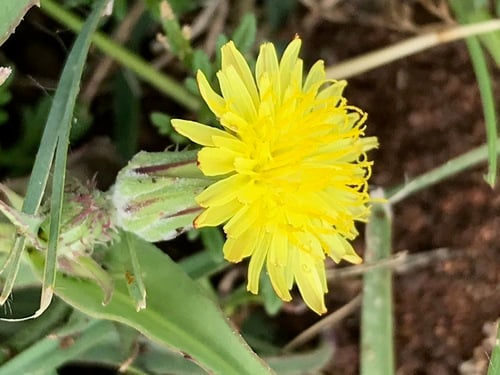
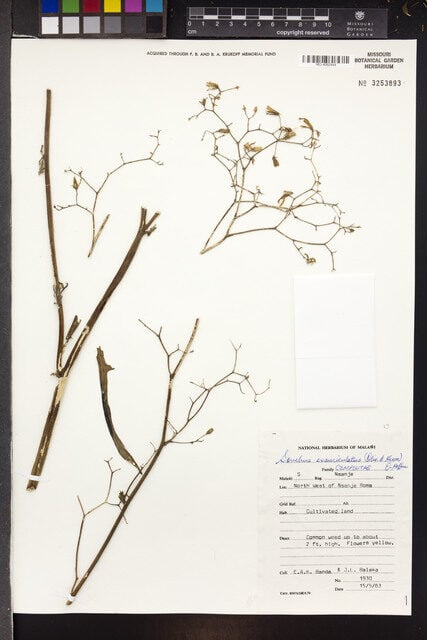
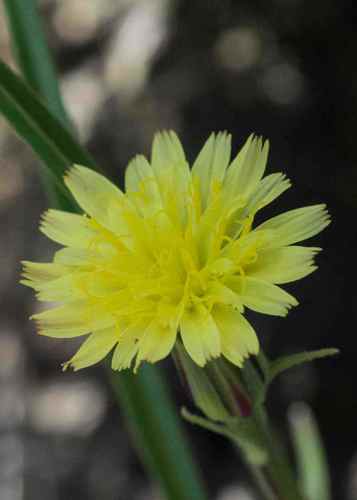
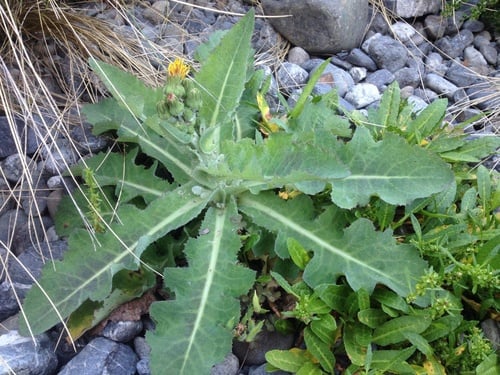
A robust herb. It is erect and grows from seed each year. The stems are hairy. They are 1 m long. The leaves are alternate and grey green. They are narrow and have small hairs. There can be fine teeth along the edge. The flowers are a the top and in pales yellow flower heads. The fruit are oblong. They have pale brown bristles.
Edible Uses
The leaves are boiled and eaten as a vegetable. Flowers and leaves are also used as a spice.
Traditional Uses
The leaves are boiled and eaten as a vegetable.
This uses section is brief — help expand it
Distribution
It is a subtropical plant. It grows in waste ground. It grows in hot arid places. It grows in areas with a marked dry season. It is often on stony and sandy land. It can grow early on larva flows. It can grow in deserts. It grows between 5-2,850 m above sea level. It can grow in arid places.
Where It Grows
Africa, Albania, Algeria, American Samoa, Argentina, Asia, Australia, Azores, Balkans, Bermuda, Bolivia, Botswana, Brazil, Canary Island, Central America, Central Asia, Chile, China, Costa Rica, Côte d'Ivoire, Dominican Republic, East Africa, Easter Island, Ecuador, Egypt, Eswatini, Ethiopia, Europe, France, Ghana, Greece, Guiana, Guianas, Guyana, Hawaii, Honduras, India, Indonesia, Iran, Israel, Italy, Ivory Coast, Japan, Kenya, Kiribati, Korea, Lesotho, Libya, Madagascar, Marquesas, Mediterranean, Middle East, Morocco, Mozambique, Namibia, New Zealand, North Africa, North America, Northeastern India, Pacific, Paraguay, Polynesia, Portugal, Qatar, Rwanda, Sao Tome and Principe, Sao Tome and Principe, Saudi Arabia, SE Asia, South Africa, Southern Africa, South America*, Spain, St Helena, Sudan, Suriname, Swaziland, Tajikistan, Tanzania, Tasmania, Uganda, United Arab Emirates, UAE, Uruguay, USA, Venezuela, West Africa, West Indies, Yugoslavia, Zambia, Zimbabwe,
Synonyms
Also Known As
Buar-zen, Buva, Capicoba, Carnicera, Coniza, Erva-lanceta, Hierba de caballo, Horseweed, Mbuy, Mozweze, Pascueta, Rabo-de-foguete, Rama negra, Ventogne, Vira vira, Voadeira, Yerba carnicera, Yerba de la vida
References (17)
- Biscotti, N. et al, 2018, The traditional food use of wild vegetables in Apulia (Italy) in the light of Italian ethnobotanical literature. Italian Botanist 5:1-24 (As Erigeron bonariensis)
- Fowler, D. G., 2007, Zambian Plants: Their Vernacular Names and Uses. Kew. p 76 (As Conyza bonariensis)
- Fox, F. W. & Young, M. E. N., 1982, Food from the Veld. Delta Books. p 128 (As Conyza bonariensis)
- Kar, A., et al, 2013, Wild Edible Plant Resources used by the Mizos of Mizoram, India. Kathmandu University Journal of Science, Engineering and Technology. Vol. 9, No. 1, July, 2013, 106-126 (As Conyza bonariensis)
- Kinupp, V. F., 2007, Plantas alimenticias nao-convencionais da regiao metropolitana de Porto Alegre, RS, Brazil p 66 (As Conyza bonariensis)
Show all 17 references Hide references
- Leon-Lobos, P., et al, 2022, Patterns of Traditional and Modern Uses of Wild Edible Native Plants of Chile: Challenges and Future Perspectives. Plants (Basel) v 11 (6) Table S1 (As Conyza bonariensis)
- Long, C., 2005, Swaziland's Flora - siSwati names and Uses http://www.sntc.org.sz/flora/ (As Conyza bonariensis)
- Malezas Comestibles del Cono Sur, INTA, 2009, Buernos Aires (As Conyza bonariensis)
- Mutie, F. M., et al, 2023, Important Medicinal and Food Taxa (Orders and Families) in Kenya, Based on Three Quantitative Approaches. Plants 2023, 12, 1145
- Pickering, H., & Roe, E., 2009, Wild Flowers of the Victoria Falls Area. Helen Pickering, London. p 35 (As Conyza bonariensis)
- Royal Botanic Gardens, Kew (1999). Survey of Economic Plants for Arid and Semi-Arid Lands (SEPASAL) database. Published on the Internet; http://www.rbgkew.org.uk/ceb/sepasal/internet [Accessed 11th April 2011]
- Ruiters-Welcome, A. K., 2019, Food plants of southern Africa. Ph.D. thesis. Univ. of Johannesburg p 33
- Thaman, R. R., 1987, Plants of Kiribati: A listing and analysis of vernacular names. Atoll Research Bulletin No. 296 (As Conyza bonariensis)
- Wehmeyer, A. S, 1986, Edible Wild Plants of Southern Africa. Data on the Nutrient Contents of over 300 species. (As Conyza bonariensis)
- Welcome, A. K. & Van Wyk, B.-E., 2019, An inventory and analysis of the food plants of southern Africa. South African Journal of Botany 122 (2019) 136–179 (As Conyza bonariensis)
- World Checklist of Useful Plant Species 2020. Royal Botanic Gardens, Kew
- Zizka, G., 1991, Flowering Plants of Easter Island. Palmarum Hortus Francofurtensis (As Conyza bonariensis)