Tephroseris palustris
(L.) Fourr.
Marsh fleawort, Clustered Marsh Ragwort, Marsh Fleabane
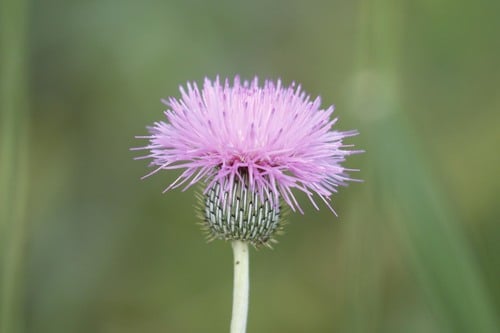
iNaturalist· cc-by-nc
(c) csledge, some rights reserved (CC BY-NC), uploaded by csledge
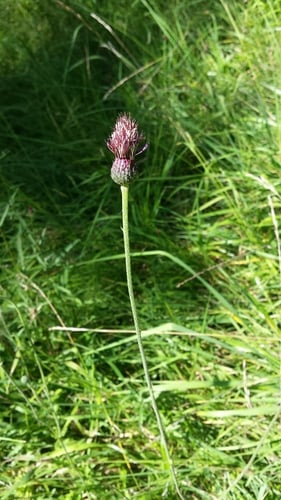
iNaturalist· cc-by-nc
(c) Scott King, some rights reserved (CC BY-NC)
iNaturalist· cc-by-nc
(c) Fernando Mateos-González, some rights reserved (CC BY-NC), uploaded by Fernando Mateos-González
Summary
Source: WikipediaTephroseris palustris, also known by its common names swamp ragwort, northern swamp groundsel, marsh fleabane, marsh fleawort, clustered marsh ragwort and mastodon flower, a herbaceous species of the family Asteraceae. It can be seen most easily when its bright yellow umbel flowers appear from May to early July standing 3 to 4 feet (0.9 to 1.2 m) along marshes, stream banks and slough areas where it likes to grow.
Description
A herb. It grows 20-60 cm tall. It has a single erect stem. It is hollow and hairy towards the top. The lower leaves have stalks and the upper leaves do not. The leaves are oblong and 5-15 cm long by 1-2 cm wide. There are teeth along the edge.
Edible Uses
Young leaves and flowering stems can be eaten raw or cooked — used in salads, cooked as greens, or fermented into a sauerkraut. Some caution is advised regarding toxicity.
Medicinal Uses
None known
Known Hazards
Toxicity: Marsh ragwort is considered a vegetable and safe for human consumption; the young leaves and flowering stems of Senecio congestus can be eaten raw as salad, cooked as a potherb or made into a "sauerkraut", Noxiousness: Tephroseris palustris appears on a list of North Dakota plants to be monitored, however, it tends to be more of a plant that the presence of which indicates severe disturbance such as over-foraging and hyper-salinity, as is the case of the habitats of arctic geese where the forage plants are disappearing. Two locations are mentioned by United States Fish and Wildlife Service (USFWS) having problems from the ever-expanding populations of arctic geese and one from the Arctic Institute of North America of the University of Calgary or from an unpublished report from the Canadian Wildlife Service made available by the USFWS: Akimiski Island in the Canadian Northwest Territories where swards of Puccinellia phryganodes and Carex subspathacea have been replaced with dead willow stands and mudflats growing non-forage plant species, including Glaux maritima and Senecio congestus Cape Churchill Region and La Pérouse Bay, Manitoba where the expanding population of lesser snow geese has resulted in substantial changes to all intertidal habitats. In the vicinity of the coast extensive moss carpets are present and Senecio congestus and Salicornia borealis are widespread. Karrak Lake, Nunavut where growth in populations of Ross's geese (Chen rossii) and lesser snow geese (Chen caerulescens) has led to a decline in vegetative cover and areas with a 10-year or longer history of goose nesting than in areas with less than 10 years of nesting had more instance of exposed mineral substrate, exposed peat, and Senecio congestus. Tephroseris palustris is reported to be extirpated in Michigan.
Distribution
It is a cool temperate plant. It grows in wet places between 600-1,000 m above sea level in north China.
Where It Grows
Asia, Canada, China, Mongolia, North America, USA,
Propagation
Sow seed in spring or late summer directly in situ, barely covering it, and keep the soil consistently moist to allow germination to occur.
Other Uses
None known
Synonyms
References (4)
- Ann. Soc. Linn. Lyon ser. 2, 16:404. 1868
- Plants for a Future database, The Field, Penpol, Lostwithiel, Cornwall, PL22 0NG, UK. http://www.scs.leeds.ac.uk/pfaf/
- Urgamal, M., Oyuntsetseg, B., Nyambayar, D. & Dulamsuren, Ch. 2014. Conspectus of the vascular plants of Mongolia. (Editors: Sanchir, Ch. & Jamsran, Ts.). Ulaanbaatar, Mongolia. “Admon“ Press. 334pp. (p. 199-230).
- World Checklist of Useful Plant Species 2020. Royal Botanic Gardens, Kew