Coddia rudis
(E. Mey. ex Harv.) Verdc.
Small bone-apple, Lesser thicket-thorn
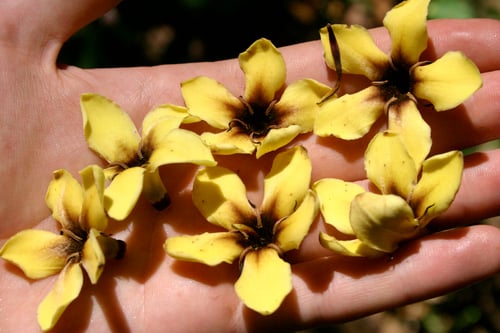
iNaturalist· cc-by-nc
(c) Craig Peter, some rights reserved (CC BY-NC), uploaded by Craig Peter
iNaturalist· cc-by
(c) Shaun Swanepoel, some rights reserved (CC BY), uploaded by Shaun Swanepoel
iNaturalist· cc-by-nc
(c) Craig Peter, some rights reserved (CC BY-NC), uploaded by Craig Peter
Description
A shrub. It can grow 2.5 m high. It has many branches. Young branches are grey. They often arch over. The leaves are small and shiny. They are in clusters on opposite sides of the stem. They are 2 cm wide and 2.5 cm long. The flowers are small and bell shaped. They are 10-15 mm across. They are white. The fruit are greenish-brown and round. They are 8 mm across.
Edible Uses
The round greenish-brown fruit are eaten as a snack, and the stems are used for flavouring and as a preservative.
Traditional Uses
The fruit are eaten as a snack. The stems are used for flavouring and as a preservative.
This uses section is brief — help expand it
Distribution
It is a subtropical plant. It grows on the edges of forests along rivers. It grows from sea level to 1,290 m above sea level.
Where It Grows
Africa, Botswana, East Africa, Eswatini, Mozambique, South Africa, Southern Africa, Swaziland, Zimbabwe,
Cultivation
Plants are grown by seeds. Seeds should be pre-soaked in warm water overnight before planting. Seedlings can be transplanted.
Production
Plants grow quickly.
Synonyms
Also Known As
Mahlamganisa, Mahlanganisa, Sikhwakhwane, Silulwane, umGogwane, umDondwane
References (3)
- Long, C., 2005, Swaziland's Flora - siSwati names and Uses http://www.sntc.org.sz/flora/
- Ruiters-Welcome, A. K., 2019, Food plants of southern Africa. Ph.D. thesis. Univ. of Johannesburg p 96
- Welcome, A. K. & Van Wyk, B.-E., 2019, An inventory and analysis of the food plants of southern Africa. South African Journal of Botany 122 (2019) 136–179
More from Rubiaceae
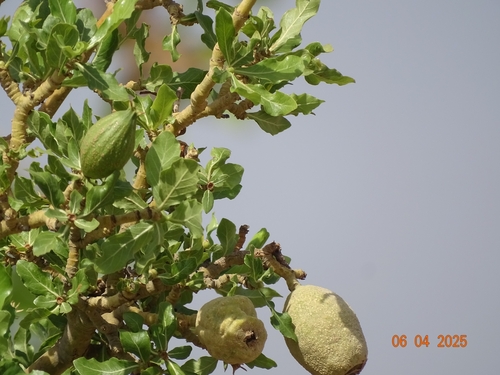
Gardenia ternifolia
Large-leaved common gardenia
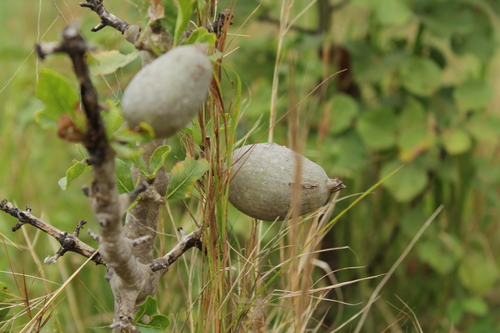
Gardenia ternifolia subsp. jovis-tonantis
Powder-bark gardenia
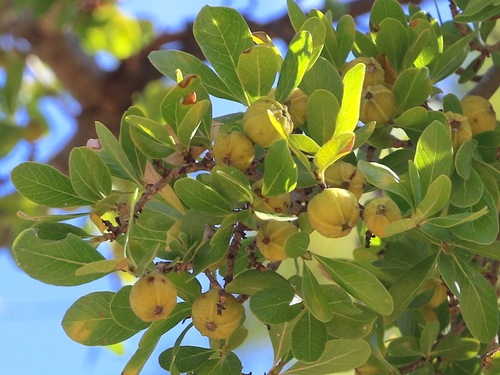
Gardenia vilhelmii
Leichhardt’s Bread-Tree, Bread-Tree of the Lynd, Breadfruit tree
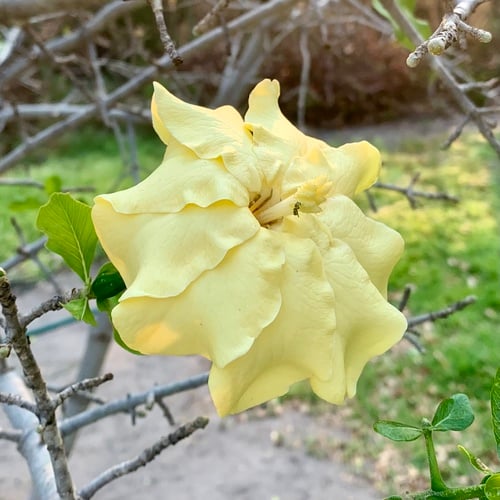
Gardenia volkensii subsp. spatulifolia
Cape jasmine, Woodland gardenia
Genipa americana
Genipa
Genipa infundibuliformis
Smooth genip