Ficus petersii
Warb.
Peter's fig
iNaturalist· cc-by-nc
(c) Troos van der Merwe, some rights reserved (CC BY-NC), uploaded by Troos van der Merwe
iNaturalist· cc-by-nc
(c) Troos van der Merwe, some rights reserved (CC BY-NC)
Description
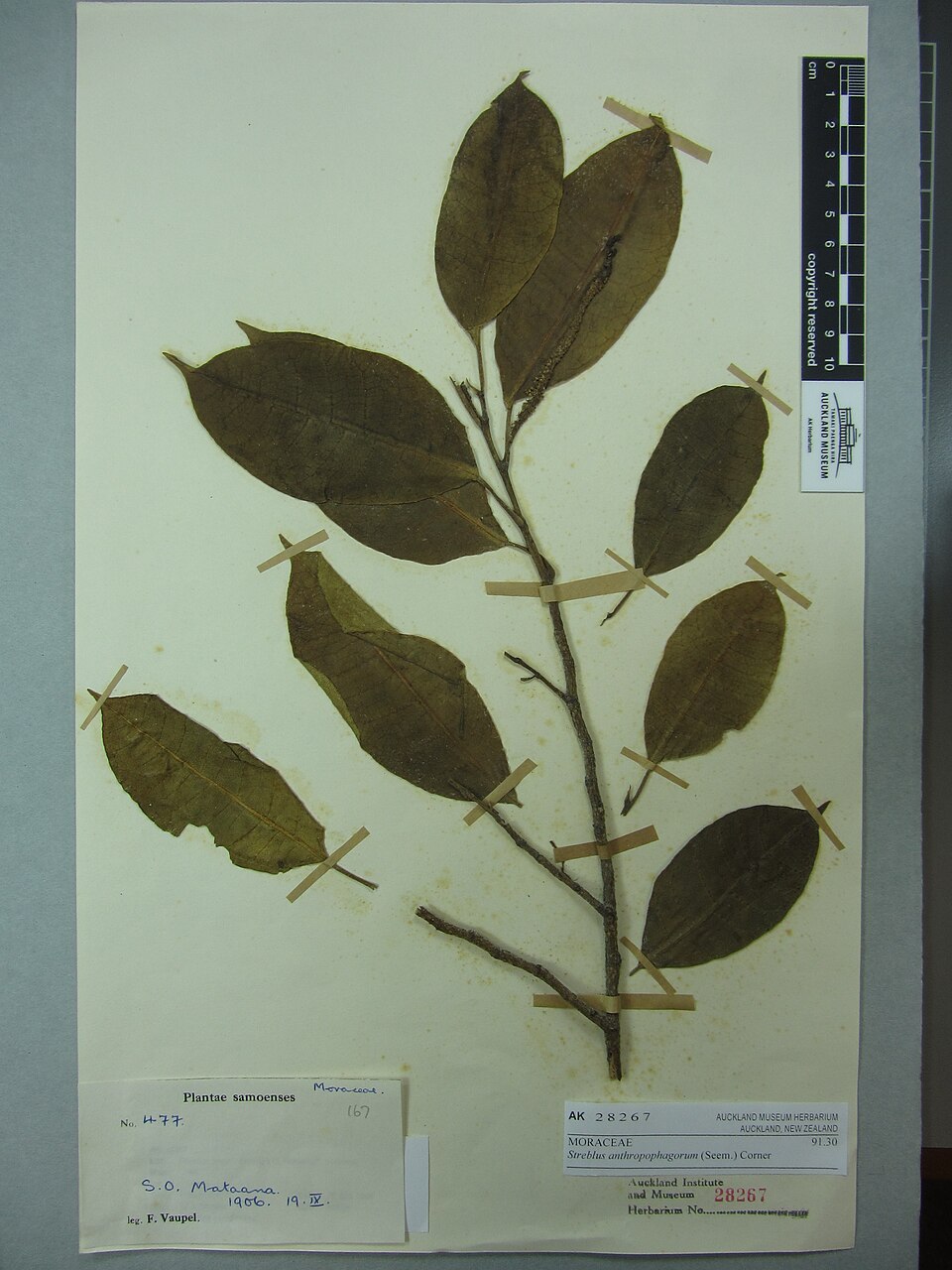
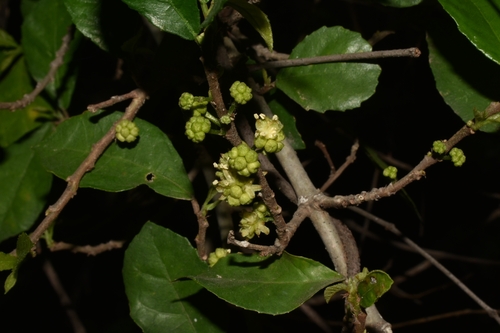
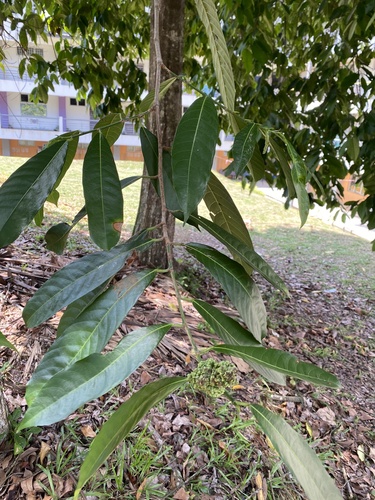
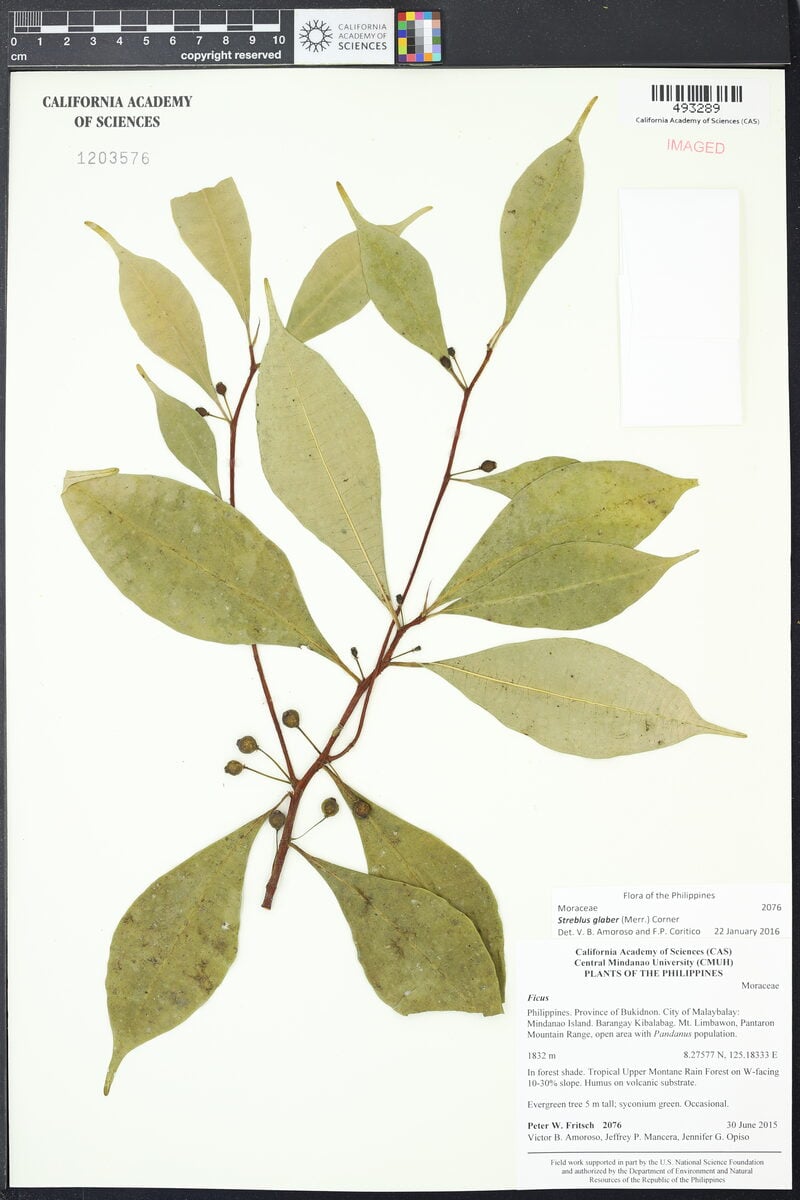
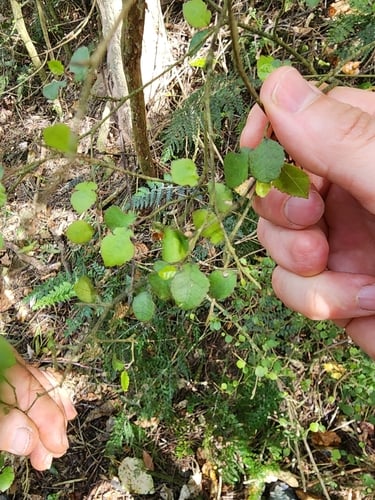
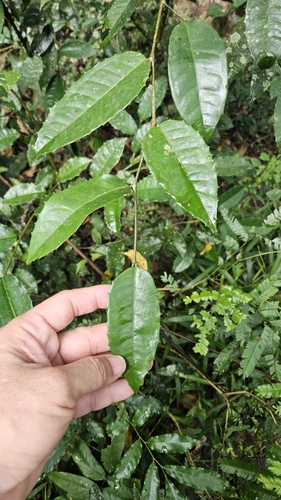
A fig. It is a tree. It grows 20 m high. Young branches are hairy. The leaves are broadly sword shaped and taper to the base. They have a short tip. They are 2-8 cm long and 2-4 cm wide. There are 6-8 veins on each side that form a loop near the edge. The figs usually occur as two together in the axils of leaves. They are oval and 10 cm long by 9 cm wide. They are a reddish colour when ripe.
Edible Uses
The fruit is eaten as a snack and used to make an alcoholic drink. The leaves are also edible.
Traditional Uses
The fruit are eaten as a snack. They are also used to make an alcoholic drink. Caution: Alcohol is a cause of cancer.
This uses section is brief — help expand it
Known Hazards
Alcohol produced from the fruit is a cause of cancer.
Distribution
It is a tropical plant. It grows in woodland and bushland. It grows on rocky places and termite mounds. It grows up to 1,400 m above sea level.
Where It Grows
Africa, Angola, Botswana, Central Africa, East Africa, Eswatini, Kenya, Malawi, Mozambique, Namibia, South Africa, Southern Africa, Swaziland, Tanzania, Zambia, Zimbabwe,
Cultivation
The wasp pollinator is Alfonsiella binghami.
Production
A fruit weighs about 5 g.
Nutrition
| Part | Moisture | kJ | kcal | Protein | Vit A | Vit C | Iron | Zinc |
|---|---|---|---|---|---|---|---|---|
| Fruit | 81.6 | — | — | 5.4 | — | — | — | — |
Synonyms
Also Known As
Umbombe, Umtfombe
References (5)
- Long, C., 2005, Swaziland's Flora - siSwati names and Uses http://www.sntc.org.sz/flora/
- Ruiters-Welcome, A. K., 2019, Food plants of southern Africa. Ph.D. thesis. Univ. of Johannesburg p 79
- Welcome, A. K. & Van Wyk, B.-E., 2019, An inventory and analysis of the food plants of southern Africa. South African Journal of Botany 122 (2019) 136–179
- Wilson, A. L. & Downs, C. T., 2012, Fruit nutritional composition and non-nutritive traits of indigenous South African tree species. South African Journal of Botany. 78:30-36
- www.figweb.org