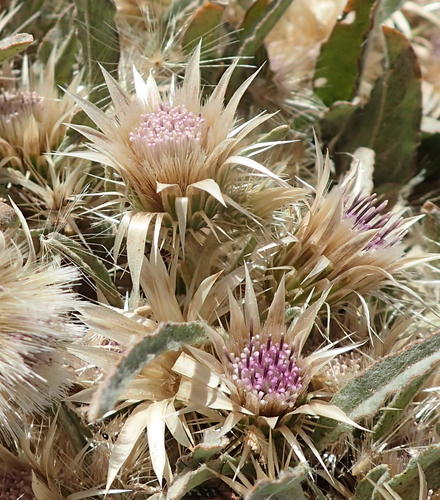
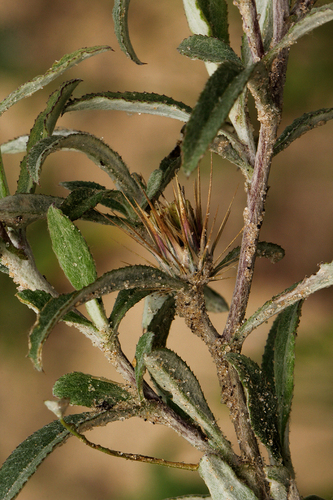
Senecio madagascariensis
Poir.
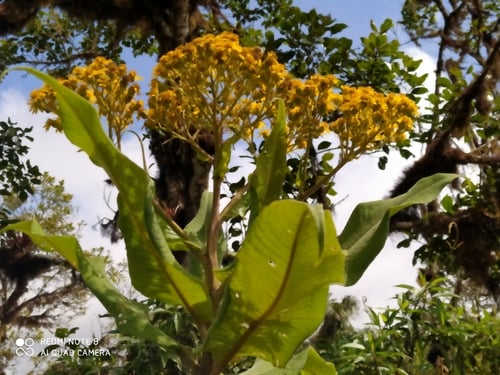
iNaturalist· cc-by
(c) Lucas Rubio, some rights reserved (CC BY), uploaded by Lucas Rubio
iNaturalist· cc0
no rights reserved, uploaded by Andrew J. Crawford
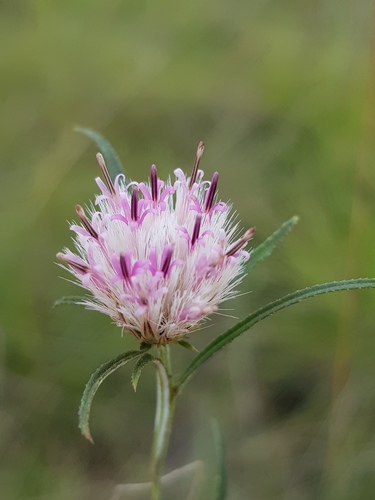
iNaturalist· cc-by
(c) Rafael Tosi, some rights reserved (CC BY), uploaded by Rafael Tosi
Summary
Source: WikipediaSenecio madagascariensis, also known as Madagascar ragwort, is a species of the genus Senecio and family Asteraceae that is native to Southern Africa. Other common names include Madagascar groundsel and fireweed. It has been included on the noxious weeds list for Hawaii and the reject list for Australia. S.madagascariensis is the diploid cytotype of S.inaequidens.
Description
A herb. It keeps growing from year to year. It grows 1 m tall. The leaves are 4-8 cm long by 3-12 mm wide.
This description is brief — help expand it
Edible Uses
The leaves are cooked as a vegetable.
Traditional Uses
The leaves are cooked as a vegetable.
This uses section is brief — help expand it
Known Hazards
Senecio madagascariensis contains pyrrolizidine alkaloids and is poisonous. Horses, cattle, and other livestock are at risk. Symptoms of poisoning from fireweed include gradual weight loss, jaundice, fluid in the lungs, blindness, sudden death without any other indications, aimless wandering, muscular coordination, twitching of the head muscles, abdominal straining, rectal prolapse, and irritability.
Distribution
It is a subtropical plant. It grows from sea level to 1,500 m above sea level.
Where It Grows
Africa, Argentina, Brazil, Chile, Hawaii, Pacific, South Africa, Southern Africa*, South America, Uruguay,
Also Known As
Impondlampondla
References (3)
- Kepe, T., 2008, Social Dynamics of the Value of Wild Edible Leaves (Imifino) in a South African Rural Area. Ecology of Food and Nutrition, 47:531-558
- Ruiters-Welcome, A. K., 2019, Food plants of southern Africa. Ph.D. thesis. Univ. of Johannesburg p 37
- Welcome, A. K. & Van Wyk, B.-E., 2019, An inventory and analysis of the food plants of southern Africa. South African Journal of Botany 122 (2019) 136–179