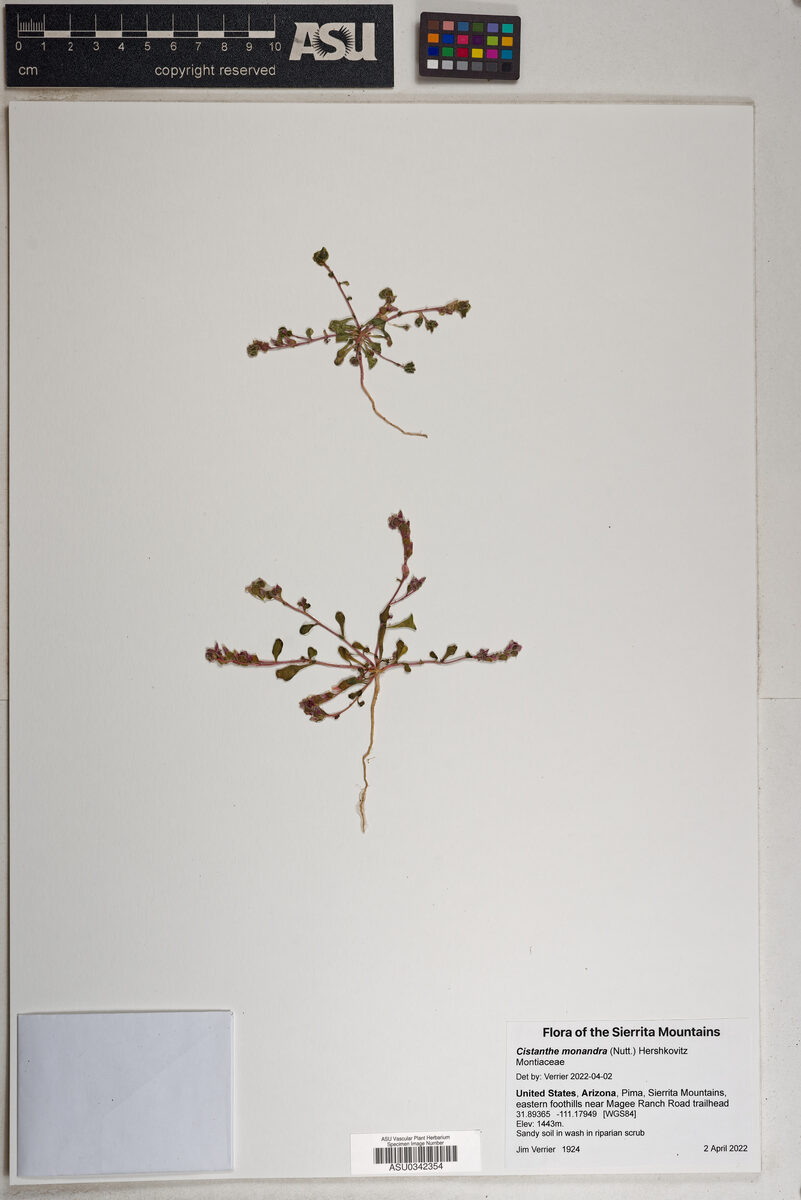
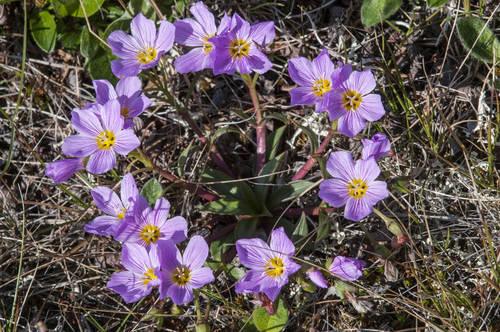
Calandrinia eremaea
Ewart
Parakeelya, Small purslane, Small or twining purslane
iNaturalist· cc-by-nc
(c) Remi Osborne, some rights reserved (CC BY-NC), uploaded by Remi Osborne
iNaturalist· cc-by-nc
(c) Pete Woodall, some rights reserved (CC BY-NC)
Description
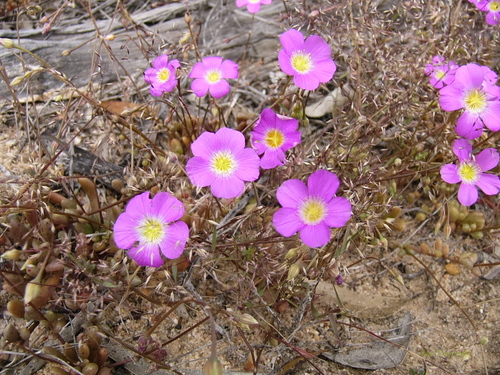
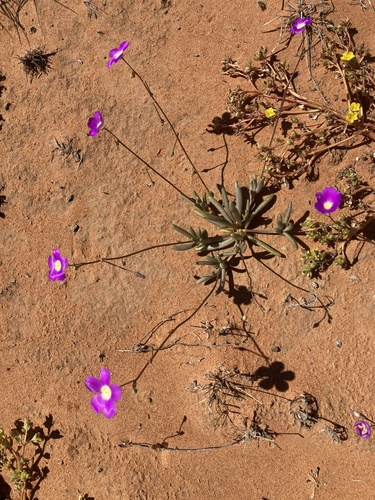
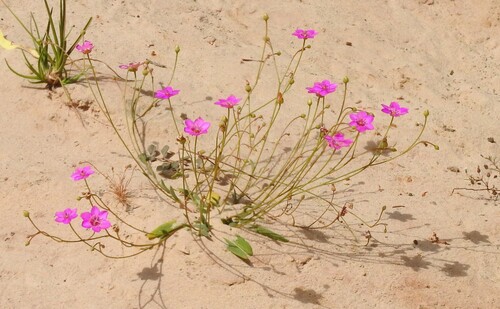
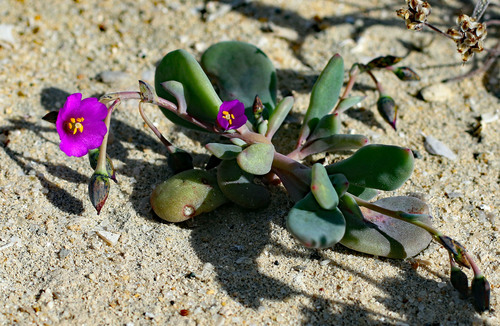
A succulent annual herb. It can be erect or lie along the ground. It grows 5-30 cm high. The leaves are succulent, fleshy and flattened. The flowers are white, pink or purple. The seed pod is 5 mm long and shaped like a spiral.
Edible Uses
The roots are eaten raw or cooked, and the seeds and leaves are also edible.
Traditional Uses
The roots are eaten raw or cooked.
This uses section is brief — help expand it
Distribution
It is a temperate plant. It grows on sandy and gravelly soils. It can grow in arid places. Tasmania Herbarium.
Where It Grows
Australia*, Tasmania,
Notes
There are between 50-100 Calandrinia species. It has also been put in the family Portulacaceae.
References (14)
- Cancilla, D., 2018, Ethnobotanical and Ethnozoological Values Desktop Assessment - Eliwana Project. p 41
- Cherikoff V. & Isaacs, J., The Bush Food Handbook. How to gather, grow, process and cook Australian Wild Foods. Ti Tree Press, Australia p 189
- Dashorst, G.R.M., and Jessop, J.P., 1998, Plants of the Adelaide Plains & Hills. Botanic Gardens of Adelaide and State Herbarium. p 54
- Hunter, J. T. & Sheringham, P., 2006, Vegetation and Floristics of Melville Range Nature Reserve. A Report to the New South Wales Parks and Wildlife Service. p 165
- Hunter, J., 2012, Vegetation and Floristics of Gilwarny and Wingadee Nature Reserves. A Report to the New South Wales National Parks and Wildlife Service p 110
Show all 14 references Hide references
- Hunter, J., 2015, Vegetation and flora of Naree and Yantabulla. A Draft Report to the Bush Heritage Australia
- Hunter, J.T., 2017, Is there a relationship between contemporary high Aboriginal plant resource locations and mapped vegetation communities? Cunninghamia 17:27-34. The Royal Botanic Garden Sydney. ISSN 2200 - 405X
- Latz, P.K., 1996, Bushfires and Bushtucker: Aboriginal plant use in Central Australia. IAD Press Alice Springs p 134
- Lazarides, M. & Hince, B., 1993, Handbook of Economic Plants of Australia, CSIRO. p 42
- Lim, T. K., 2015, Edible Medicinal and Non Medicinal Plants. Volume 9, Modified Stems, Roots, Bulbs. Springer p 22
- McKerney, M. & White, H., 2011, Bush Tucker, Boomerangs & Bandages. Border River-Gwyder Catchment Management Authority p 181
- Paczkowska, G . & Chapman, A.R., 2000, The Western Australian Flora. A Descriptive Catalogue. Western Australian Herbarium. p 462
- Steenbeeke, Greg as part of the Plants Directory project. List of plant species from northern NSW that may be used as food plants p 13
- Tasmanian Herbarium Vascular Plants list p 46